Haweswater barn loft transformed to support bat colony
A Lake District barn is restored to house both its brown long-eared bat colony and RSPB visitors.
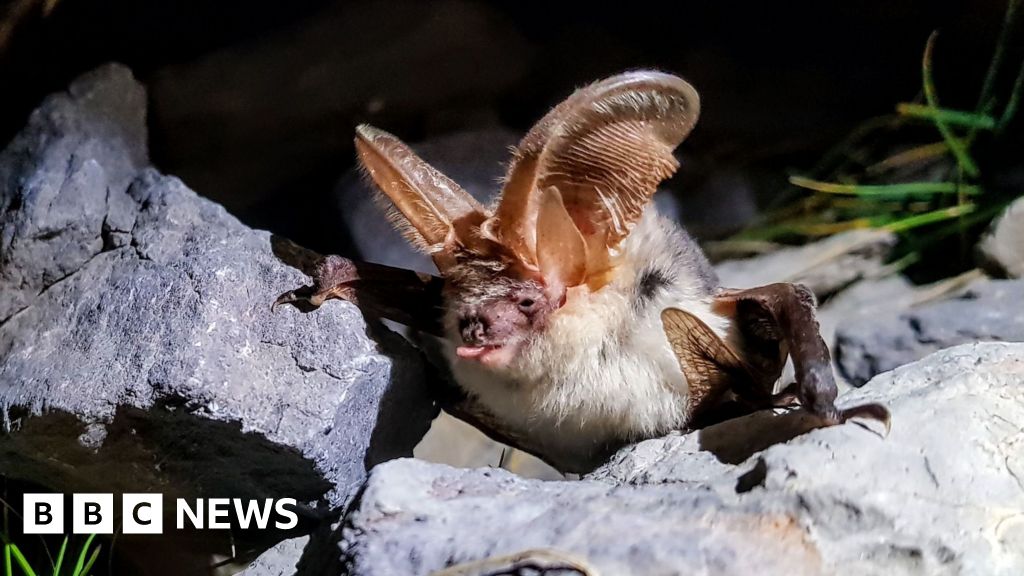
A barn loft has been transformed to support its resident colony of brown long-eared bats.
The RSPB secured a £135,000 grant to restore a traditional Cumbrian spinning barn - a site where farm workers spun sheep's wool - into a visitor's hub and conserve its bat colony in its loft at Wild Haweswater near Penrith.
The site's manager, Annabel Rushton, said the bats were named because they had "fantastic lugs on them", and were among soprano pipistrelle, common pipistrelle and Daubenton's bats at the site.
Rushton said there had been more entrances and exits created, more "nooks and crannies for them to hide in and roost" and the building was heated ahead of hibernation.
"The barn was previously a dark, dilapidated place with rotten beams, meaning the bats did not have place to rest and roost," Rushton said.
"All bats are up against a lot of challenges that many of our wildlife in the UK are also facing, for example a decline in insects."
Rushton said the mammals were "very special" and it was "great to be able to support them" at the barn, which is owned by United Utilities.
The grant from FCC Communities Foundation has also enabled a full restoration of the indoor space below the loft.
The hub will host groups and public events, where people can learn more about the landscape recovery work being undertaken in the Haweswater area.
Follow BBC Cumbria on X , Facebook , Nextdoor and Instagram and listen to Radio Cumbria on BBC Sounds.
'Most people only encounter badgers with roadkill'
New fungal research to support woodland creation
Biofluorescence reveals nature in a new light
Topics in this story
Gathered from external sources. Rights to this text belong to whoever originally published it.