Chris Brain: The rapist priest who abused his congregation
Chris Brain, who led nightclub-style services in the 1980s and 90s, is convicted of rape.
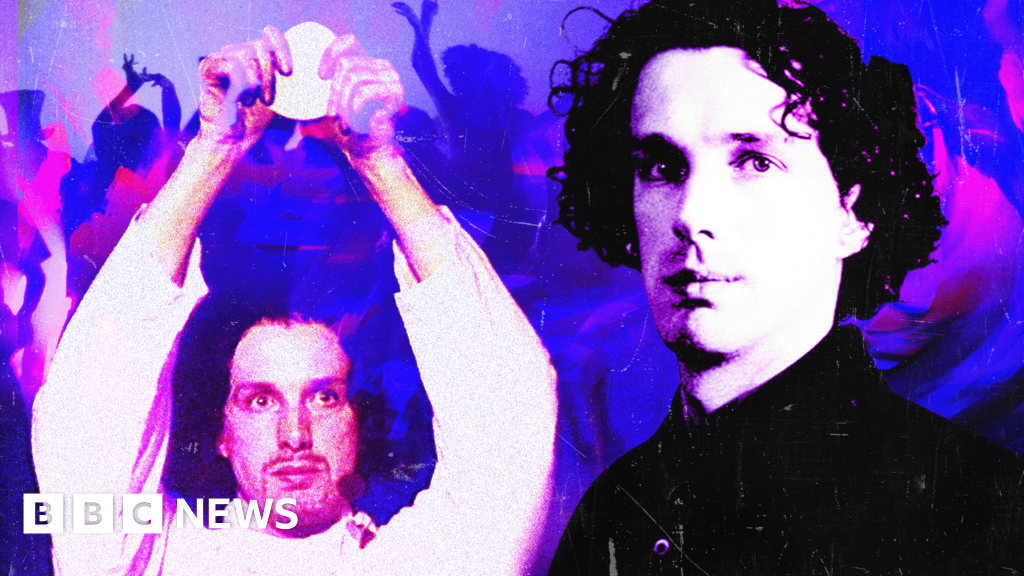
In the detailed written instructions given to the young women who worked without pay in the then-Reverend Chris Brain's house, there was a revealing demand.
The homebase team, as they were known, were to "do anything" the Church of England priest asked of them.
Routine tasks - assigned on a rota 24 hours a day, seven days a week - included cooking, cleaning, ironing, shopping, looking after Brain's young daughter, and walking his dog.
This housework was intended to free Brain for his mission of leading the Nine O'Clock Service (NOS), a radical congregation of hundreds of young people drawn weekly to a Sheffield church in the 1980s and 1990s by a fusion of rave culture, live music, environmental activism and liturgy.
But the lengthy list of homebase team duties did not spell out other demands Brain made in the attic bedroom of his family's end-terrace house in the suburb of Crookes, heard jurors at his retrial on charges of rape and indecent assault.
On Friday at Inner London Crown Court, the 69-year-old was found guilty of raping one woman in his congregation and four indecent assaults against three others .
He had already been convicted of 17 indecent assaults in August 2025 but faced a retrial as jurors could not reach verdicts on five further counts.
Brain will be sentenced later this year and has been told he is facing a custodial term.
His sentencing will conclude a dramatic and protracted downfall for a preacher who at one point been preparing to take NOS global with expansion to the US.
The charismatic and domineering preacher, seen by many followers as a prophet, would routinely summon members of his congregation to "put him to bed" with sensual massages, jurors heard.
Often Brain would strip to his underwear and expect kissing and sexual touching with the women, who feared being ostracised - or even damned - if they refused, the court heard.
"By displeasing Brain, you were displeasing God," explained one woman, who gave evidence last month during her former vicar's sexual assault trial.
The movement took root in the early 1980s when Brain, his wife Lynne and small group of like-minded Christian friends joined St Thomas's church in Crookes.
These dozen or so new worshippers - clustered around a band called Present Tense - were devout but disillusioned with traditional Anglican worship. Brain, their bassist and de facto leader, railed against "fancy golf club Christianity" which did not connect with them culturally.
In 1984, the church's vicar Robert Warren gave the group an opportunity to run their own experimental service, every Sunday at 21:00.
The band - who had played gigs across the north of England and performed before U2 at the Christian festival Greenbelt - ditched their evangelical rock songs in favour of a new sound influenced by Sheffield's burgeoning electronic music scene.
NOS was a sensation - attracting a youthful congregation of up to 600 people with an innovative blend of cutting-edge music, video, prayer, and dancing.
"It's the most entertaining church I've been to. It's the best dance night in Sheffield," one worshipper told a 1990 BBC Radio 4 programme, which reported how NOS was "bridging the gap between the church and the people".
One NOS member put it more bluntly in a TV documentary five years later: "We were sticking two fingers up to normal, middle-class church ways of behaviour."
The Diocese of Sheffield, thrilled by the sight of students queueing down the road to worship to the pulsing sound of house music, fast-tracked Brain's route to priesthood despite the reservations of his ordination tutor . The Archbishop of Canterbury told Brain he would be happy to see a NOS in every town and city in Britain.
The services, which later moved to a larger space at Ponds Forge leisure centre, were a huge production involving a crew of up to 150 volunteers - among them musicians, sound technicians, designers, security, and a trucking team. A new multimedia service was planned each week, with volunteers working unpaid throughout Sunday into the early hours of Monday morning to pull it off.
Warren, who had oversight of NOS in its first years at St Thomas's, told the court he initially believed Brain's"controlling" nature helped to get things done.
But as the popularity of NOS grew, the vicar noticed "cult-like elements" emerging. Brain's congregation seemed to look at him "almost as a guru," Warren said in evidence at Brain's first trial.
NOS members were expected to live simply and pay at least 10% of their income to the tight-knit and passionate community, though the court heard many gave more. Some handed over their inheritances and even houses.
Brain, meanwhile, had a modern car, a mobile phone, designer clothes and went on expensive holidays. In 1994, he moved his family to live in a renovated Peak District farmhouse which had been donated to NOS, jurors heard.
"He seemed to be living a luxurious lifestyle when other people are scrimping and scraping along," one NOS member told the court.
Another, who estimated she had given £40,000 to NOS over seven years, recalled the "manipulative" Brain persuading her to skip her brother's wedding in South Africa and buy van for the community instead.
NOS members told the court they were expected to cut ties with family and friends outside the community.
Jurors were told that one woman was reprimanded by Brain and other NOS leaders for going home to see her family on a weekend: "There were messages to the point of, 'This is your family now. Sacrifice now, for the greater good'."
Women gave evidence that Brain would "groom" them by pulling up to them on the street in his car and inviting them for a drive. On some occasions during this "Chris-napping" - as it was known in the community - he would touch the women and berate them for being sexually repressed, both trials were told.
One victim recalled: "He grabbed my hand and put it on his thigh and he said, 'You fancy me don't you?'"
After she replied 'no' and pulled her hand away, Brain shouted at her to get out of the car. The woman told the court she was left "distraught" and blamed her own "Catholic frigidity".
But later that night she said she got a call from Brain: "He was speaking in a gentle voice and asked if I could put him to bed."
In his defence Brain insisted there had been "nothing wrong" with members of his congregation giving him massages. He told his second trial "close friends" had given him back rubs to relieve his tension and they had become sexual "very, very" rarely and always consensually.
Brain admitted he would criticise young female members of NOS for their attitudes towards sexuality, but claimed this was "post-modern" attempt to encourage assertiveness.
"This kind of thinking had a profound effect on the development of the third wave of feminism and I regret none of it," he told jurors.
The women who Brain summoned to his bedroom gave a very different account in their evidence during his trials.
"It was what I did to survive at that time," one said. "I didn't have the freedom to consent. I was frightened all the time."
Asked by Brain's defence barrister why they kept returning, the women said they feared being cut out of the movement which had become their life.
One told the court: "He was somebody who was respected by the church, he was supported by the church. He was my priest. Who was I to question his authority?"
Another woman - who told jurors Brain had pushed her down onto a bed and raped her in the early 1980s - described being "brainwashed" and made financially dependent on him.
Witnesses said the homebase team - known by some as the "Lycra lovelies" due to the revealing clothing they wore as they did Brain's housework - were "like slaves" who would sleep on the floor of Brain's office at night.
Throughout his retrial Brain continued to reject his previous convictions, compelling prosecutors to recall victims to court and describe for a second time their experience of how they were sexually assaulted.
Recalled witnesses included a woman who Brain was found to have sexually assaulted in her bed while she was traumatised after helping people locate the bodies of friends and relatives killed in the Hillsborough disaster.
NOS came to an abrupt and dramatic end in 1995 when a former member approached Stephen Lowe, then archdeacon of Sheffield, to warn him the movement had become a cult in which Brain was abusing his congregation.
Lowe, who later became a bishop, had been an enthusiastic supporter of NOS and waved away concerns from fellow clergy as early as 1992.
But the archdeacon told the court he had noticed Brain - who was ordained in the cassock worn by Robert de Niro in the 1986 film The Mission - becoming "something of a messianic" figure.
On hearing the whistleblowers's account that Brain's followers had been "putting him to bed with sexual favours," he told the court he confronted the NOS leader.
In response to claims he had had sexual relationships with up to 40 women in NOS, Brain is said to have told Lowe: "I thought it was more."
The Church of England sent Brain to a psychiatrist, who he told he had been "obsessed with sex since the age of 10," according to a report disclosed as evidence in his trials.
Brain resigned shortly before the broadcast of BBC documentary in 1995 in which he said: "For a priest in a church setting, I would have to say I was involved in improper sexual conduct with a number of women".
Though the scandal devastated the NOS community and made for lurid headlines in the country's newspapers, for some it had not come out of the blue.
During one of the trials, the court heard that, years before allegations against Brain became public, one St Thomas's staff member had been shot down in a meeting for questioning whether it was "appropriate" for "scantily young women" to be seen coming and going from the priest's family home.
Mark Stibbe, the church's curate, told the trial he had also warned Lowe that Brain was growing unaccountable and NOS was heading for "disaster". The archdeacon was said to have replied: "We don't conduct witch hunts in the Sheffield diocese."
As the scandal faded from newspaper front pages, Brain changed his name and disappeared from the public eye. He was running a design consultancy in Wilmslow, Cheshire, when in 2021 former NOS members first contacted South Yorkshire Police.
In the 1995 documentary, then Bishop of Sheffield David Lunn had said: "If people want to set up an investigation, good luck to them. I don't think it would serve any useful purpose. I think we know what happened."
Following Brain's convictions three decades later, the Diocese of Sheffield struck a very different tone, announcing an independent safeguarding review into "institutional failures".
"What happened was an appalling abuse of power and leadership that should never have occurred," said the Right Reverend Dr Pete Wilcox.
If you are affected by any of the issues in this story, help and support is available at BBC Action Line .
'Cult' priest guilty of rape and assault of women
Topics in this story
Gathered from external sources. Rights to this text belong to whoever originally published it.