Howard Finster developed Paradise Garden from the 1960s onward and, after a reported vision at 59, produced 46,991 religiously themed artworks in Georgia
Explore the inspiring story of Howard Finster, a Georgia preacher who after receiving a divine vision at 59, became a prolific artist creating over 46,000 artworks and establishing the iconic Paradise Garden. Discover the blend of religious themes, recycled materials, and artistic vision that shaped this unique folk art environment.
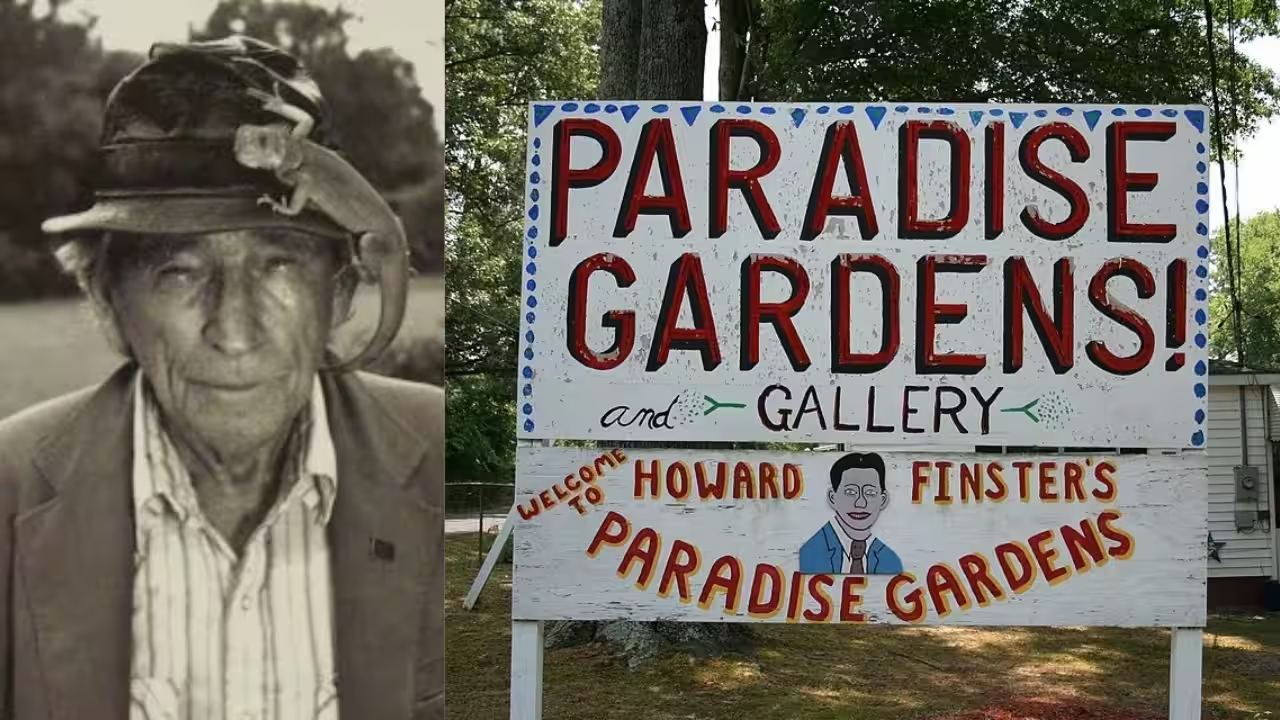
A Georgia preacher and bicycle repairman named Howard Finster was 59 when he said that he received a vision that God was instructing him to create sacred art. He was not trained as an artist, but he began painting in 1976 and went on to produce 46,991 works before his death in October 2001, according to the Paradise Garden Foundation.Finster also built an outdoor art environment called Paradise Garden at his home in Pennville, Georgia, and later incorporated it into Summerville. He filled the property with paintings, concrete sculptures, religious messages, salvaged objects and structures that were assembled from discarded materials, and the garden developed over several decades, with Finster treating the entire site as part of his artistic work. His first painting followed an experience that he described as a face appearing in a dab of white paint on his finger, and interpreted it as a divine instruction to paint sacred art. The episode became important to his account of how he began making art late in life.A garden built around religious messagesFinster initially called the garden a roadside park and museum, and he wanted to display inventions and objects that he considered evidence of human creativity. The garden contains Bible verses that are embedded in concrete, bicycle parts, television tubes, mirrors, bottles, plastic toys and other discarded items. These materials were combined with religious imagery and paintings of historical figures, inventors and public personalities, and some of the objects were collected, while others became part of structures that he built himself.Paradise Garden is described as a two-acre environment by the Smithsonian American Art Museum that Finster began constructing in the 1960s, and its account documents the mixture of religious texts, recycled objects and handmade sculptures across the property. Finster’s paintings produced images of biblical figures alongside politicians, musicians, inventors and celebrities, and he also made plywood cutouts, decorated objects and works on unusual surfaces. He had constant visitors who came to the garden to see the installations and buy his art, and demand grew as his work reached audiences even outside of Georgia.From local preacher to nationally recognised folk artistFinster’s bicycle repair business gave him a practical background in fixing and assembling objects, but he did not begin painting seriously until the vision he described in 1976. His work later entered major museum collections and attracted attention from musicians and popular-culture figures, with the High Museum of Art identifying him as one of the leading self-taught artists of the 20th century and holding a substantial collection of his work, including paintings and pieces that once stood in the garden.Finster’s art made a number of television appearances and had connections with musicians, which helped him reach a wider audience, and his paintings mixed religious subjects with familiar images from American public life, which is a combination that made them different from conventional devotional art. In terms of the volume of paintings produced by him, the Paradise Garden Foundation records 46,991 works completed by the time he died at 84. Finster took help from family members, who assisted him with repetitive tasks such as cutting out patterned shapes and filling background colours. He generally completed the detailed work and added the text himself.The garden after FinsterFinster’s daughter Beverly purchased the garden in 1999, and a nonprofit organisation was later established to preserve it; in 2011, the property was sold to Chattooga County, which arranged for the Paradise Garden Foundation to manage the site. The foundation now maintains the garden and operates it as a public attraction in Summerville, and preserves the outdoor installations, cares for the property and presents Finster’s art to visitors. The garden still remains a physical collection of his paintings, structures and religious messages that was built over decades. Even though Finster’s career began late, his output continued until his final years, and the site he built is still open to visitors and has its original mix of religious art, handmade structures and reused materials.You use AI every day. Now get your AI Quotient. Take the AIQ test.
Topics in this story
Gathered from external sources. Rights to this text belong to whoever originally published it.