An early freeze forced Iowa farmer Wayne Fredericks to try no-till in 1991; over the following decades, soil organic matter in three fields doubled
Discover how Iowa farmer Wayne Fredericks transformed his farming practices from traditional tillage to no-till planting after an early frost in 1991, resulting in a significant increase in soil organic matter and overall soil health.
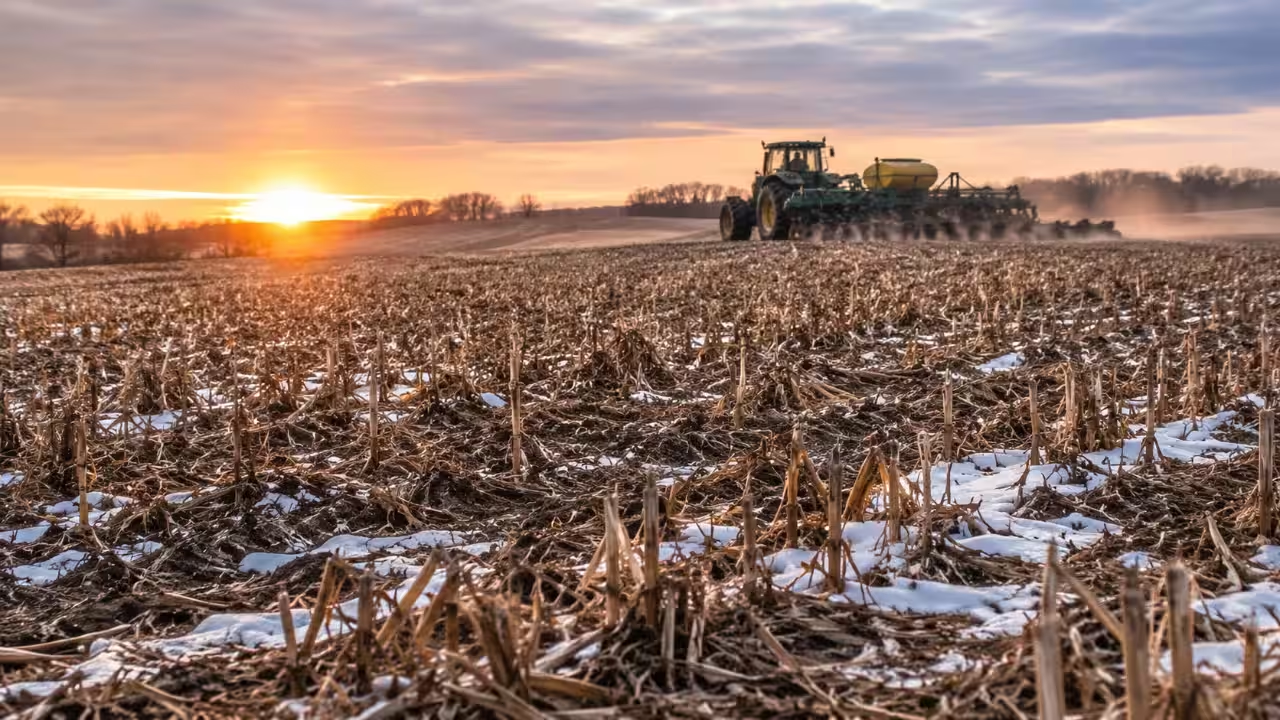
Wayne Fredericks and his wife Ruth started farming near Osage, northern Iowa, around the early 1970s, growing corn and soybeans. For the initial nineteen years, the family was farming conventionally, tilling corn stalks prior to planting soybeans and plowing soybean stubble before planting corn, says the Iowa Soybean Association. This practice stopped in the fall of 1991 when an early freeze and snow prevented Wayne from tilling after harvesting corn. What made a great impact on the way Wayne farmed was an accident. He came across an article about a farmer who planted soybeans without tilling and he decided to try no-till himself, a method that lets a farmer grow soybeans without first turning over the soil. Soil samples from three of his fields, taken over 30 years from 1984 to 2015, showed that their organic matter had roughly doubled. Fredericks used a John Deere 750 drill to plant soybeans for the 1992 growing season. The crop grew well, weeds remained under control and yields were strong. The successful trial convinced him to continue with no-till soybean production. The Iowa Soybean Association's account of his transition described how the change also reduced the time and work involved in preparing his fields.From no-till soybean to strip-till cornFredericks continued to develop his conservation techniques. In the spring of 2002, he switched from traditional tillage in his corn fields to strip-till. This technique disturbed only the strips of the land where planting took place, allowing most of the land to stay covered with plant residues. He started experimenting with cover crops in 2012. According to Farm Progress, he used cover crops such as rye in his corn and soybeans in 2017. Cover crops allowed maintaining soil cover and reduce soil erosion during the off-growing season. It was part of broader measures that he undertook to enhance soil health and water management. He added waterways, windbreaks and pollinator habitat to his land.Soil organic matter roughly doubledSamples were taken at nine locations in each of Fredericks' three fields in 1984. The initial reason for doing this was that it would help determine whether the rate of the herbicide should be changed. In a 2022 article titled “Changes in soils and crops along a transformational journey”, published by the American Society of Agronomy, Fredericks and soil scientist Jerry Hatfield examined how the fields changed over time. Their analysis used soil organic matter measurements collected between 1984 and 2015. Organic matter was found to be increasing in all three fields. Organic matter doubled over a 30-year period, according to the article. Organic matter also rose between the first measurements in 1984 and the next set in 2007, an increase the article attributed to less frequent tilling.Cover crops only came later into Fredericks' agricultural system, so the long-term improvement was attributed to the use of many conservation methods. It was found in the study that lowering tillage intensity was the primary cause of the increase in soil organic matter. Soil organic matter improved soil structure and the soil's capacity for water retention. This helped soil handle drought and grow crops. Fredericks' experience also showed how an unexpected weather condition could lead to a lasting change in farm management. What began as a practical solution to an unfinished plowing season became a decades-long shift towards conservation of soil and improving the land. Fredericks and Ruth received the American Soybean Association's 2022 National Conservation Legacy Award for their conservation work, the Iowa Farm Bureau reported.You use AI every day. Now get your AI Quotient. Take the AIQ test.
Topics in this story
Gathered from external sources. Rights to this text belong to whoever originally published it.