Elizabeth Holmes to be transferred to a halfway house
Holmes, 42, was sentenced to more than 11 years in prison for defrauding investors of millions of dollars through Theranos, the failed blood-testing company that she founded.
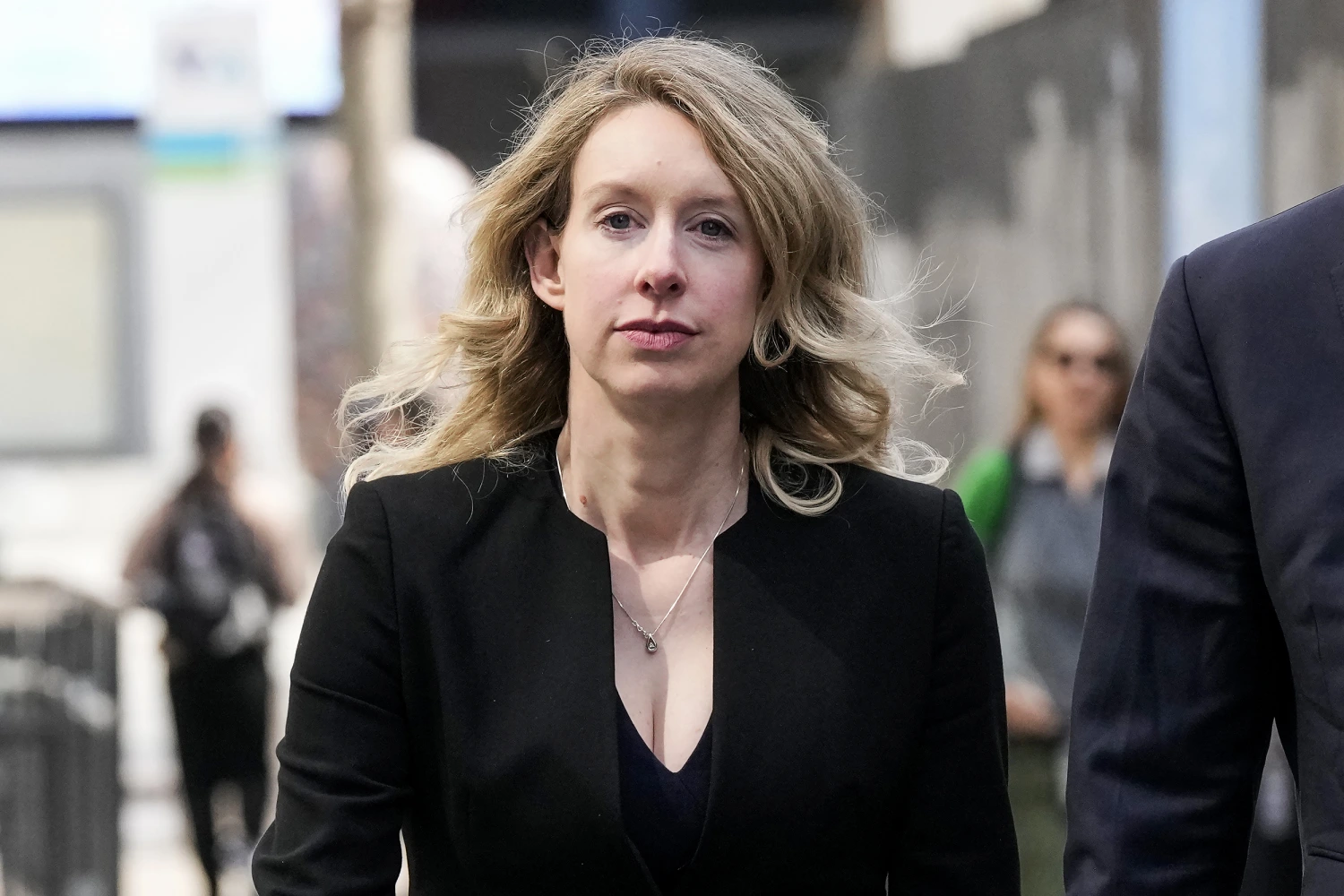
Elizabeth Holmes, who was convicted of fraud for siphoning hundreds of millions of dollars from several high-profile investors, is scheduled to be transferred from a low-security federal prison to a halfway house next year, according to one of her victims. Holmes, 42, defrauded investors of millions through Theranos, the failed blood-testing company that she founded. She was sentenced in 2022 to 11 years and three months in prison. She and her business partner Ramesh “Sunny” Balwani were ordered to pay 12 victims a total of $452 million in restitution. Holmes has been serving that sentence at a low-security prison in Bryan, Texas. The halfway house will provide her greater freedom. Alan Eisenman, one of her victims, said she is to be transferred to the Austin Transitional Center, a halfway house in Del Valle, an unincorporated community that borders Austin, Texas. The Department of Justice is required by law to notify victims of crime of case developments through letters and emails. Scott Taylor, a spokesperson for the Bureau of Prisons, said he could not provide details of Holmes’ confinement, including release plans. Taylor cited safety, security and a Bureau of Prisons policy that says such information can’t be released until after an individual arrives at their designated institution. Eisenman, an early Theranos investor who testified at Holmes’ trial, said he received a message from the Justice Department’s victim notification system Wednesday saying the halfway house transfer would occur in August 2027. Eisenman, a retired financial planner from Texas, invested about $1.2 million with his family in the failed blood-testing company beginning in 2006. He was the smallest investor among a list of high-profile, well-monied investors who included Australian media mogul Rupert Murdoch. Eisenman was unhappy to hear of the planned transfer. “Seems like a gift,” he told NBC News. Holmes owes Eisenman and his wife, Sherrie, almost $150,000 out of a total of $452 million in restitution for all victims of her crimes, according to a court document. So far, he has “not received a penny” from Holmes, he told NBC News. “She was a liar back in 2006,” Eisenman said, “and she’s a liar today.” Eisenman said he hoped Holmes would remain in prison through her scheduled release date of Feb. 22, 2030, after some reductions in the sentence. In March, a judge cut Holmes’ sentence from 135 months to 123 months. According to a court document, the judge agreed with Holmes that she did not personally cause “substantial financial hardship” to her victims. The government had tried to prevent a reduction of her prison time, arguing that Holmes has not accepted responsibility for her crimes, paid minimal restitution and “has the opportunity to reoffend,” according to a court filing. The government told the court that Holmes has continued to tell national media she intends to resume a career in healthcare technology after her release and has been advising her romantic partner on fundraising for his startup, a company that has similarities to Theranos, the court document states. Eisenman added that he’s against Holmes receiving any form of presidential clemency. She filed for a commutation of her sentence last year. It remains pending. Holmes’ attorney during her trial did not respond to a phone message from NBC News requesting comment. ABC News first reported her pending release to the halfway house. The news comes as a documentary about her is about to be released. The documentary by comedian Nathan Fielder and director Lance Oppenheim is based on Fielder living with her and her partner for several days before she entered prison in 2023. It recently made its debut at the Telluride Film Festival and is scheduled for full release next month. Eisenman said he also watched the latest trailer for the documentary, “You Can See Everything,” and plans to see it upon its release next month. His concern, he added, is whether it will portray Holmes as a sympathetic figure. “She’s obviously manipulative,” Eisenman said. “If people don’t see that, then they’re blind. She’s the most conniving person I’ve ever met.”
Topics in this story
Gathered from external sources. Rights to this text belong to whoever originally published it.