A WWII airfield once used by Britain's famous Dambusters was later quarried for sand; today its runway is a nature reserve filled with skylarks and birds of prey
Woodhall Spa Airfield was constructed on former farmland as a satellite station to RAF Coningsby and opened in February 1942.
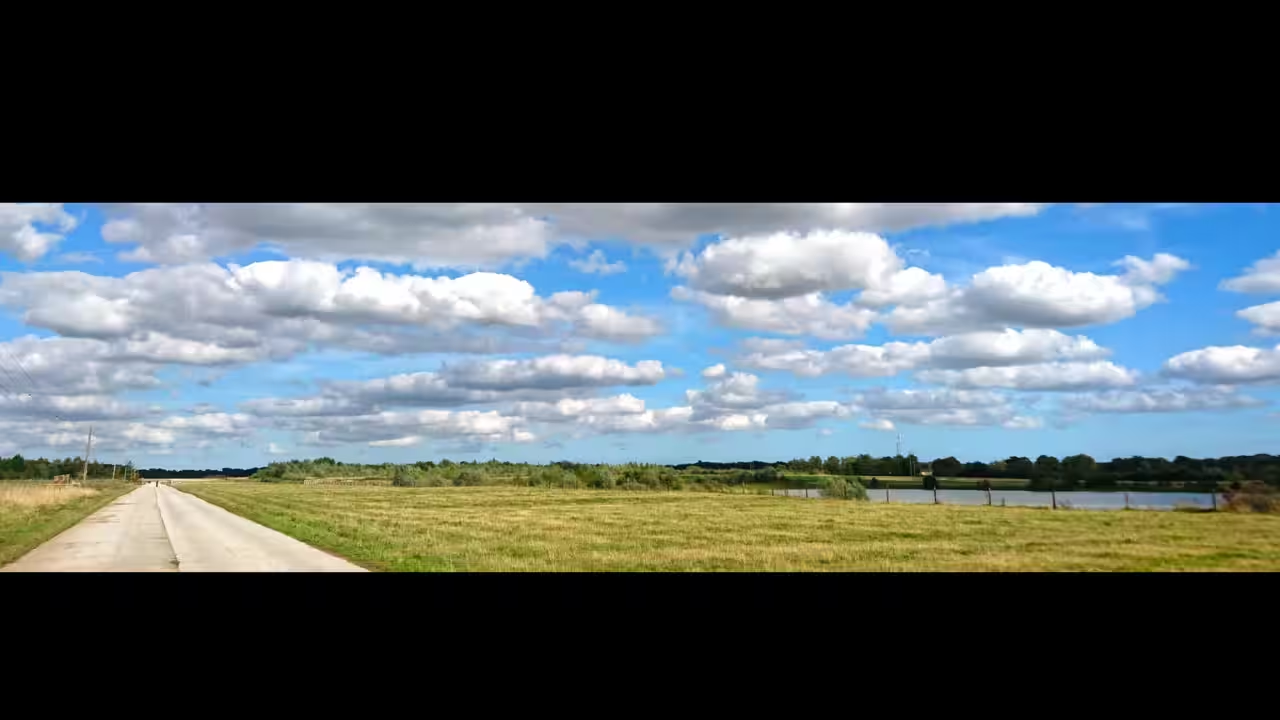
Woodhall Spa Airfield was constructed on former farmland as a satellite station to RAF Coningsby and opened in February 1942. It was home to several RAF squadrons during the Second World War, including 617 ‘Dambusters’ Squadron, which used the ‘bouncing bomb’ developed by Barnes Wallis to destroy three major dams in the Ruhr. The site was later a sand and gravel quarry. The Trust concluded the final phase of its purchase on 19 September 2014, supported by £450,000 from WREN’s Biodiversity Action Fund and a £100,000 legacy. The reserve has sandy soils, acid grassland, heathland and open water.How did the WWII Dambusters airfield become a nature reserveAccording to Lincolnshire Wildlife Trust, Woodhall Spa Airfield was constructed on former farmland as a satellite station to RAF Coningsby and opened in February 1942. The Trust states that, during the Second World War, the airfield was home to several RAF squadrons, including the famous 617 'Dambusters' Squadron.The Trust's reserve page names several other squadrons that served there. It says 97 Squadron and 619 Squadron were heavily involved in the early operations of the Avro Lancaster bomber. It adds that 627 Squadron crucially developed a method of low-level target marking that proved extremely successful.Who led Britain's famous Dambusters raidThe most famous squadron to serve at RAF Woodhall was 617 'Dambusters' Squadron, which was based there for most of the Second World War. The Trust says it was this squadron that used the 'bouncing bomb' developed by Barnes Wallis to destroy three major dams in the Ruhr industrial region of Germany.The Trust's 2014 news release also records a link to Guy Gibson, leader of the Dambusters raid. According to the release, Gibson continued flying missions over Europe after the 1943 raid, until his last flight in 1944. The Trust states that he took off from RAF Woodhall Spa on 19 September 1944 on a mission over Germany, and that his plane was lost whilst returning.How did the former RAF airfield become a nature reserveThe Trust says the airfield was, more recently, used as a sand and gravel quarry. In its news release of 19 September 2014, it announced that it had concluded the final phase of its purchase of the former RAF base. According to the release, £450,000 was donated by WREN's Biodiversity Action Fund Land Purchase Programme, and a further £100,000 came as a legacy donation from Robert Thomas Pearson. The Trust also received substantial public donations. The release notes that the purchase came exactly 70 years after the last flight of Guy Gibson.It would now begin developing the former airfield into a nature reserve. It also said the airfield would be closed for the foreseeable future while machinery from the quarry was removed and development work began. The reserve would be part of a local Living Landscape, connecting existing nature reserves and habitats and allowing wildlife to move through these spaces.How is the former Dambusters airfield being restoredWoodhall Spa Airfield is a landscape of sandy soils with acid grassland, heathland with some marsh areas and open water. The 2014 release set out plans to restore parts of the land to the way it existed in the nineteenth century, including lowland heath, a habitat that already exists in the neighbouring Kirkby Moor nature reserve. It says a record of the landscape in 1890 survives in the diary of the Victorian naturalist Joseph Burtt Davy, who recorded the habitats and wildlife he met around Woodhall Spa. The Trust stated that the reserve would retain the outline of the airfield landing strip while restoring the landscape to its earlier condition. The reserve page includes a photograph of wildfowl flying above a lake in winter.The site has a car park and viewing areas, with limited access and no dogs. It also describes a new memorial garden near the reserve entrance, which it calls "a place of peace and reflection for everyone". The Trust says the garden is intended especially for older or less able visitors, and for veterans who find the walk to the existing war memorial too far. The fundraising target was exceeded, work began, and a new sculpture was installed in time for a visit by the 617 Squadron Association on 18 May 2025, held to commemorate the 80th anniversary of VE Day.You use AI every day. Now get your AI Quotient. Take the AIQ test.
Topics in this story
Gathered from external sources. Rights to this text belong to whoever originally published it.