In 2016, a Florida diver reported possible human remains offshore, leading archaeologists to uncover a 7,200-year-old Native American burial site now submerged underwater
A 7,200-year-old Native American burial site was uncovered off Manasota Key, Florida, after an amateur diver reported possible human remains, revealing significant archaeological findings about Florida’s Indigenous past.
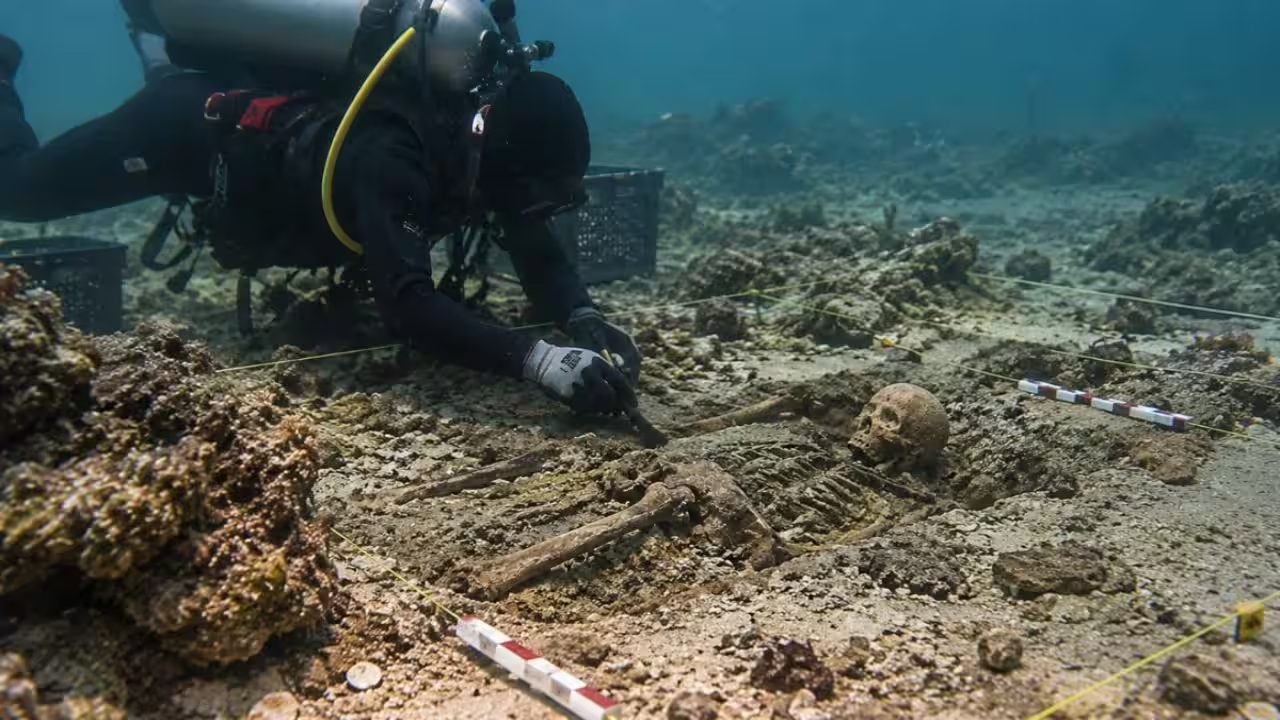
In June 2016, an amateur diver searching for prehistoric fossils off Manasota Key, which is located in Florida, reported possible human remains to the state’s Bureau of Archaeological Research. The investigation that followed the report revealed a prehistoric Native American burial site beneath the Gulf of Mexico. Known as the Manasota Key Offshore (MKO) archaeological site, it contains human remains. Additionally, the site contains worked wooden stakes that were linked to ancient burial practices. According to the Florida Department of State, radiocarbon dating of two wooden stakes placed them at more than 7,200 years old, thus transforming the site into an important source of evidence about Florida’s Indigenous past and the region’s changing landscape.How a fossil hunter’s report led to an archaeological investigationPrompted by the fossil hunter's initial report, underwater archaeologists from the state’s Bureau of Archaeological Research launched an investigation of the region using non-invasive techniques. The methods included magnetometry, side-scan sonar and sub-bottom profiling. These helped the researchers map features beneath the water and identify areas for further examination. Several areas containing peat, worked wooden stakes and the remains of multiple individuals were documented in the investigation. After the initial investigation had established that the offshore location contained a prehistoric burial site, on February 28, 2018, the discovery was announced publicly by Florida’s secretary of state.Following these initial non-invasive tracking surveys, the methodology transitioned to targeted, physical salvage operations. In the excavations conducted between 2017 and 2018, the crew recovered human remains representing at least 11 individuals. A federal notice published by the National Park Service documented seven adults, two infants and two unborn individuals, along with 49 associated funerary objects. Fibre cordage, wooden stakes and modified shells were recovered from the site. Therefore, the notice established the minimum number of individuals represented by the recovered items instead of necessarily establishing the total number of people originally buried across the entire site.How a prehistoric burial site became submergedThe burial site was likely not underwater when it was in use. Researchers believe it occupied a freshwater pond with a peat-rich bottom, located on land before rising sea levels inundated the site. The state’s agency reported that the Gulf of Mexico’s water level was approximately 30 feet lower than it is today. The site currently lies beneath about 21 feet of water. Because the sea level in the Gulf of Mexico was roughly 30 feet lower than today when the site was in use 7,200 years ago, the former freshwater pond was situated on dry land roughly nine feet above the sea level of that era. With the rise in sea level, the pond became a part of the submerged landscape beneath the Gulf.The peat underneath the pond helped preserve evidence of the burial site. In its 2018 announcement, the state’s department explained that peat slows organic decay and that the pond’s peat bottom remained as it was even after rising seas covered the area. The survival of the materials found alongside the human remains allowed archaeologists to study evidence that might otherwise have deteriorated.The wooden stakes hold special importance because radiocarbon dating of two examples provided evidence of the site’s antiquity. The Florida Department of State dates the stakes to more than 7,200 years ago, during the Archaic Period.Why the discovery matters for archaeologyFlorida’s archaeological record already includes Archaic-period pond burials at sites like Windover in Titusville and Little Salt Spring in Sarasota County. The distinguishing point for Manasota Key is its offshore location and the preservation of a prehistoric burial environment beneath the Gulf of Mexico. The site offers researchers an opportunity to reconstruct a landscape that existed before sea-level rise submerged it. Furthermore, the findings demonstrate that continental shelves and other submerged coastal areas preserve evidence of communities that lived there thousands of years ago.The discovery also raises questions about the protection and respectful treatment of human remains. A federal notice records that the state’s agency consulted representatives of the Miccosukee Tribe of Indians, the Seminole Tribe of Florida and the Seminole Nation of Oklahoma when assessing the recovered remains and associated funerary objects. The notice states that the remains were determined to be Native American based on contextual data and osteological analysis.The MKO is protected under Florida Law. The state’s Division of Historical Resources says unauthorised excavation or removal of archaeological material is prohibited, while knowingly destroying or damaging a human burial can constitute a felony under state law. Officials have emphasised the need to protect the site from intentional and accidental disturbance by divers and other visitors. Therefore, its management combines archaeological investigation with the safeguarding of a culturally important burial ground.You use AI every day. Now get your AI Quotient. Take the AIQ test.
Topics in this story
Gathered from external sources. Rights to this text belong to whoever originally published it.