US spent $861 million on agricultural pest inspections in 2011, but legal limits and fee collection failures left a $325 million funding gap
In 2011, the United States spent $861 million inspecting travellers and cargo for agricultural pests, but fees collected left a shortfall of more than
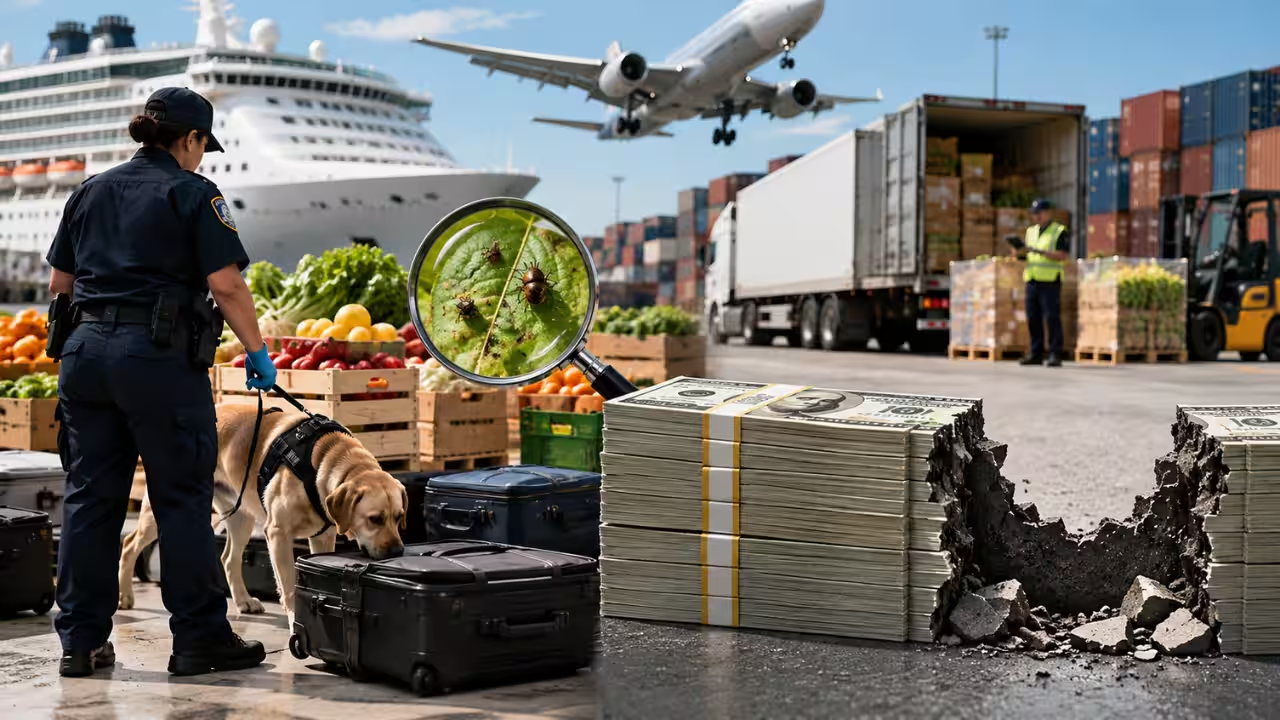
In 2011, the United States spent $861 million inspecting travellers and cargo for agricultural pests, but fees collected left a shortfall of more than $325 million. The funding gap stemmed partly from federal laws restricting which passengers and transport operators could be charged, alongside weaknesses in fee collection and differences between agency costs and revenue. According to the Government Accountability Office (GAO), the programme, jointly administered by the US Department of Agriculture and Customs and Border Protection, aims to intercept foreign agricultural pests and prevent prohibited materials from entering the country. Later reforms addressed some gaps, but legal restrictions remained.Why did US agricultural inspection fees fall short of costsThe GAO identified restrictions on the government’s fee-setting authority as one of the reasons for the shortfall. APHIS could not charge every person entering the United States, including pedestrians, under its authority. The agency was unable to recover the costs of those inspections by charging other parties. The report further identified commercial buses, private vessels and private aircraft as categories for which the existing legal framework restricted the collection of fees to cover passenger inspection costs.APHIS also chose not to charge certain passenger groups, citing difficulties associated with collecting small fees. These limitations meant that some inspection costs continued to be covered through federal appropriations rather than user fees. The GAO stated that additional legal authority would be necessary to recover all programme costs through fees. In its recommendations to Congress, the agency called for changes that would allow the Secretary of Agriculture to set rates covering the programme’s aggregate estimated costs and extend fee authority to additional transport categories.Why did CBP receive only 60% of fees despite covering over 80% of costsThe report also identified a mismatch between the costs incurred by the two agencies and the revenue they received. In 2005, APHIS and CBP had agreed to distribute AQI fee collections in proportion to each agency’s share of programme costs. However, the GAO found that this arrangement was not reflected in the fiscal year 2011 figures. CBP incurred more than 80% of total programme costs but received only 60% of fee collections. APHIS, meanwhile, incurred 19% of costs and retained 36% of collections.CBP covered the difference between its AQI expenditure and its share of fee revenues through its annual appropriation. APHIS also carried forward part of its fee collections to maintain a shared reserve with CBP against unexpected declines in revenue. According to the GAO, APHIS aimed to maintain a reserve equivalent to three to five months of programme costs, but its preliminary fee proposal would have funded the reserve above the five-month maximum. The report warned that this level would increase reliance on appropriated funds to meet current programme costs.How did missed railcar fees cost the US $13.2 million in 2010The GAO found that weaknesses in collection procedures also contributed to the funding problem. APHIS did not collect AQI fees for railcars in accordance with its regulations, resulting in a reported revenue loss of $13.2 million in 2010. CBP, meanwhile, did not verify that all fees due for commercial trucks, private aircraft and private vessels had been collected. The report said the resulting annual revenue loss for these categories was unknown.The report noted that CBP had tools available to address these collection problems but did not require their use. It recommended improvements to oversight and the allocation of inspection costs, including clearer guidance on recording officers’ work. The GAO also recommended that APHIS account for costs incurred by other federal agencies on behalf of the AQI programme when setting fees. These measures were intended to improve revenue collection and bring the distribution of fees closer to the actual costs of providing inspections.Why did US agricultural inspection fees remain insufficientIn October 2015, APHIS published a final rule introducing new AQI fee categories and adjusting existing rates. According to the GAO’s report update, the changes were intended to recover the full costs of related inspection services, including costs borne by other federal agencies. The changes included a $1.75 fee per cruise ship ticket for tickets purchased from 28 December 2015. The revised rules also removed caps on commercial cargo vessel and railcar fees and adjusted truck fees to better reflect inspection costs while retaining an incentive for trucks to use transponders.However, the changes did not eliminate every funding gap. The GAO’s update, dated February 2026, stated that Congress had not passed legislation giving the Secretary of Agriculture authority to set fees that fully recover the aggregate costs of AQI services. Rail passengers also continued to be exempt from AQI fees under the 2015 rule, leaving their inspection costs to be covered through CBP’s Salaries and Expenses appropriation. The GAO’s findings therefore identify both legal restrictions and administrative weaknesses as factors affecting the programme’s ability to fund agricultural inspections through fees.You use AI every day. Now get your AI Quotient. Take the AIQ test.
Topics in this story
- US agricultural pest inspections
- funding gap in pest control
- Customs and Border Protection
- fee collection failures
- USDA APHIS inspection fees
- agricultural pests in the US
- Government Accountability Office 2011 report
- costs of agricultural inspections
- AQI program funding
- legal restrictions agricultural inspections
Gathered from external sources. Rights to this text belong to whoever originally published it.