A £15 million London apartment linked to a Bangladeshi businessman was frozen by the High Court after shares in its owning company were reportedly transferred for £1
A luxury apartment near Regent’s Park in London has been frozen by the High Court while the UK’s National Crime Agency (NCA) investigates the source of
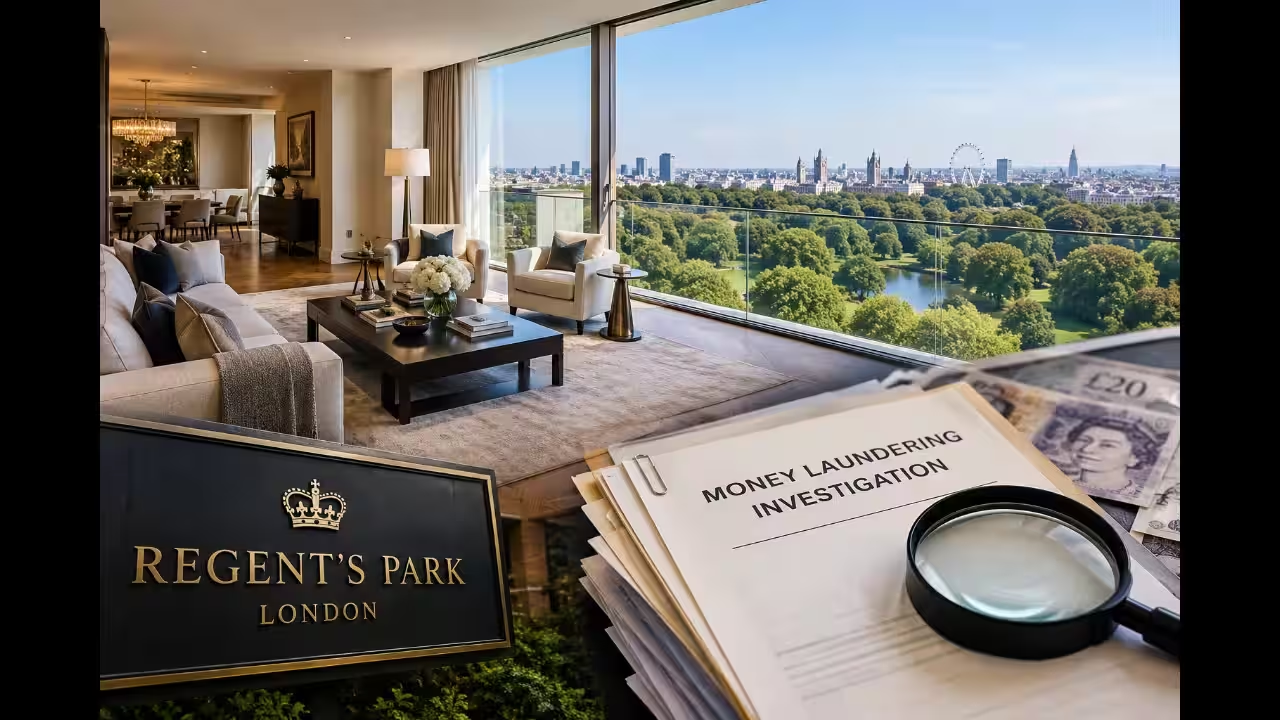
A luxury apartment near Regent’s Park in London has been frozen by the High Court while the UK’s National Crime Agency (NCA) investigates the source of the money used to acquire it. The property, valued at about £15 million, is linked to Bangladeshi businessman Anisuzzaman “Ronny” Chowdhury, brother of the country’s former land minister. The case centres on a reported September 2025 transaction in which shares in the company holding the apartment were transferred to a third party for a nominal £1, although the NCA valued the transaction at £14.95 million. Investigators allege that the arrangement was intended to conceal Chowdhury’s continued control of the property and facilitate the refinancing of loans secured against it. Mrs Justice Karen Steyn found a good arguable case that the apartment represented the proceeds of crime and granted a property freezing order. Chowdhury did not oppose the application, denied wrongdoing and said he would defend any civil recovery proceedings.Why a London apartment worth £15 million was frozenAccording to the Financial Times, Land Registry records show that Chowdhury purchased the apartment in 2023 for £12.4 million through a company called Ronny 42 Limited. The NCA subsequently investigated the funding behind the purchase as part of wider inquiries into suspected embezzlement, corruption, fraud and money laundering connected to assets associated with his family. In 2025, Chowdhury became subject to an unexplained wealth order (UWO), requiring him to explain the source of the funds used to acquire the property. Similar orders were obtained in connection with his brother, Saifuzzaman Chowdhury, Bangladesh’s former land minister, as well as the former minister’s wife and associated companies.The NCA later applied for a property freezing order to prevent the apartment from being sold or transferred while its investigation continued. At the High Court hearing, Mrs Justice Karen Steyn found a good arguable case that the property represented the proceeds of crime and granted the order. This is a finding that the legal threshold for the order was met, not a final determination that the property was criminal proceeds. Chowdhury’s legal representatives did not oppose the application. Speaking to the Financial Times, he denied attempting to conceal his ownership and said the property had been transparently disclosed to investigators. He also said he had “no business relation” with his brother and denied that his wife and children were involved in the matter. He said he would vigorously defend any civil recovery proceedings brought by the NCA. The agency’s evidence described the apartment as Chowdhury’s principal UK residence. The property remains subject to the court’s order while the investigation and any subsequent recovery proceedings continue.The reported £1 share transfer and the DBS loan disputeThe company transaction is central to the investigation. In September 2025, shares in the company holding the apartment, renamed PNN UK Properties, were reportedly transferred to a third party for £1. The NCA valued the wider transaction at £14.95 million, close to the apartment’s estimated market value. In submissions to the court, the NCA described the transfer as an “arrangement of convenience” connected to refinancing loans secured against the apartment from Singapore-based DBS Bank. The agency alleged that the structure was intended to facilitate refinancing while concealing Chowdhury’s continued control of the property and allowing his wife and 2 daughters to regain control.The court also heard that the loans had not been refinanced and that DBS was pursuing repossession following a loan default. The NCA’s concerns about the ownership arrangements and the outstanding lending formed part of the case for freezing the property. The reported £1 price needs to be distinguished from the agency’s valuation of the transaction as a whole. A company can own a property while its shares change hands, meaning that the property may remain registered in the company’s name even as control of the company changes. Investigators therefore examine the underlying ownership arrangements, the financial purpose of a transfer and who ultimately benefits from it. The allegations about the transaction have not been finally determined through civil recovery proceedings. Chowdhury has denied wrongdoing and said he intends to challenge the allegations against him.How unexplained wealth orders work in the UKUnexplained wealth orders are investigative tools available under the Proceeds of Crime Act 2002. They allow specified enforcement authorities to require individuals or companies to explain the source of funds used to acquire particular assets when the statutory conditions are met. Under the legislation, failure to comply with a UWO without reasonable excuse creates a rebuttable presumption, in subsequent civil recovery proceedings, that the property is recoverable. This does not automatically transfer ownership to the state or establish criminal guilt. The authorities must pursue the relevant legal process to recover an asset.A property freezing order serves a different purpose: it prevents the property from being sold or otherwise dealt with while the investigation or civil recovery process proceeds. The NCA has used unexplained wealth orders in other high-value property investigations. In 2019, it obtained orders concerning properties in London linked to individuals associated with a former Kazakh government official. However, in National Crime Agency v Baker, the High Court discharged the relevant unexplained wealth orders and related interim freezing orders on April 8, 2020, after finding that the statutory requirements had not been met. The case illustrates that these investigative powers remain subject to judicial scrutiny.In the Regent’s Park case, the next steps will depend on the evidence concerning the source of the purchase funds, the company’s share transfer and the outstanding DBS loans. The property freezing order preserves the apartment while the investigation continues, but the ultimate question of whether it can be recovered as criminal property remains to be resolved through the civil process.You use AI every day. Now get your AI Quotient. Take the AIQ test.
Topics in this story
- High Court London freeze apartment
- Anisuzzaman Chowdhury investigation
- crime proceeds investigation UK
- National Crime Agency unexplained wealth order
- Bangladeshi businessman property investigation
- chowdhury
- Regent’s Park luxury apartment
- Chowdhury family corruption allegations
- money laundering property freeze
- DBS Bank
Gathered from external sources. Rights to this text belong to whoever originally published it.