Rebuilding US foreign policy after Trump
Following a stinging defeat for Republicans in the midterm elections driven by opposition to the Iran war and tariff policies, the incoming Congress is expected to attempt to restrain or reverse several of President Trump’s foreign policy initiatives.
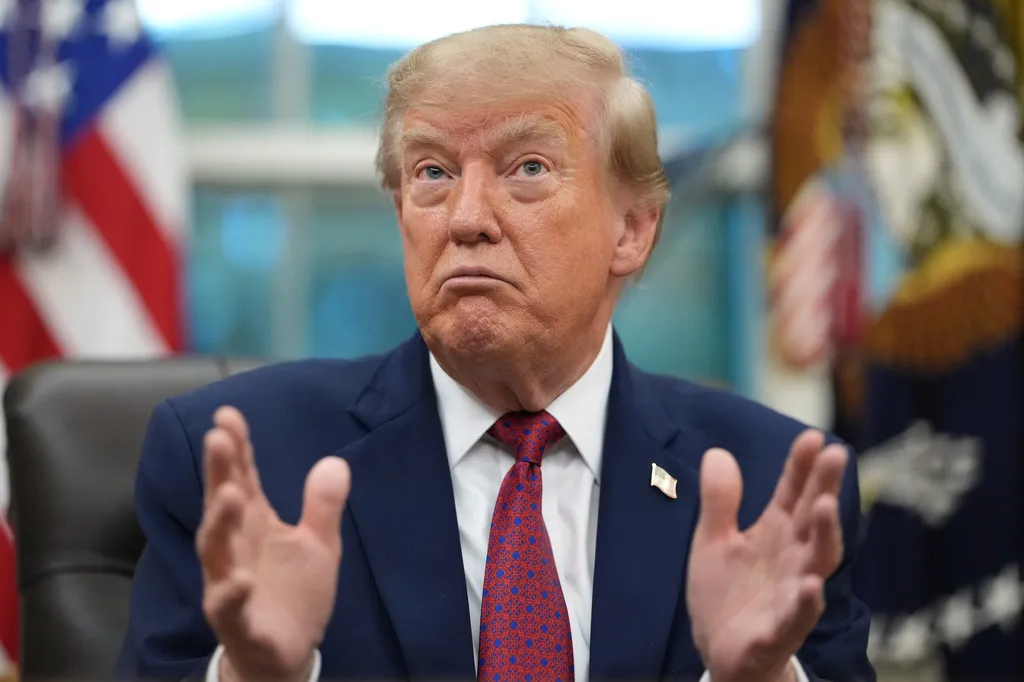
The American people have spoken and issued a stinging repudiation of the Trump administration in the midterm elections.
Already, Vice President JD Vance has laid blame for his party’s poor performance on two areas of foreign policy, the Iran war and its Israel policy. Wider issues of affordability and the Trump administration’s policy on tariffs also likely loomed large in voters’ decisions.
Since returning to office, President Trump and the vocal advocates of his “America First” agenda have dominated the foreign policy debate. Ironically, part of Trump’s legacy will be the weakening of American support for policies that he pursued — from tariffs to risky military interventions — making it less likely that future presidents will pursue them. But some of Trump’s policies will nevertheless be hard to reverse, and repairing the damage will be a multi-presidential effort.
While both Trump and former President Joe Biden were willing to increase tariffs on Chinese imports, the second Trump administration took the extraordinary step on “Liberation Day” of imposing tariffs on allies and rivals alike. Trump also further unnerved close allies by talking up territorial acquisition of Greenland and even making Canada the 51st state. Wavering support by President Trump for Ukraine in its fight to ward off Russian aggression, along with antagonism to NATO, has further accentuated a rupture in long-standing U.S. support for its European allies. The Trump administration’s elimination of the U.S. Agency for International Development also flew in the face of America’s established role as the leading provider of humanitarian and foreign assistance.
Many of these foreign policy choices are unlikely to endure. The inflationary effects of rising gas prices and the unpopular war of choice against Iran led to an electoral wipeout for Republicans in the midterms. It is hard to imagine another president imposing tariffs indiscriminately as the Trump administration has done, particularly on close trading partners like Canada and the European Union. The increasing competitive threat of China’s exports in areas like critical minerals, batteries and autos is not a problem the United States can address on its own.
Moreover, there is limited domestic support for key aspects of Trump’s foreign policy agenda, including tariffs, territorial expansion, the NATO alliance, and Ukraine, according to recent surveys of the American public and U.S. foreign policy leaders conducted by the Chicago Council on Global Affairs.
The American public is only fitfully preoccupied by foreign policy, but after major policy failures like the Iran war, the American people have reacted by punishing leaders or their political parties. While the current moment may be dominated by affordability and domestic politics, choices made on foreign policy — on tariffs and Iran — loomed large in the midterms. Current international policy failures suggest another disciplining moment is likely.
With the Congress flipping after the midterm elections, we are likely to see efforts to restrain or reverse some of Trump’s foreign policy excesses. At the very least, Congress will likely use its oversight functions to hold the administration’s foreign policy architects to account, including beginning impeachment proceedings against Defense Secretary Pete Hegseth. Congress may also move to more vigorously restrict presidential leeway regarding the use of tariffs and to ensure that the executive branch respects Congress’ appropriations power over foreign aid. This week’s rebuke of the Trump administration at the very least will also increase pressure on the administration to end the Iran war.
Having said that, some areas of Trump’s foreign policy will be difficult to undo in the short run. Simply returning to the pre-Trump internationalist status quo of support for free trade and democracy, multilateral alliances, and freedom of navigation on the high seas is not an option either. Too much damage has been done.
Reconstituting funding for foreign aid programs will also be politically fraught, as Republican voters and Republican foreign policy leaders remain hostile to many types of foreign assistance, though are more open to humanitarian assistance. On immigration and climate change, too, there are wide partisan differences both among voters and leaders, suggesting that policy debates may devolve into partisan feuds.
It won’t be easy to rebuild the foundations of U.S. foreign policy after a second Trump presidency. The legacy effects of another forever war may sap Americans’ willingness to remain engaged in the Middle East, with the Strait of Hormuz constantly threatened by a strengthened Iran. Russia’s war with Ukraine appears no closer to an end, though President Trump has tried to tilt the balance towards Russia.
On China, the American default has been a reflexive hawkishness, but other countries are loath to choose between the U.S. and its major rival. Meanwhile, the American public (and U.S. munitions) may be in no shape to prepare for another conflict.
In this context, American leaders will have to articulate at home why engagement with the world is important and what it should look like. Internationally, greater consistency and collaboration with allies will be essential to begin to gain back the trust of America’s long-standing partners, but it will take more than four years before America is once again more admired than feared across much of the world.
Jonathan Monten is associate professor in the Department of Political Science at University College London. Jordan Tama is a professor in the Department of Foreign Policy and Global Security at American University and senior nonresident fellow at the Chicago Council on Global Affairs. Joshua Busby is a professor in the LBJ School of Public Affairs at the University of Texas at Austin and senior nonresident fellow at the Chicago Council on Global Affairs.
Topics in this story
Gathered from external sources. Rights to this text belong to whoever originally published it.