Analysis: With UNIFIL set to leave, Lebanon seeks U.N.-backed successor
Lebanon wants to preservie a United Nations role in the south after the current peacekeeping force leaves, Lebanese and Western analysts said.
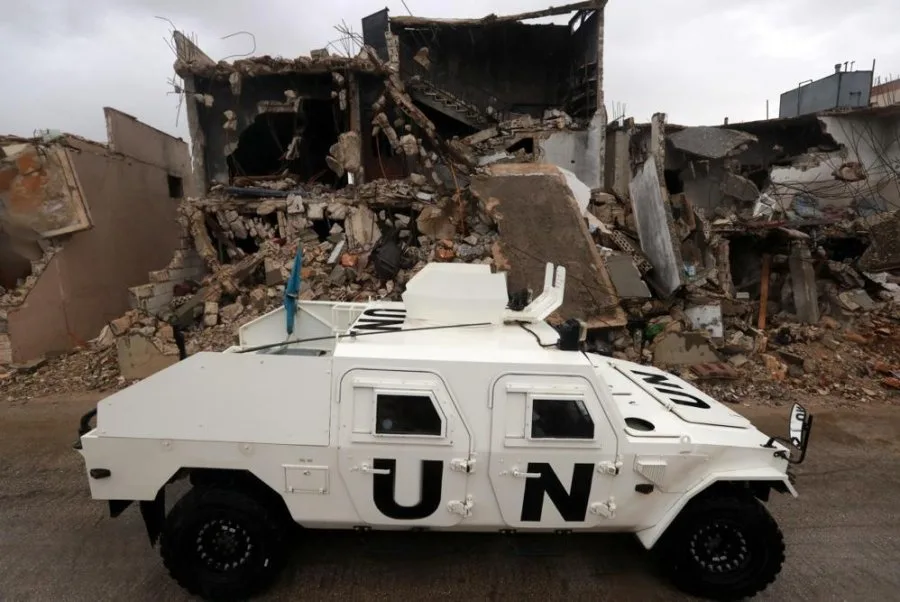
BEIRUT, Lebanon, Aug. 25 (UPI) -- Lebanon, struggling to secure an Israeli withdrawal from occupied parts of southern Lebanon and restore its sovereignty, is facing another challenge: preserving a United Nations role in the south after the current peacekeeping force leaves, Lebanese and Western analysts said.
Without an U.N.-mandated international presence, Lebanon risks losing an important source of protection and leverage and could find itself increasingly at the mercy of Israel and the United States -- the two countries that have pushed hardest to terminate the U.N. peacekeeping mission.
The issue is gaining urgency, as the mandate of the U.N. Interim Force in Lebanon, or UNIFIL -- originally established after Israel's first invasion of southern Lebanon in 1978 to help confirm an Israeli withdrawal and assist the Lebanese government in re-establishing its authority -- is to expire at the end of this year.
Ironically, UNIFIL, tasked with maintaining peace in southern Lebanon for nearly five decades, is scheduled to leave as Lebanon once again negotiates -- this time through U.S.-brokered direct talks with Israel -- a new Israeli withdrawal and the future security of its southern territory.
Fearing a potential vacuum after multinational peacekeepers depart, Lebanon -- backed by a petition signed by 86 parliamentarians -- is pushing to keep UNIFIL in place, despite knowing that the effort will face opposition from Israel and the United States, while simultaneously seeking support for a replacement force under U.N. auspices.
Israel has strongly criticized UNIFIL for failing to fulfill its mission, accusing the force of allowing Hezbollah to strengthen its military presence in southern Lebanon since the 2006 war -- in violation of U.N. Security Council Resolution 1701. It is therefore unlikely to agree to any U.N. role in the future.
For the United States, terminating UNIFIL's role fits within President Donald Trump's broader efforts to sideline the U.N. and diminish its role in addressing global crises. Washington also appears to favor a new mechanism outside the existing U.N. framework.
However, blaming UNIFIL for the situation in southern Lebanon overlooks the complex realities on the ground, as well as the responsibilities of the warring parties and the international community.
Lebanese retired Maj. Gen. Abdul Rahman Chehaitli, who previously served as a liaison officer between the Lebanese government and UNIFIL, said Israel and Hezbollah have been preparing for their next confrontation since the 2006 war, rather than demobilizing or laying the groundwork for lasting peace.
While Israel was strengthening its intelligence, targeting, defensive and ground war capabilities along its northern front, Hezbollah was rebuilding and expanding its military capabilities, including weapons stockpiles, defensive positions and underground infrastructure in southern Lebanon in anticipation of another Israeli invasion.
"All the countries were seeing these preparations," Chehaitli told UPI, dismissing Gaza and Iran as "superficial pretexts" for the wars and escalations between Hezbollah and Israel in 2023 and 2026.
He noted that UNIFIL, which grew significantly in size and scope after the 2006 Israel-Hezbollah war, "did not fail in its mission, but rather carried out its duties," intervening directly on numerous occasions to prevent military escalations.
But, he said, the peacekeeping force could not stop a war once either side had made the decision to fight, adding, "It cannot prevent a war made by a decision."
Chehaitli, who was involved in post-2026 negotiations on the implementation of Resolution 1701 aimed at ending hostilities, said UNIFIL also played a role in managing border disputes between Lebanon and Israel and assisting the Lebanese Army and residents of southern Lebanon.
However, the challenges facing UNIFIL were numerous, reflecting the limitations of its mandate and the powers it was actually given.
UNIFIL spokesperson Kandice Ardiel said the role of peacekeepers has never been to enforce Resolution 1701, but to support the parties, monitor and report on its implementation.
"The main challenge has always been the incomplete commitment by Lebanon and Israel implementing their obligations under Security Council resolutions," Ardiel told UPI. "Over the years, continued violations have undermined trust and complicated efforts to achieve lasting stability."
She also cited the challenges posed by conflict, unauthorized weapons in southern Lebanon and the Israeli presence north of the Blue Line -- the U.N.-identified line of withdrawal used to confirm Israel's pullout -- as well as restrictions on peacekeepers' freedom of movement and attacks against them.
However, Ardiel emphasized UNIFIL's "important contribution" to security and stability along the Blue line for almost 17 years thanks to the peacekeepers' "visible presence," liaison and coordination role to help prevent unintended escalation during periods of tension.
"From 2006 to 2023, the Blue Line saw the longest period of relative stability in recent history, allowing a whole generation of young people to grow up there without knowing conflict," she said.
Israel's intensive military campaign has killed 8,915 people and wounded 30,543 since October 8, 2023, according to a tally released by Lebanon's Ministry of Information last Friday. It caused massive destruction to property and infrastructure, with some 70 border villages in southern Lebanon reduced to rubble and rendered uninhabitable.
An important aspect of UNIFIL's mission has been the impartial recording of what happens on the ground, including violations by the parties. Its departure, therefore, would mean losing a credible witness whose reports provide an independent record of events and violations in southern Lebanon.
As the recent war revealed the extent of Hezbollah's military presence south of the Litani River, including an extensive network of underground tunnels, questions emerged over whether -- and to what extent -- UNIFIL should be held responsible.
Ardiel said U.N. peacekeepers had, over the years, reported locations and activities of concern to the Lebanese authorities and the Security Council, noting that they "had detected and reported suspected tunnel infrastructure" before the escalation of the conflict in late 2023. However, they were not authorized to enter private property without the necessary permission.
Hezbollah, for its part, would mobilize civilian supporters to block their access, a practice that became increasingly common, according to observers.
David Wood, a senior Lebanon analyst at the International Crisis Group, emphasized that UNIFIL never had a mandate to actively enforce disarmament by confronting Hezbollah. Rather, its role was to support the Lebanese Army, which, "for its own reasons," has not sought to confront Hezbollah or force it to withdraw from the area south of the Litani River.
In fact, the Lebanese Army needed the go-ahead from the political authorities, which for years supported Hezbollah's powerful armed presence and its claim to maintain an armed resistance, according to observers.
Today, Lebanon's new leadership is keen to restore its sovereignty at a time when Hezbollah has been significantly weakened by the war, while Israel has shown little willingness to relinquish the military upper hand and gains it achieved during its campaign against the Iran-backed group.
However, ending the war and securing Israel's withdrawal from southern Lebanon would require an international force on the ground -- a replacement for UNIFIL that Lebanon is discussing with European powers.
According to Wood, by far the preferable course for any new international force would be to operate under a U.N. Security Council mandate, providing "international legitimacy and backing to protect the (participating) troops," while also securing Israeli and U.S. consent.
Chehaitli warned that any new force without international cover or authority grounded in international law would leave Lebanon "at the mercy" of the United States and Israel, which "is now treating Lebanon as a weak country and imposing its conditions on it."
"UNIFIL used to put Lebanon at the same level of Israel, not as Lebanon is weak and Israel is strong, and used to be not only a witness but also a referee," he said.
He expressed concern that a new force without a U.N. mandate could face conflicts of interest among its participating countries and risk pushing Lebanon to the margins of international attention.
Topics in this story
Gathered from external sources. Rights to this text belong to whoever originally published it.