In Washington, Bob Barker spent 25 years planting 30,000 trees across 71 acres after buying land to putter around in after retiring; his former pasture is now home to endangered frogs and cougars
Discover how Bob Barker transformed a weedy pasture into a thriving forest over 25 years, creating a sanctuary for endangered species in Washington state.
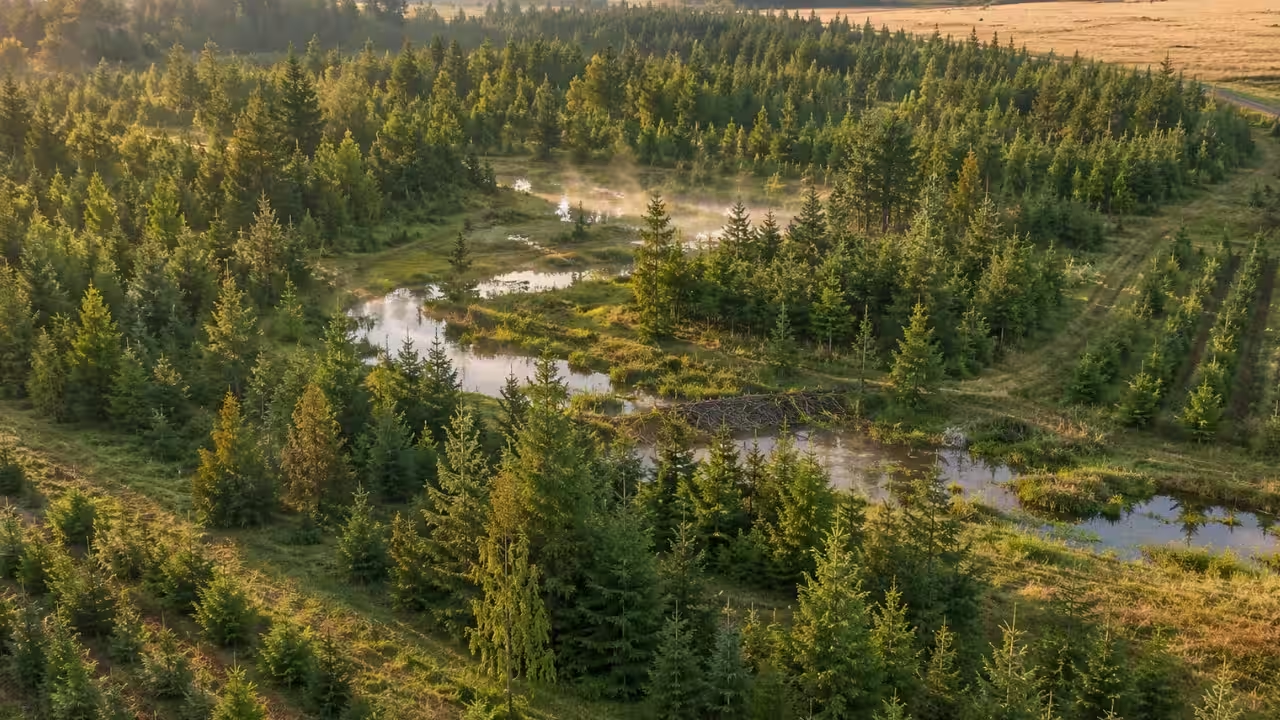
Say the name Bob Barker and most people would probably think of a TV game show. This Bob Barker is a different man whose retirement hobby grew into a forest. KING 5 reported in 2022 that he planted about 30,000 trees over 25 years on 71 acres in Washington state, and he did much of the digging himself. The land had once been a pasture. Today, the report says endangered Oregon spotted frogs, bobcats, and families of cougars have been seen there. It shows what one person's slow, steady work can do to a patch of countryside.A retirement plan that started small Barker did not set out to make headlines. According to the Bellingham Herald, after retiring in 1995, he and his wife, Kazuko, moved to Washington and started looking for a piece of land to “putter around in” and plant trees. He ended up choosing land near the South Fork of the Nooksack River. The land had been logged some time ago and became a wet pasture covered in weeds, blackberries and reed canary grass. Barker was not a lifelong forester. He once worked at a logging camp when he was young, but he spent most of his career in biochemistry. It took him 25 years of steady work to turn that weedy field into a forest.Voles, beavers and plenty of patience The first attempt didn't go well. A hired crew planted the first trees, but voles and rabbits nibbled off and killed most of them. Barker tried again with fresh tricks. He deterred rodents with blue plastic tubes wrapped around young trees, built fences to keep beavers from chewing on them and planted them on raised mounds of soil because of the high water table. KING 5 said Barker figured he could plant about 50 trees an hour with his spade. He also signed up for the conservation reserve enhancement programme, a government-funded programme that pays for planting native trees and shrubs along creeks and ditches.Why a rare frog turned upThe Washington Department of Fish and Wildlife’s Draft Washington State Oregon Spotted Frog Recovery Plan, written by Lisa Hallock in 2013, says the frog was classified as endangered in Washington in 1997. It further states that the frog breeds in shallow waters up to 30 centimetres deep, with short plants and full sunlight. At that time, there were only six Washington river drainages where the frogs survived. In the US Fish and Wildlife Service's final rule, the frog is listed as threatened under federal law effective 29 September 2014. The rule lists restoration planting, together with reed canary grass, among the factors that could affect water temperature and vegetation structure for the frog. So trees alone don't explain the frogs. Barker’s restoration helped recreate some of this habitat, and active beavers helped by opening up parts of the forest.A living legacy for the family The Herald reported Barker’s work earned him the Washington tree farm program’s 2022 tree farmer of the year award. Most of the routine care is now handled by his daughters and sons-in-law. Strict rules on logging by streams mean much of the land can no longer be cut for timber. His son-in-law, Dave Tempero, summed it up: “They were all planted by Bob.” The wildlife news is a bonus, not a guarantee, as planting trees does not help every species. Still, a retirement project built one seedling at a time turned a worn-out pasture into a home for wildlife, including a rare frog.You use AI every day. Now get your AI Quotient. Take the AIQ test.
Topics in this story
Gathered from external sources. Rights to this text belong to whoever originally published it.