Between 1984 and 1989, Oregon recycled the old asphalt on about 672 km (420 miles) of country roads, and over 75 percent of those projects were later rated fair or better
Discover how Oregon successfully recycled old asphalt on country roads between 1984 and 1989, achieving over 75% success rating. Learn about the cold in-place recycling method and its benefits for low-volume roads.
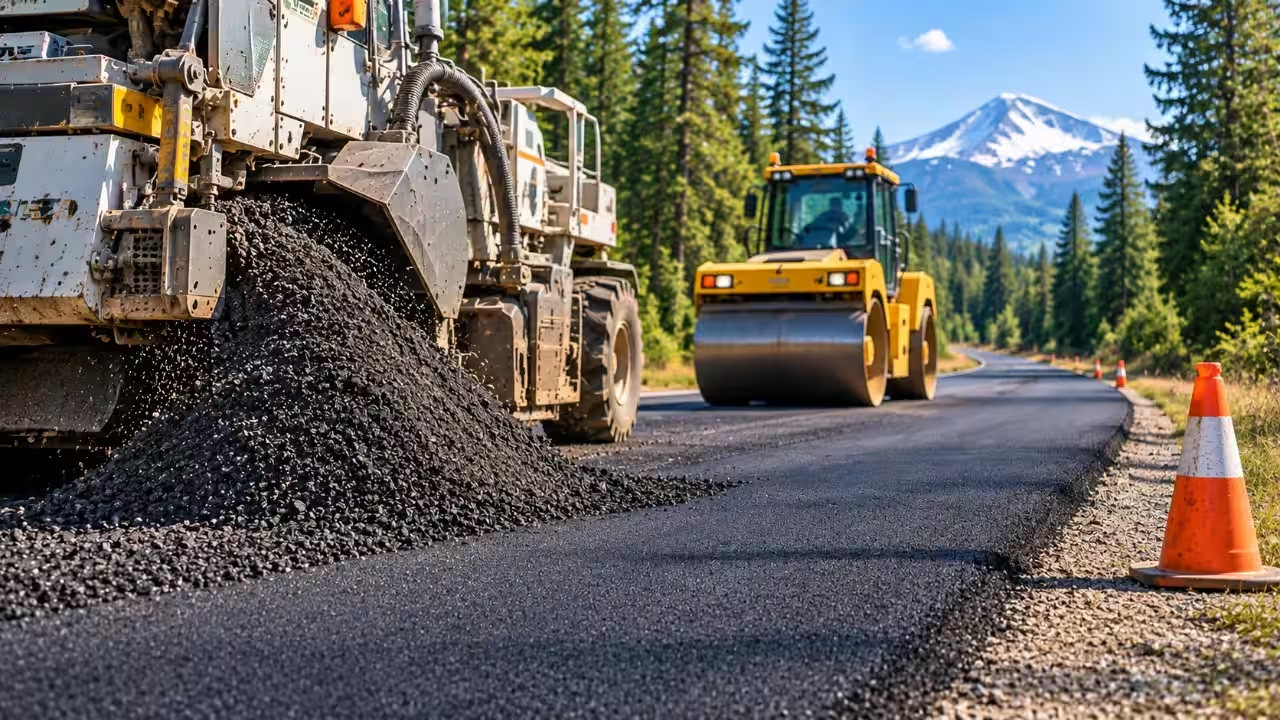
Few things test a driver's patience like a cracked, bumpy country road. In the 1980s, Oregon found a way to give these roads a second job. The Federal Highway Administration’s guide, ‘User Guidelines for Waste and Byproduct Materials in Pavement Construction,’ says that between 1984 and 1989 the state recycled the old asphalt on about 672 km (420 miles) of low-volume roads, the kind people call country roads. More than 75 percent of those projects were later graded fair or better. That's not a perfect score. Still, it shows how recycling worn pavement can be a good, workable option for roads with lighter traffic.How the recycling actually works The method is called cold in-place recycling. It may sound complicated, but it’s actually pretty simple. Instead of removing old pavement, the worn-out top layer is ground up on site. The federal guide states that this fix is used when the depth of the damage is about 4 to 6 inches (100 to 150 mm). The crushed asphalt is mixed with new asphalt in either liquid or foamed state without any heating. Then the mixture is placed back in place and compacted with heavy rollers. The work is done on-site, so there are no long truck trips to a far-away plant. After a couple of weeks of curing in favourable conditions, according to the federal guide, a hot mix overlay is added on top. In most cases in Oregon, however, as stated in a 1991 article, the recycling layer was sealed with a sand or chip seal coating.Why quiet country roads were a good match Oregon kept this work on lightly travelled roads. In their 1991 Transportation Research Record paper, authors Todd Scholz, R. Gary Hicks, David Rogge and Dale Allen explained that every Oregon project was partial depth recycling. These roads generally carried fewer than 2,000 vehicles per day. Projects were also completed on county roads and US Forest Service roads. The authors also reported construction costs of approximately $1.70 to $2.10 per square yard. A normal 2-inch asphalt overlay was about $2.75 to $4.00 per square yard. These figures reflect prices at the time. The method has been studied closely by the Oregon State Highway Division and Oregon State University since 1986. The authors concluded that it seemed to be a viable option for low-volume roads. The federal guide also said that taking old asphalt to a plant on small roads will likely cost more. This makes fixing the road in place all the more tempting.What the ratings do and do not tell us The fair or better rating is useful, but it does not always guarantee perfect roads. The federal guide was careful about this point. It says that the cold recycled mixes were not recommended for use as a wearing course, which means that it must be protected by an overlay. Choosing the right road is also quite important. A road with a failing base or subgrade cannot be fixed by simply recycling the surface. The guide noted that eight projects in Pennsylvania received good to satisfactory ratings if a double seal coat was applied over the recycled mix. It also explained that more performance information was needed on resistance to rutting, fatigue and durability. The administration guide further added that more study was also needed on how cold recycled mixes would perform on busier roads. Oregon’s story is not about some magic fix. It's about a practical tool that, when crews chose the right roads, got fair or better ratings on most projects. That's good news to anyone who has dodged potholes on a back road.You use AI every day. Now get your AI Quotient. Take the AIQ test.
Topics in this story
Gathered from external sources. Rights to this text belong to whoever originally published it.