US Supreme Court rejects Trump’s plans on postal ballots: Why it matters
Trump has repeatedly criticised mail-in votes and has attempted to restrict them ahead of the midterms.
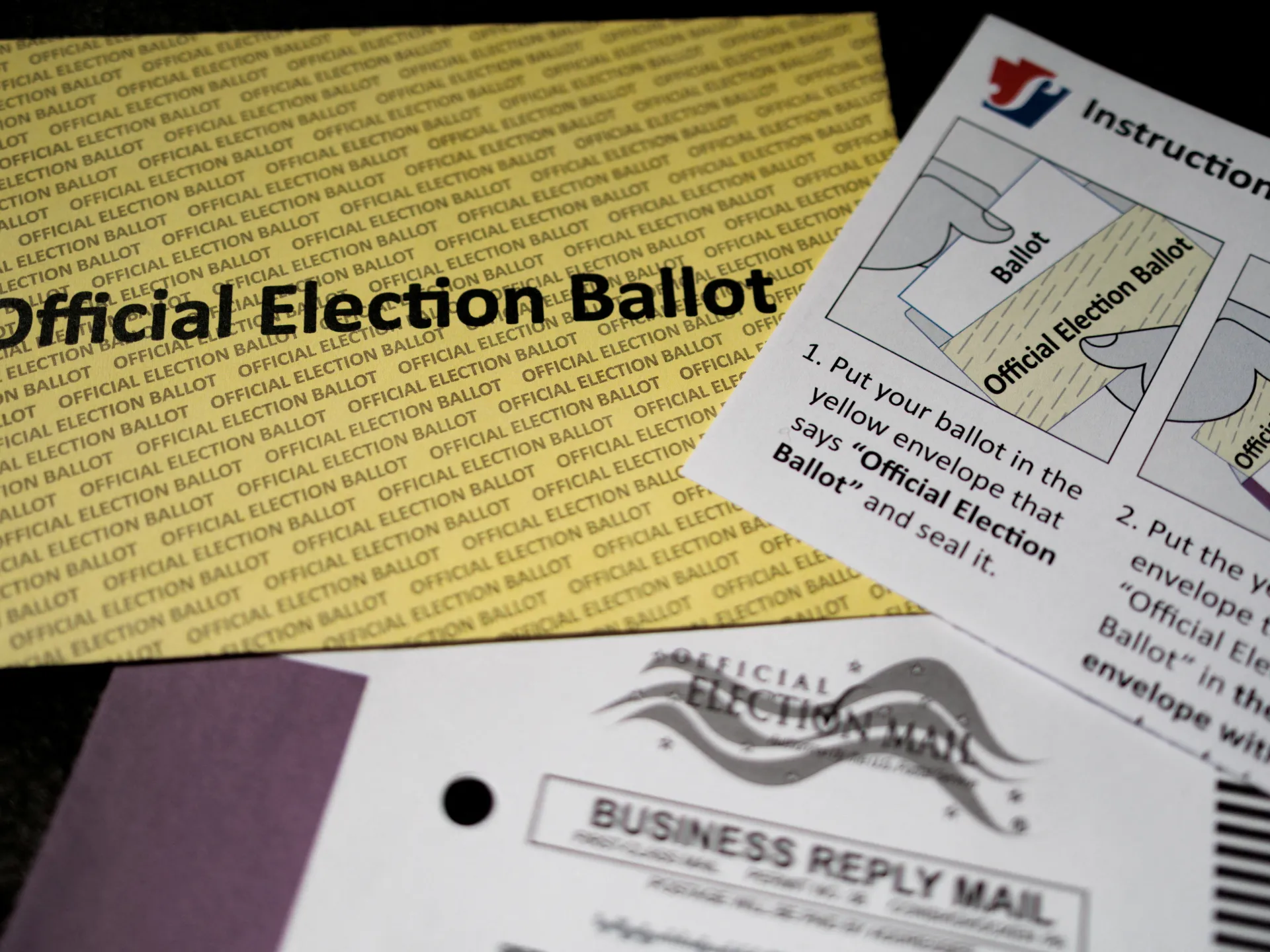
The United States Supreme Court has rejected Donald Trump’s bid to restrict voting by mail ahead of the November midterm elections, in a setback to the US president’s efforts to change rules governing elections.
The ruling on Monday by the conservative supermajority court allows states to continue sending out mail ballots as they have done for years, dealing a blow to Trump’s plans to stop the ballots before the elections and halting possible last-minute legal actions as voting begins in some states.
Trump has repeatedly cast doubt on the security of mail-in voting, citing debunked claims of widespread election fraud associated with it. That is despite the president voting by mail himself, including during the 2024 election.
Mail ballots, in place for decades, have been found to increase voter turnout and currently account for a third of all votes cast in the US.
Here’s what we know about the legal challenge to overturn them:
Voting by post works by sending ballots to the homes of registered voters, who then mail them back before a deadline.
Eight states, several of them Democratic-leaning – California, Colorado, Hawaii, Nevada, Oregon, Utah, Vermont and Washington – as well as the District of Columbia, allow all elections to be conducted entirely by mail.
Others only allow smaller elections to be conducted by mail.
Although there are cases of forgery or repeat voting, they are rare and amount to just four in 10 million mailed votes, according to the Brookings Institution.
What has Trump said about the mail-in votes?
Trump falsely blamed his 2020 presidential election loss on mail-in voting fraud. He and his supporters also opposed changes made during the COVID pandemic to expand mail-in voting.
During the 2020 Republican National Convention, Trump called mail-in voting changes “the greatest scam in the history of politics”.
His attempt to push the SAVE America Act, which calls for sweeping voting laws, has stalled in the US Senate. The bill, passed in the House of Representatives in February, faces opposition over concerns that millions of voters will be disenfranchised.
In March 2026, Trump signed an executive order directing the US Postal Service to take control of mail voting by designing new envelopes with special barcodes that would allow the federal government to ensure ballots are only from eligible voters.
For the midterms, that move would force all states to adopt a uniform envelope style in a short time.
The order also required states to provide the US Postal Service with a list of eligible voters ahead of elections. Several government departments, including Homeland Security and US Citizenship and Immigration Services, would also have the voters’ lists.
The postal agency was additionally empowered to deny mailed ballots if they did not comply with new standards or were not associated with registered voters on the states’ lists.
Democrats and activists challenged the order in several courts, resulting in a series of back-and-forth rulings between May and August.
US District Judge Indira Talwani imposed an injunction against the rule in June on the basis that it likely violated the US Constitution. Talwani also noted in her injunction that Trump’s executive order would be impossible to apply when the midterms were already so close.
But her ruling was overturned by the conservative-majority Supreme Court in late August in a temporary judgement.
The Supreme Court had not decided at the time whether Trump’s move was constitutionally legal. Rather, it only sided with the Trump administration on procedural grounds after the administration argued that Democrats sued too soon.
In the latest and final decision, the Supreme Court refused to lift Judge Talwani’s injunction.
In a brief written order that did not go into detail, the court noted that the administration was likely to fail in its push to restrict mail-in votes ahead of the midterms.
Justice Brett Kavanaugh, who was appointed by Trump, voted with the majority against the administration, though he indicated he could support the policy at a later stage. Two judges, Samuel Alito and Clarence Thomas, dissented.
Critics have long warned that restricting mail-in ballots could disenfranchise some voters who typically rely on this method.
It could also disrupt the delivery of mailed votes, as some states, including Alabama, North Carolina and Wisconsin, have begun sending in midterm ballots.
Topics in this story
Gathered from external sources. Rights to this text belong to whoever originally published it.