UK oil refinery broke toxic pollution limits dozens of times
Pollution was spilled into local rivers and protected sites, documents shared with the BBC suggest.
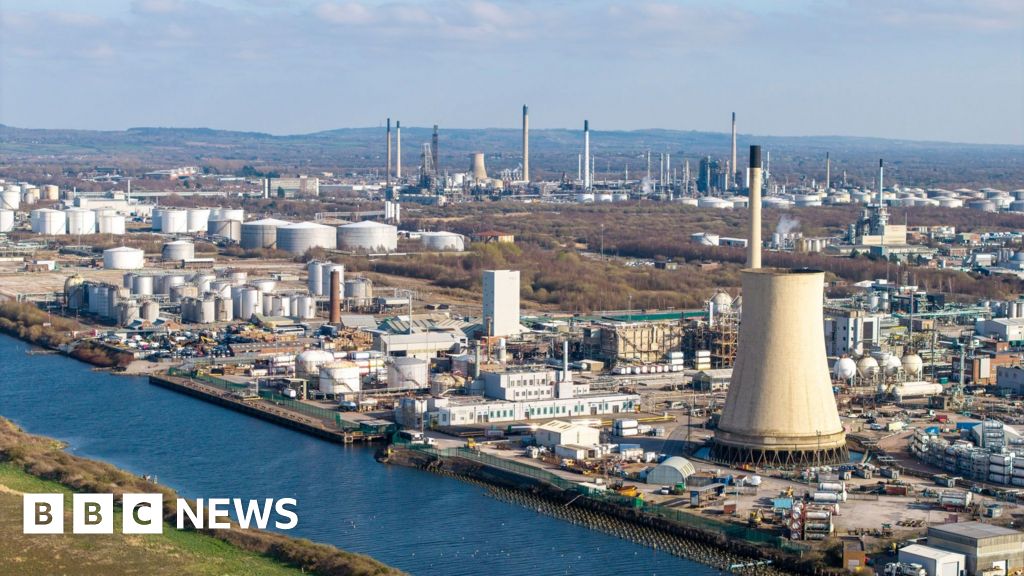
One of the UK's biggest oil refineries spilled pollution into local rivers and the Mersey Estuary on dozens of occasions in 2023 and 2024, documents shared exclusively with the BBC suggest.
EET Fuels, formerly known as Essar, which runs Stanlow refinery, pleaded guilty this year to 12 charges of breaching environmental law between 2018 and 2020.
But documents obtained by investigative journalists from SourceMaterial describe other breaches from the refinery in Ellesmere Port, Cheshire, with toxic chemicals and oil regularly spilled into the waterways and even groundwater.
EET Fuels said it "takes its environmental responsibilities extremely seriously".
The Environment Agency (EA) has confirmed that it is investigating the breaches.
The Stanlow oil refinery is one of only four remaining refineries in the UK and processes 10 million tonnes of crude oil each year - producing around 18% of the country's fuel for road transport like cars and trucks.
EET Fuels, which bought the refinery from Shell in 2011 for £842m , holds a permit to operate the site.
This says it can discharge controlled amounts of oil and chemicals into the air and waterways. However, it must make efforts to limit pollution to the environment and harm to humans.
But reports from the EA into activities at the refinery, uncovered by environmental journalists SourceMaterial, show that in 2023 and 2024 the permitted levels for chemical releases were exceeded hundreds of times.
The regulator has determined this meant EET Fuels broke its permit conditions 58 times over the two-year period - which could amount to an illegal offence.
The documents show the spills included toxic chemicals such as cyanide, benzene, and heavy oils - into the air and local waterways like Thornton Brook and the River Gowy which connect onto the River Mersey Estuary.
The Estuary is a Site of Special Scientific Interest (SSSI) and home to endangered species including dolphins and a breeding ground for rare birds.
"Species like dunlin, blacktail, godwit and red shank will travel all around the world to feed and roost in the land around the River Mersey," explained Charlotte Harris, chief executive of Cheshire Wildlife Trust.
Harris said this has only been possible because organisations, including the Wildlife Trusts, have undertaken years of pollution clean up from legacy industry in the area.
"We've seen the Atlantic salmon return to the river and also the critically endangered European eel makes its way up the Mersey and into the River Gowy to breed each year as well," she said.
EA documents detail how pollutants like sulphur dioxide were released into the air at seven times permitted levels, cyanide into waterways like the Gowy at more than eight times permitted levels, and oil at more than thirteen times the allowed levels.
In one incident in July 2023, the company breached its permit after rainwater containing oil leaked from the site - the EA classed the event as "significant".
In its report it said there were a "significant number" of complaints from locals about the smell and further investigations indicated the oil had contaminated groundwater supplies.
EET Fuels told the BBC that the oil lost was on a "low scale" and "was strictly localised to two boreholes, all well within the Stanlow site itself".
A year later on 12 September 2024, another EA report says that oil was spilled again from the site. Over a 36-hour period more than a tonne of oil was released into Thornton Brook and spread to the Mersey Estuary.
EET Fuels reported the incident to the authorities, but it took nearly two weeks for the company to provide an estimate of how much oil was spilled - another breach of the regulations which requires this within 24 hours.
An emergency response team was organised including regulators the EA and Natural England, local port authorities and the Fisheries Authority - according to meeting documents.
Natural England (NE), which regulates SSSIs, said in one meeting: "What has gone in there is going to have some impact on the vegetation and salt marsh and there is probably still a risk of ingestion by birds."
A drone was sent up to survey the scale of the damage which revealed oil had spread for more than a mile down the river and "there was brown discolouration around the reedbed". The footage showed wading birds - including the red-listed Dunlin - in the area.
"Where we have chemical pollution the impact isn't just localised. When it enters the river system, that system is highly dynamic and high energy, which means that pollution spreads far and wide really, really quickly," said Harris.
A floating barrier was deployed to try and contain the spill.
The regulators decided that because the site was not easily reachable, the public health risk was low, but a decision was made to close local cockle beds in the Estuary while the water quality was tested by the Food Standards Agency (FSA).
The beds were given the all clear, but were closed for five weeks whilst testing took place.
Mark Taylor, CEO of the Inshore Fisheries and Conservation Authority North West, told the BBC: "The incident led to a delay in the fishers being able to derive an income from the bed".
He added that they were able to make up this income later in the season.
The incident was later categorised by the EA as a "minor" breach of the company's permit.
EET Fuels told the BBC in a statement: "Selectively chosen, historical permit exceedances from prior years in no way represent the current operational status, improving environmental performance, or governance of the refinery today."
The Environment Agency has launched a separate criminal investigation into what happened in September 2024 and told the BBC it remained "ongoing".
It said it was yet to confirm what action to take in relation to the 2023 offences.
As well as the Environment Agency's investigation, Natural England began its own investigation after the 2024 incident.
It eventually dropped this, and told the BBC: "Our assessment found that, while it was regrettable that the incident occurred, the environmental impact on the SSSI was minor."
But in internal emails Natural England told the EA its reason for dropping the investigation was it thought the company's permit to operate did not set any limits for how much oil could be released - despite the pollution risks.
Its officers wrote: "Thank you for sending the permit…. which verify Stanlow's stance that the storm overflow is permitted and further with no limit set to the quantity of oil released. With this in place, Natural England have decided not to take any further action."
James Wallace, chief executive at charity River Action, said these documents suggest "we're seeing a downgrading of pollution incident[s]... where evidence is being ignored."
When asked about its reasons for dropping the investigation, Natural England said its role was to assess the impact on the protected site and that any questions about "compliance with the environmental permit are matters for the Environment Agency".
EET Fuels is due to be sentenced next month for the previous permit breaches between 2018 and 2020.
Wallace said the fact this case took up to eight years to reach the courts and the company appears to have breached environmental law repeatedly, calls into question the effectiveness of the regulators in deterring environmental pollution.
"We need to see consistent law enforcement, and we need to see the threat of punitive measures by all industries, whether it's the water industry or oil refineries," Wallace said.
Harris from Cheshire Wildlife Trust agreed the current regulations were "not solving the problem at source at the moment".
"So when a business does impact a river like this, it is absolutely vital that they're held to account. But going further than that, it shouldn't be happening in the first place. We really do need to get a grip of how we treat our river systems," she added.
EET Fuels, also told the BBC: "[It] has backed its environmental commitments with decisive action, investing over £24 million in major wastewater infrastructure alone and delivering a measurable, upward trend in Environment Agency compliance ratings, improving from an F rating in 2023 to an E rating in 2024 as major capital projects came online."
Topics in this story
Gathered from external sources. Rights to this text belong to whoever originally published it.