In March 2020, researchers lowered 3D-printed concrete reefs into Poole Bay; after 2.5 years, the structures supported 118 species, including rare native oysters
Discover how innovative 3D-printed concrete reefs in Poole Bay became a thriving habitat for marine life, supporting 118 species, including the rare native oyster, after just 2.5 years underwater.
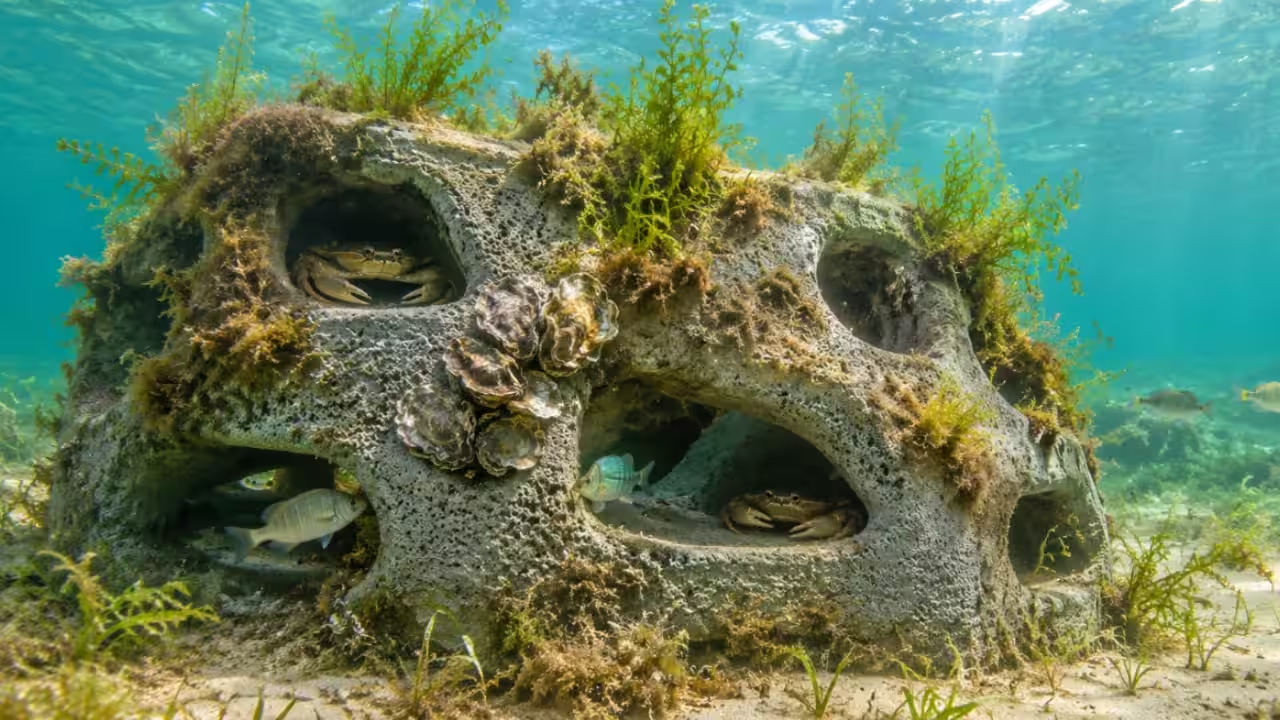
Imagine throwing a concrete block into the ocean and returning a few years later to find it packed with marine life. This is what happened in Poole Bay, on the south coast of England. Researchers lowered nine 3D-printed reef blocks into the water in March 2020. The structures were supporting 118 species after 2.5 years underwater, according to Bournemouth University's project page. The list included rare native oysters.Why the sea needs new homes Natural reefs are one of the most diverse ecosystems in the world, but they are disappearing fast. Bournemouth University cited overfishing, pollution and disease as some of the reasons. It might take many years for stricter government rules to arrive, so scientists had been looking for alternatives. One idea was to create artificial reefs where fish, crabs and seaweeds could live while long-term protection catches up. That was the thinking behind the 3DPARE project, an EU Interreg project to design reefs for Atlantic waters. The University of Cantabria in Spain led the project. Other partners included Bournemouth University, the University of Porto’s marine research centre CIIMAR, Portugal's sea and atmosphere institute IPMA and the civil engineering institute ESITC Caen in France. Bournemouth University researchers kept track of the reefs and identified the animals and plants inhabiting them.How the reef blocks were built3D printing allowed for more complex textures and gaps than the concrete blocks sunk at sea at the time. The project used low-impact, sustainable materials that are designed to help marine life settle. Adrian Yoris-Nobile and others described how the reef designs were developed in a 2023 paper in Construction and Building Materials. Outside the reefs, there were overhangs, and inside there were holes. The researchers tested the three cement mortar mixes and three geopolymer mortar mixes. They found that cement mortars were more suitable for reef printing. In the summer of 2018, the team conducted an initial survey of natural and artificial habitats in Poole Bay using scuba surveys and baited underwater cameras. Then nine blocks were printed at the University of Cantabria and shipped to the UK. In March 2020, a crane on a large barge lowered them into the bay. Similar blocks were sent to the sea at study sites in France, Spain and Portugal.Life moved in fast Within a few days, there were already lots of crabs that moved into the holes and tunnels. By the end of 2020, more than 40 species had been recorded, including seaweeds, filter feeders, crabs and fish. The surveys were conducted between 2020 and 2023, and each survey showed new species. Two years after the blocks were lowered, more than 100 species had occupied the area, and by 2.5 years, the count reached 118. They included the native oysters, whose population had declined by more than 95% since the middle of the 19th century. The page also noted that the varying features of the blocks supported a higher diversity of marine life than nearby natural rocky reefs in Poole Bay. Crabs preferred the holes, but fish preferred the tunnels.A nursery for young fish and what comes next The site became a popular spot among the juveniles of many fish species, which suggested that the blocks could be acting as a nursery habitat. In September 2022, the team also put more than 200 juvenile lobsters on the reef. Young lobsters are usually very vulnerable to predators, and researchers wanted to see if the reef would be a good place for them to live. This doesn't mean artificial reefs can substitute natural ones. Bournemouth University called them a possible short-term solution. The 2023 paper added that information about reef designs, materials and sites of deployment was still very limited. The project was scheduled to run until June 2023, by which point the blocks would have been underwater for more than three years. Scientists hoped to continue monitoring them.You use AI every day. Now get your AI Quotient. Take the AIQ test.
Topics in this story
Gathered from external sources. Rights to this text belong to whoever originally published it.