Army to unveil new land warfare doctrine: What may change and why it matters
The army is about to get a new land warfare doctrine.
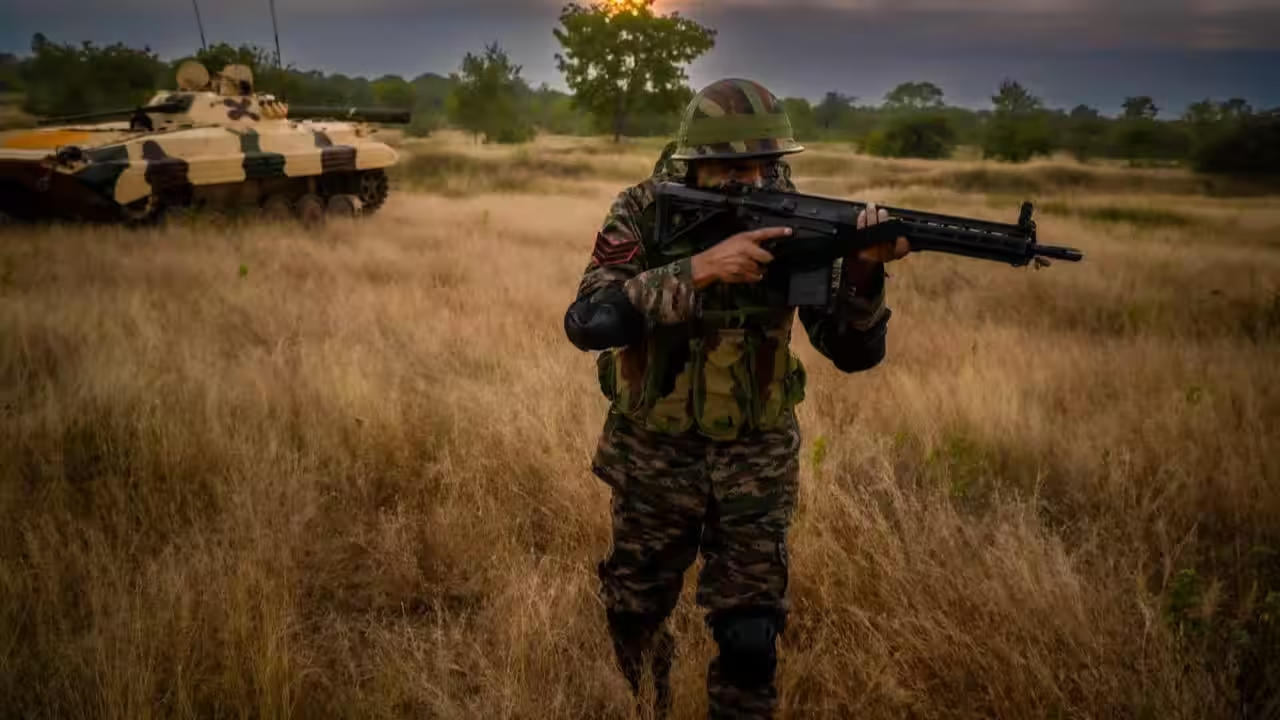
The army is about to get a new land warfare doctrine. Defence minister Rajnath Singh will release it on Friday, the third and final day of the biannual Army Commanders' Conference, the first under General Dhiraj Seth as Army chief. The three-day meeting brings together the commanders-in-chief of the army's six operational and one training command and the principal staff officers at Army Headquarters. The defence ministry says the doctrine will give the force an overarching framework for the changing character of war, at a time when drones, precision strikes and networked operations are deciding more and more battles.The last land warfare doctrine was released in December 2018, about a year and a half after the joint doctrine of the armed forces of April 2017. Earlier editions came out in 1998 and 2004. The 2018 document dealt with the geostrategic environment, the spectrum of conflict, hybrid warfare, multi-front capability, surveillance, precision strike, information warfare, space warfare and special forces, and it was meant to form the basis for strategies on the northern and western fronts. The new version is expected to cover how operations are integrated across the conventional domains and newer ones such as cyber, space and electronic warfare, and the growing use of unmanned platforms and artificial intelligence in surveillance, targeting and decision-making.A good deal has happened since 2018. The army has been through a long stand-off with China along the Line of Actual Control. In May 2025, Operation Sindoor showed what long-range precision fire against targets across the border looks like. On May 7, India announced strikes on nine terrorist infrastructure sites in Pakistan and Pakistan-occupied Jammu and Kashmir and the army took on seven of them, using artillery and precision-guided munitions, including loitering munitions. At the same time, the wars in Ukraine and West Asia have brought drones, loitering munitions, ballistic and cruise missiles, electronic warfare and integrated air defence to the fore. Counter-insurgency operations in Jammu and Kashmir and the north-east have carried on throughout.The doctrine will be read against two fronts. In the north, the stand-off with China has made rapid mobilisation, high-altitude logistics and round-the-clock surveillance a priority. In the west, the Army has to deal with conventional formations, drones, missiles and cross-border attacks.The lessons from Ukraine and West Asia are also expected to feature. Drones and loitering munitions now handle reconnaissance, target acquisition and attack, while electronic warfare can knock out communications, navigation and command networks. With constant surveillance overhead, troops and vehicles find it harder to move unseen, which makes camouflage, deception, dispersal and mobility matter more. Ballistic and cruise missiles can hit headquarters, airfields, ammunition depots and supply points far behind the front line, so the Army has to think about how to protect them and how to keep communications going when networks are jammed or damaged. Artificial intelligence and digital command systems can speed up the way information is processed and shared, but they need reliable data, secure networks and trained people to work.The Integrated Defence Services issued its Joint Doctrine for Multi-Domain Operations in August 2025, a framework for bringing together land, air, maritime, space, cyber and information capabilities. For the army, that could mean combining satellite imagery, drone feeds, electronic intelligence, artillery targeting and air support to find and engage an enemy. The test is whether the right information reaches the right commander quickly, and whether the three services can work together when an adversary goes after communications, navigation or surveillance systems before attacking.The Army is also changing its own structure, and that may show up in the new document. Integrated Battle Groups bring combat and support elements under one commander for faster mobilisation. Bhairav battalions are light, mobile forces for reconnaissance and rapid response. Shaktibaan regiments and Divyastra batteries add drones, loitering munitions and precision strike, and Ashni platoons give infantry battalions their own drone capability.
Topics in this story
Gathered from external sources. Rights to this text belong to whoever originally published it.