Alaska spent $46 million to lower power bills for 81,000 people in 188 rural communities, many reliant on diesel
Alaska Energy Authority disbursed about $46 million in Power Cost Equalization payments during fiscal year 2025 to help reduce electricity costs for rural
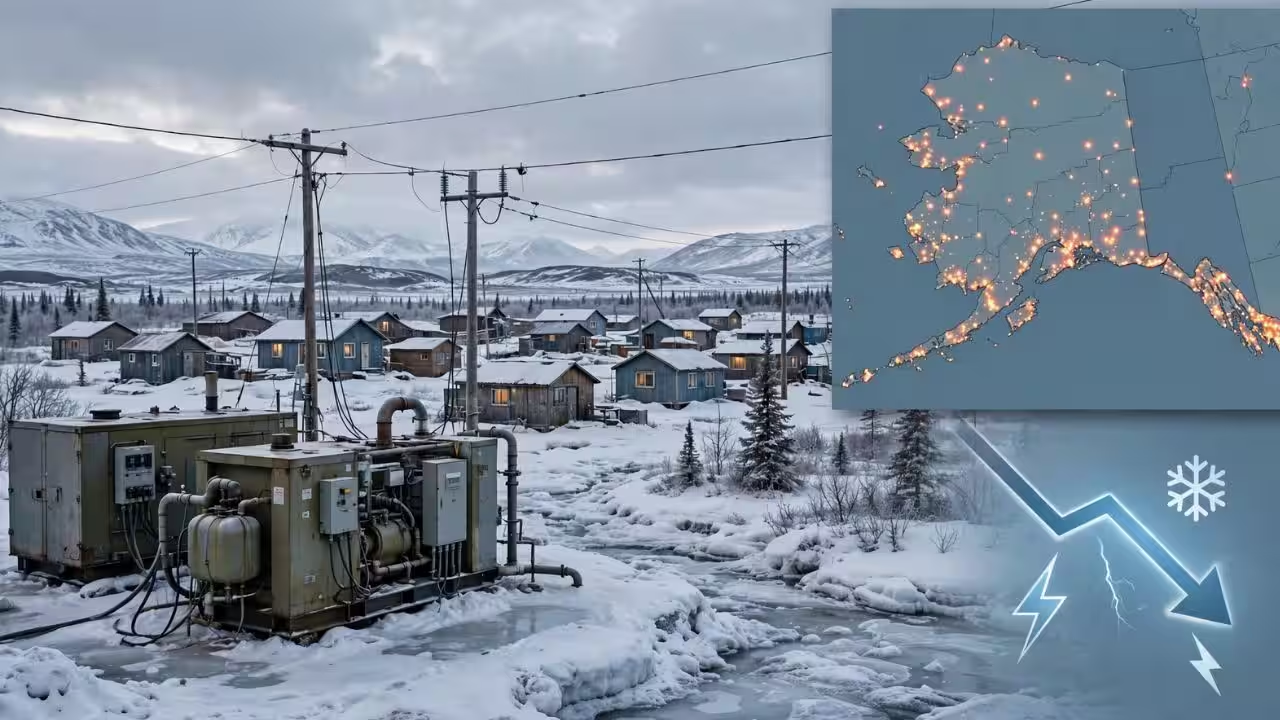
Alaska Energy Authority disbursed about $46 million in Power Cost Equalization payments during fiscal year 2025 to help reduce electricity costs for rural residents and community facilities across the state. The programme serves more than 81,000 Alaskans in 188 primarily diesel-dependent communities, with customers in 186 communities benefiting from PCE credits.According to the 2025 AEA Annual Report (Alaska Energy Authority), the payments support rural residents while also helping the long-term viability of utilities serving Alaska’s most remote communities. AEA administers the programme by providing payments to eligible rural electric utilities, which apply credits to qualifying residential and community facility customers. The programme was established in 1984 to bring rural electricity costs closer to those paid in Alaska’s larger cities.How did Alaska spend about $46 million to lower electricity costsThe Power Cost Equalization Program was established in 1984 to reduce electricity costs for rural residents and community facilities to levels comparable to those paid in Alaska’s larger cities.AEA administers the programme for more than 81,000 Alaskans in 188 primarily diesel-dependent communities. Residential and community facility customers in 186 communities benefit from PCE credits. AEA calculates payments using monthly utility filings and disburses the money to eligible utilities.The utilities then apply credits to qualifying customers for electricity use up to specified consumption limits. In fiscal year 2025, AEA disbursed about $46 million in PCE payments to rural utilities. The payments help ease electricity costs for residents and community facilities while supporting long-term viability of utilities serving remote communities.Alaska’s endowment fund helps finance rural electricity supportPCE payments are funded by the PCE Endowment Fund. Alaska Statute 42.45.085 authorises the Legislature to appropriate up to five percent of the fund’s three-year average market value for PCE payments.In recent years, the five-percent draw has fully funded PCE disbursements. Statutory changes enacted in fiscal year 2018 established how excess earnings are allocated. These changes allow endowment earnings to fully cover PCE programme administrative costs and direct $30 million annually to the Community Assistance Program.The statute also authorises up to $25 million to support the Renewable Energy Fund, Rural Power System Upgrade projects, and the Alaska Division of Community and Regional Affairs’ Bulk Fuel Revolving Loan Fund.How does Alaska’s Power Cost Equalization programme help rural customersThe programme provides different electricity credit limits for residential customers and public facilities. Residential customers may receive PCE credit for up to 750 kilowatt-hours per month. Community facilities may receive PCE credit of 70 kilowatt-hours per month multiplied by the number of residents.The programme works through eligible rural electric utilities, which receive payments from AEA and apply credits to qualifying customers. In many rural communities, electricity rates before PCE exceed urban rates. AEA’s PCE team also provides technical assistance to utility clerks to support accurate reporting and filing. This administration allows the programme to calculate and distribute payments based on monthly utility filings while maintaining the credit structure for participating customers and community facilities across rural Alaska.How can modern fuel facilities help lower energy costs in rural AlaskaRural Alaska relies heavily on diesel fuel for power generation and heating, and many villages depend on barges to deliver fuel for diesel-fired generators and heating. The annual report says rural energy infrastructure also includes bulk fuel facilities that can be more than 40 years old and may exceed their useful life or not meet current standards.AEA’s Rural Power Systems Upgrade and Bulk Fuel Upgrade programmes address parts of this infrastructure. The report says modern facilities can lower energy costs by preventing leaks and failures, while bulk storage allows communities to purchase fuel in larger quantities.You use AI every day. Now get your AI Quotient. Take the AIQ test.
Topics in this story
Gathered from external sources. Rights to this text belong to whoever originally published it.