Russia is escalating its attacks on Europe. The risk of a misstep is growing every day
It is a strategy built around a contradiction. Russia’s attacks on Europe aim to make war feel closer, without starting it. To provoke, without forcing a res...
It is a strategy built around a contradiction. Russia's attacks on Europe aim to make war feel closer, without starting it. To provoke, without forcing a response. To alarm, without causing a real change in behavior.
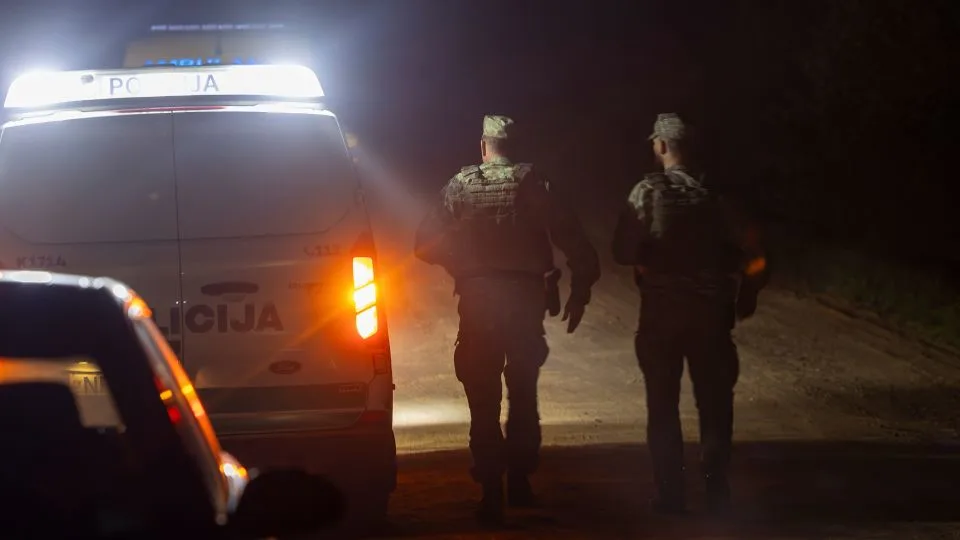
Moscow has palpably escalated its "grey-zone" conflict with NATO in Europe in the past week. Since late Sunday, a railway on which top former Western officials were traveling has been attacked by a Russian drone, another drone of likely Russian origin has been shot down in Lithuania, a third has washed up on Polish shores, a Danish helicopter has narrowly been missed by a Russian flare, and Dutch trains have been paralyzed by an as-yet unclaimed act of sabotage.
None of this is by accident. And it comes after weeks of warnings Moscow would seek to escalate with NATO – but perhaps not because it seeks or can afford a full-on conflict with the largest military alliance in history.
Instead, Russian President Vladimir Putin , has two goals, expedited by a Trump administration loathed to upset him having half a term left, and Ukraine's air defenses being in a woefully undersupplied state.
First is to make the cost of supporting Ukraine feel real and growing, and weigh on the minds of European voters, as pro-Russian right-wing parties vie for electoral power in several countries in the region. The second is to test Article 5 – the bedrock of the NATO alliance, in which an attack on one member is an attack on all, and Putin's long-term bugbear. Be in no doubt, Russia is getting away with sabotage, border violations and assassination plots that in the Cold War would have sparked existential angst. Now it seems commonplace.
As one European diplomat told me: "What's happening now would have triggered NATO's Article 4 just a few months ago," referring to the clause in the alliance's treaty calling for an emergency meeting over a crisis. "Now, it's becoming almost a daily occurrence." Speaking on the condition of anonymity for discussing a sensitive matter, the diplomat added Russia's goal was "to scare Europe away from supporting Ukraine," and "play with the fear of escalation."
NATO's major problem is that this is likely not the peak of Russian malice, but opening salvos.
A peace deal seems more than distant, with the United States ineffective in its pressure, and Putin clearly set on the goal of taking the eastern Donbas region , then perhaps more of Ukraine. And while Russia's horrific squandering of human capital in frontline "meat wave" infantry attacks somewhat curbs its ambitions, the Kremlin's military-industrial complex is providing new, real options: a cheap and highly effective form of air power its adversaries struggle to defeat, and which it can increasingly mass-produce.
Russia's Geran 4 and 5 drones are powered by Chinese-made turbojet engines, which cost about $40,000, according to Ukrainian officials and media reports, with each device retailing at about $70,000. Their Banderol cruise missile can reach speeds of 375 mph, and may reportedly cost as little as $100,000. Anything these weapons lack in polish or accuracy is made up for in sheer volume. And again, Moscow is just getting started, with its Alabuga drone factory adapting fast to flood the front lines and beyond with this new threat.
Production is key. Dr. Marina Miron, from the Defence Studies Department at King's College London, said that "adaptation when it comes to production, supply chains, logistics, doctrine" was a vital part of any strategy, even if it grabbed less headlines than the integration of AI into Ukraine and Russia's battlefield reconnaissance and attack. "And both sides are trying to adapt and innovate, to benefit from a short window… while the adversary designs countermeasures" to stop the new advances, she told me.
"NATO is well behind when it comes to readiness to deal with these changes," Miron added. "It is not just about building drone defenses… [but] about rethinking the entire doctrine." She said ideally NATO would not copy Ukraine or Russia, but adapt to "the lessons from both sides."
Miron said the probability of conventional war was "low," but what NATO would instead "be facing are 'events' below threshold as we have witnessed in Poland, Romania, Denmark, etc."
In this brewing crisis, part of the challenge for NATO members is how to convey to its public the gravity of the threat they are now continually facing, without causing panic and granting a psychological win to Moscow. It is a near-impossible needle to thread. A near-miss drone attack at a German airport, a ballistic missile landing in open-ground in Poland, assassination plots alleged in indictments filed in New York's Southern District. The list grows from the late summer, as does its potential lethality and geographical spread.
Moscow may be better suited to this sort of precarious dance. A senior European official said the Russian mindset was better adjusted than NATO's to erratic escalation. "The Russians have since Soviet times theorized the flexible adjustment of power and aggression," he noted. " For NATO, escalation management in this way is more of a new thing. So there are things for NATO to learn."
He added: "Overreaction is not useful, but turning the other cheek is not either."
At some point, Moscow will misfire, overstep and oblige a NATO member to respond with force in some way. It is not unprecedented: In Syria, a 2018 attack on US positions by Russian Wagner mercenaries drew a ferocious US military response. We should also not forget that European NATO arms and intelligence are assisting Ukraine daily to hit Russia. This is often weaponry bought and supplied by NATO, but with Ukrainians pressing the trigger. Moscow – in its warped perspective as the invader – perhaps feels as though it is pushing back.
But when Russia's misstep occurs, the jump-step in confrontation that it will bring is one NATO's military and public are not ready for. It is likely closer by the day.
For more CNN news and newsletters create an account at CNN.com
Topics in this story
Gathered from external sources. Rights to this text belong to whoever originally published it.