At 89, an American businessman left nearly 60% of his $161 million estate to charity; the trust created from his will later grew into a major source of grants
The William R. Kenan Jr.
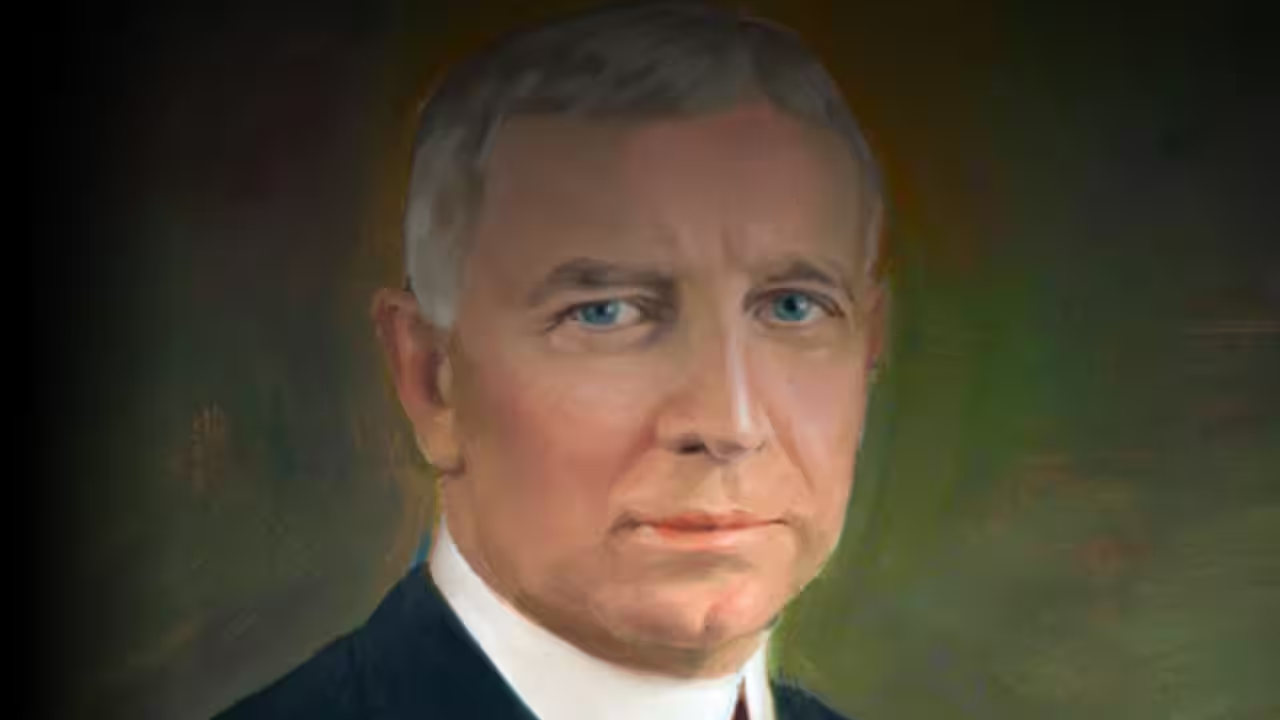
The William R. Kenan Jr. Charitable Trust, a major source of charitable grants, grew from a will signed by an 89-year-old American businessman who left almost 60% of his $161 million estate to charity. Kenan created the trust in 1961, and it became active upon his death in 1965. By 2020, the trust held $685 million in assets, having distributed thousands of grants totalling nearly $700 million since 1965. Of that total, $20 million endowed the William R. Kenan Jr. Fund for Ethics, founded in 1995, which provides significant funding to the Kenan Institute for Ethics at Duke University.A Wilmington-born student, a lamp-gas research project and the start of a career in engineeringAccording to the Kenan Institute for Ethics at Duke University, William Rand Kenan Jr. was born in Wilmington, North Carolina, in 1872. His family had reached North Carolina from Scotland, via Ireland, in the 1730s. He entered the University of North Carolina at Chapel Hill in 1890 and discovered a passion for chemical and mechanical engineering there. He took part in research on converting calcium carbide into acetylene gas, which fuelled lamps that competed with electric lights. That experience led to a career at Carbide Manufacturing Company, which later became Union Carbide.How a brother-in-law’s railway empire and a sister’s inheritance created a vast family fortuneKenan left Union Carbide in 1900 and, among other work, became a consulting engineer for Henry M. Flagler, who married Kenan’s sister, Mary Lily Kenan, in 1901. Flagler had partnered with John D. Rockefeller in 1863 to found Standard Oil. From the 1880s, he developed the Florida East Coast Railroad from Jacksonville to Key West, along with eleven hotels, power and water companies and agricultural enterprises. After Flagler died in 1913, most of his vast estate passed to Mary Lily Kenan. When she died in 1917, William Kenan and his two surviving sisters inherited one of the nation’s largest fortunes.Why Kenan came to see his inheritance as a trust to be preserved and put to worthwhile useDecades later, as Kenan and his advisers prepared his will, he reportedly told his longtime secretary, “I feel this money has been given to me as a trust.” He went on to say that he had to preserve it and make sure it did something worthwhile, according to the Kenan Institute for Ethics at Duke University.You use AI every day. Now get your AI Quotient. Take the AIQ test.
Topics in this story
Gathered from external sources. Rights to this text belong to whoever originally published it.