10 minutes of super-slow running can benefit your brain and mood
Research suggests a run can feel surprisingly easy and still benefit your thinking skills.
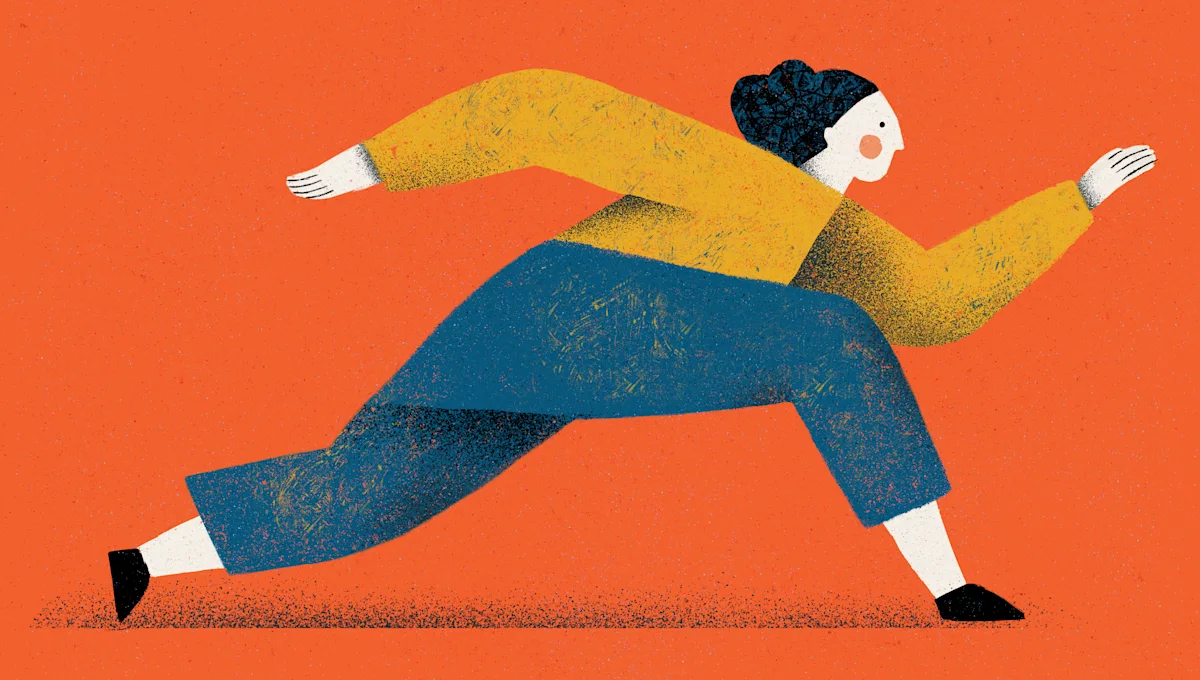
Are you, like me, a slow, plodding runner?
Congratulations. You may be doing your brain a favor, a new study finds.
In the study, 10 minutes of super-slow jogging, at a pace barely exceeding walking speeds, almost immediately changed people's brain activity, improved their thinking skills and raised their moods.
The study is one of the first to show that running needn't be strenuous or prolonged to alter how well we think and feel. It can be surprisingly unhurried, low-key and brief.
But it does, it seems, need to be running. The researchers found that running's biomechanics influence our bodies — and in particular, our heads — in ways that other activities don't.
"I have always been interested in the unique nature of running," said Hideaki Soya, a professor emeritus of exercise biochemistry and neuroendocrinology at the University of Tsukuba in Japan, who oversaw the new study. He also competed for many years in track and field.
What they found in the new study, he said, is that "running does not have to be hard to be good for your brain."
A wealth of science already links exercise of various kinds to cognitive and mental health. Mice that run generate more new brain cells and perform better on rodent intelligence tests than sedentary animals. Similarly, people who exercise in almost any way, including walking and resistance training , typically have larger brains and less risk of dementia than people who rarely move. They're also less likely to experience depression or anxiety.
But these past studies involved widely varying forms and amounts of exercise, and often looked at long-term effects on the brain and thinking, not what happens in the moments soon after you work out.
They also didn't center a question of pressing interest to many of us: How minimal can exercise be and still benefit our brains, especially right away?
That last issue has long guided much of the research at Soya's lab, the professor said, as has the distinctiveness of running. In one of his earliest animal experiments from almost 20 years ago, he had some mice sit quietly on tiny treadmills while others ran at their slowest possible speed. Afterward, the scientists checked their brains for markers of gene expression and stress response. The inactive mice showed no meaningful changes, but the slow runners' brains teemed with markers of increased neuronal activity in areas involved with memory and thinking.
The portions of their brains that control stress reactions, though, remained still, an important finding, since heightened stress might undermine desirable brain changes.
Jump ahead to 2021. For a study published that year in Scientific Reports, Soya and his colleagues asked 26 healthy adults to run on treadmills for 10 minutes at a steady, moderate jog, fast enough that they were breathing hard and could barely speak. Afterward, the runners felt more cheerful, their thinking had sharpened, and areas within their brains involved with cognition showed greater activity.
But Soya and his colleagues wondered if gentler running, its intensity dialed down almost to zero, would have equivalent effects with less physiological stress.
So in the new study, they invited 24 healthy men and women to the lab to complete mood questionnaires and a cognitive test. Before that test, volunteers were fitted with caps containing probes that track brain activation. Then they sat on treadmills for 10 minutes, or on another day ran as slowly as they possibly could for the same 10 minutes.
Technically, running differs from walking by being partially airborne. When you walk, one of your feet is always on the ground. With running, both feet leave the earth at some point as you bounce through each stride.
By shortening their steps, the volunteers managed to run at easy paces ranging from about 17 to 21 minutes per mile. "These are also walkable speeds," the scientists wrote.
But they were running. The scientists could tell because they had attached sensors to the top of people's skulls to measure how much their heads rose with each step. That's another signature aspect of running: your skull accelerates vertically with each step. Similar head acceleration is trivial during walking and almost nonexistent during cycling, other research showed.
It was there, though, as the volunteers ran their slowest.
After either sitting or running, the volunteers repeated the mood and thinking tests, while again wearing the brain-scanning caps.
Comparing before and after, the scientists saw no changes from sitting on the treadmill. But almost everyone performed better on the cognitive test and reported feeling more cheerful after the super-slow run, while portions of their prefrontal cortex, an area of the brain involved in high-level thinking and decision-making, were much more active than before.
Perhaps most surprising, the scientists also found correlations between how much people's heads had moved up and down while running and the extent to which their moods had improved. (The relationship between head acceleration and cognition was slighter.)
"Our findings offer good news," Soya said. "Running at the gentlest possible pace, for just 10 minutes, is enough to brighten moods and sharpen prefrontal function."
"This is a very nicely done study," said Henriette van Praag, an associate professor of biomedical science at the Charles E. Schmidt College of Medicine at Florida Atlantic University in Jupiter, Florida. She's studied exercise and the brain for decades but wasn't involved with the new study.
"The association between running, head acceleration and mood is certainly of interest," she said.
Soya agreed. "Head acceleration is not only a matter of the head," he said. "It reflects the rhythmic vertical oscillation of the whole body," which may stimulate muscles and the brain in a way other movements cannot. In mouse studies , he said, head acceleration activates neurons that release serotonin, a brain chemical linked to mood improvements.
But similar effects in people are theoretical. "We regard our current findings as a starting point," he said. He and his colleagues plan to study the effects of head acceleration on brain health in future research.
The study was also small, short-term and involved only healthy adults in Japan.
But even with those limitations, the results are encouraging and practical. "A 10-minute slow run before a presentation or a demanding mental task," or when you're feeling blue, "is exactly the kind of use we have in mind," Soya said. "The benefits appear immediately afterward," and require only a glacially slow jog around the block or along a long hallway for less time than a coffee break.
Do you have a fitness question? Email YourMove@washpost.com and we may answer your question in a future column.
Topics in this story
Gathered from external sources. Rights to this text belong to whoever originally published it.