A self-taught Birmingham teenager built a gesture-controlled robotic hand for about £30; the invention attracted 2.6 million views and requests from students worldwide
A self-taught teenager from Birmingham has attracted 2.6 million views on TikTok after building a gesture-controlled robotic hand for about £30.
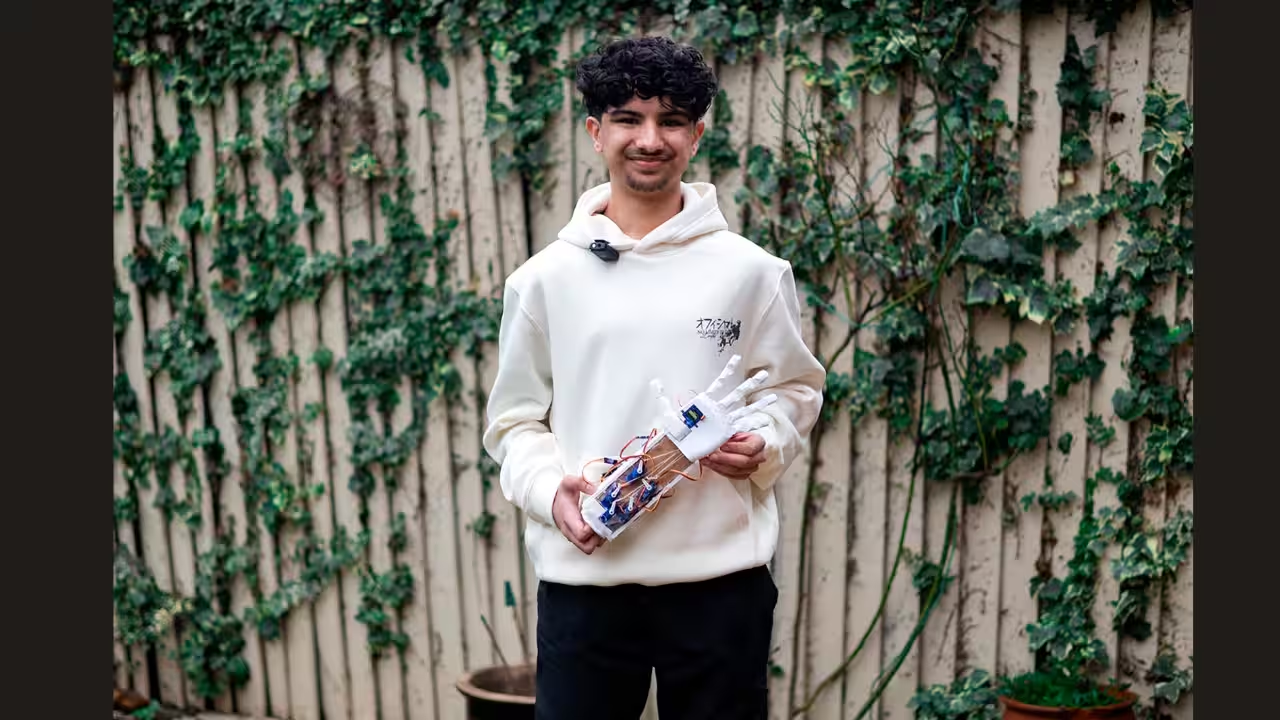
A self-taught teenager from Birmingham has attracted 2.6 million views on TikTok after building a gesture-controlled robotic hand for about £30. Suleymaan Khan, 17, developed the device using camera recognition and code he wrote himself, with materials including foamboard, card and hot glue. According to Hyphen, hundreds of people have contacted him to learn how to recreate the invention, while students around the world have sought his advice on robotics projects. Khan is now working on step-by-step kits to help others build the hand, alongside developing further robotic inventions.How does Khan’s £30 gesture-controlled robotic hand workKhan's latest robotic hand is fully articulated and controlled through gestures. It uses camera recognition, supported by code that he wrote himself. The project demonstrates how he has progressed from simple homemade constructions to more complex robotic systems. Unlike his early cardboard creations, the hand combines physical components with programming to respond to recognised movements. The invention has attracted attention because Khan developed it using inexpensive, readily available materials rather than relying on costly specialist equipment.The cost of the project was approximately £30, according to Hyphen. Foamboard, card and hot glue were among the materials used to construct the hand. Its relatively low cost has prompted hundreds of people to ask Khan how to build a similar device themselves. He told the publication that he was working on putting together step-by-step kits to help people recreate the invention. The planned kits reflect the interest generated by the project and the requests he has received from people wanting to learn how the robotic hand works.Khan’s robotics projects attract followers on YouTube and TikTokKhan's robotics projects have developed a following on social media, where his work has reached audiences interested in technology and engineering. Hyphen reported that he had more than 400,000 likes and 20,000 followers across YouTube and TikTok. The robotic hand alone received 2.6 million views on TikTok. Alongside this online attention, students from different countries have approached him for help with their own robotics work, including university assignments and projects that they have struggled to complete.Khan described how students in Dubai contacted him shortly before his interview with Hyphen, seeking advice about a university assignment involving a robot. He has increasingly made helping other people an important part of his work. Reflecting on his development as an inventor, he said, “It’s cool to see where I started”. His experience illustrates how online platforms have enabled a young robotics enthusiast to share his projects with an international audience and connect with learners seeking practical technical guidance.How did Khan build the Pepper humanoid robot at the age of 12Before developing the gesture-controlled hand, Khan built several other projects, including remote-controlled paper planes and a humanoid robot called Pepper. He created Pepper when he was 12, using LEGO Mindstorms, cardboard and dental floss. The robot could move around, pick up and carry objects in its arms, and use motion sensors in its eyes to help prevent collisions. Although Pepper is now damaged and can no longer stand independently, the project helped Khan learn how to build more complex machines while working with limited resources.Pepper also earned Khan the 2023 Network Rail national innovation award at the Big Bang Fair, a UK science and engineering competition for young people aged 11 to 18, according to Hyphen. He has since secured an apprenticeship at a local robotics company while continuing to develop his own creations in his spare time. His next project is another humanoid robot that he hopes will incorporate artificial intelligence for speech recognition, object recognition and home mapping. Khan has also expressed an interest in developing prosthetics in the future, identifying their cost as an area he would like to address through his work.You use AI every day. Now get your AI Quotient. Take the AIQ test.
Topics in this story
Gathered from external sources. Rights to this text belong to whoever originally published it.