In 2015, Alibaba founder Jack Ma paid $23 million for 28,100 acres in New York’s Adirondacks; he planned to conserve its forests, trout streams and white-tailed deer habitat
US News: In 2015, Alibaba founder Jack Ma purchased the vast Brandon Park estate in New York's Adirondacks for $23 million, focusing on conservation to protect forests, trout streams, and wildlife habitats, while also serving as a personal retreat.
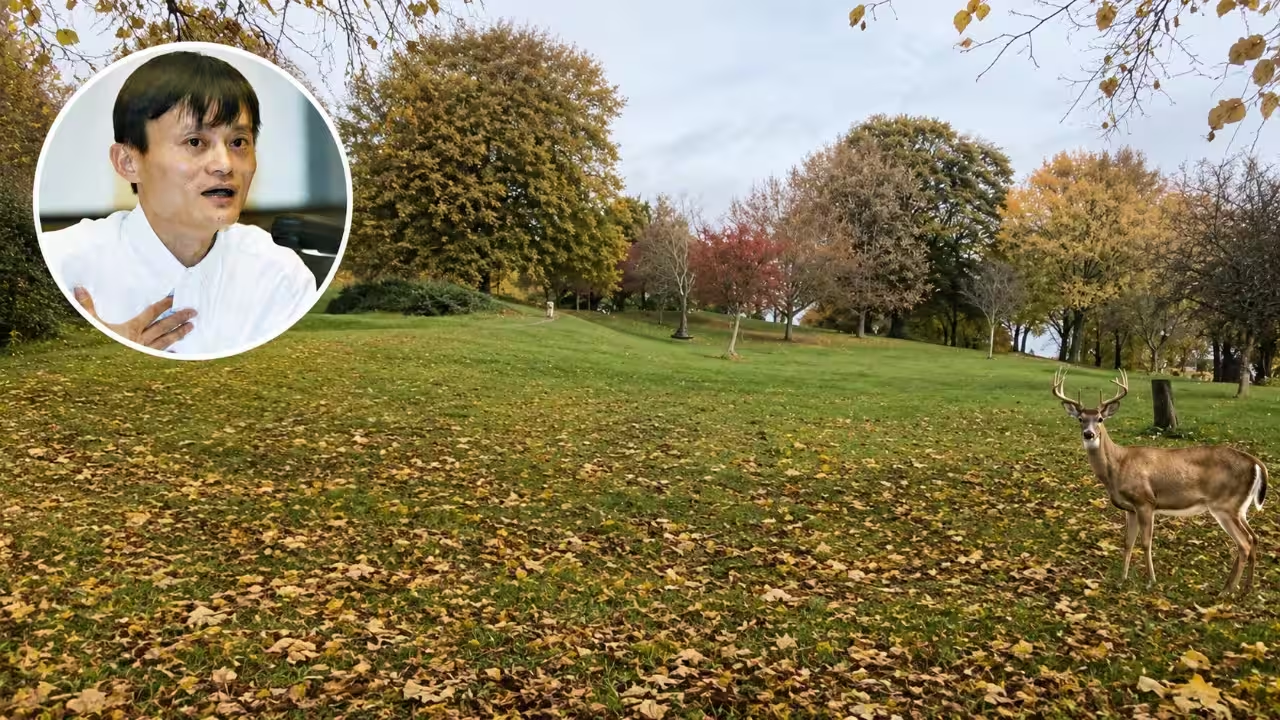
In the summer of 2015, a tract of New York's Adirondack wilderness changed hands in a deal that drew attention far beyond the region. Jack Ma, the co-founder of Alibaba, had acquired Brandon Park, a vast private estate of forests, rivers, ponds and wildlife habitat. Unlike a conventional luxury property purchase, Ma's representatives said the land was bought principally for conservation, although he also planned to use it as an occasional retreat. The purchase put a large privately owned landscape under the control of an entrepreneur known for environmental interests in China. It also raised a broader question about the role private ownership can play in conserving landscapes that are valuable for forests, freshwater and wildlife.A vast forest beside the St Regis RiverAccording to the Adirondack Daily Enterprise, Jack Ma paid $23 million for the 28,100-acre Brandon Park estate in Franklin County, in the northwestern Adirondacks. The property included nearly 10 miles of the St. Regis River, trout streams, woodlands and several homes and guest cabins. Other reports on the purchase noted that the estate also contained lakes, ponds, a trout fishery, a horse barn and a maple-syrup operation. The land had a long conservation history before Ma acquired it. Much of Brandon Park had once formed part of a larger private preserve associated with William A. Rockefeller Jr. The Rockefeller family's Adirondack holdings reflected an era when wealthy industrialists established large private estates in the region, often combining hunting and fishing with forest management.By the time Ma bought Brandon Park, however, the property was already part of the larger Adirondack Park, a six-million-acre landscape made up of both public and private land. Ma's purchase did not turn the 28,100 acres into public Forest Preserve land. Instead, the property remained privately owned while its new owner said conservation would be its principal purpose. According to a study published in Landscape and Urban Planning, privately owned working forests and conservation lands form an important part of the Adirondack landscape, and areas perceived as wilderness are not necessarily publicly owned. The research found that some landscapes residents and visitors viewed as wilderness were actually privately managed forests, underscoring the role of private stewardship in preserving the region's undeveloped character.Forests, trout streams and wildlifeBrandon Park’s ecological value came from its forests and waterways. Contemporary reports described the property as containing extensive woodlands, trout waters and habitat for white-tailed deer. Its river frontage, streams, lakes and ponds formed a connected landscape supporting aquatic and terrestrial wildlife.According to research published in the Journal of Wildlife Management, white-tailed deer in the Adirondacks use specific wintering areas where features such as dense conifer cover and watercourses provide suitable conditions. The study highlights the importance of forest structure and landscape features to deer habitat, providing broader ecological context for the type of landscape found at Brandon Park. Rather, keeping a large property relatively undeveloped can help retain existing habitat and maintain ecological connections within a wider landscape.Conservation through private ownershipMa's stated intention was to preserve Brandon Park while retaining the option of using it as a personal retreat. His spokesman said a nonprofit entity would be established to manage the property and described the purchase as Ma's first investment in conservation land outside China.Later reporting in Adirondack Life said the property, then known as New Brandon, was being maintained by local employees and remained connected to Ma's conservation efforts. The magazine also reported Ma's involvement with other international conservation organisations, including the Paradise International Foundation. In that context, the significance of the purchase extends beyond its price to how the property was intended to be managed and conserved.In a region where private land makes up a substantial portion of the Adirondack landscape, the acquisition also illustrates how private ownership can influence the future of large, ecologically connected areas. For Ma, Brandon Park represented both a potential retreat and a conservation project. For the surrounding region, its value lies in the landscape itself: forests along rivers, streams and lakes that support aquatic life, and connected habitats used by wildlife.Catch the latest World News and Live updates. Download the TOI app.
Topics in this story
Gathered from external sources. Rights to this text belong to whoever originally published it.