Trump’s diesel deal derailed Ukraine-Russia peace progress, says Czech president
Czech President Petr Pavel on Tuesday said President Trump’s diesel deal with Russia derailed peace talks between the Kremlin and Ukraine, saying both sides were “so close” to a ceasefire. “It will be much harder now,” Pavel told the Axel Springer Global Reporters Network, which includes Politico. “Russia uses this momentum to get out of…
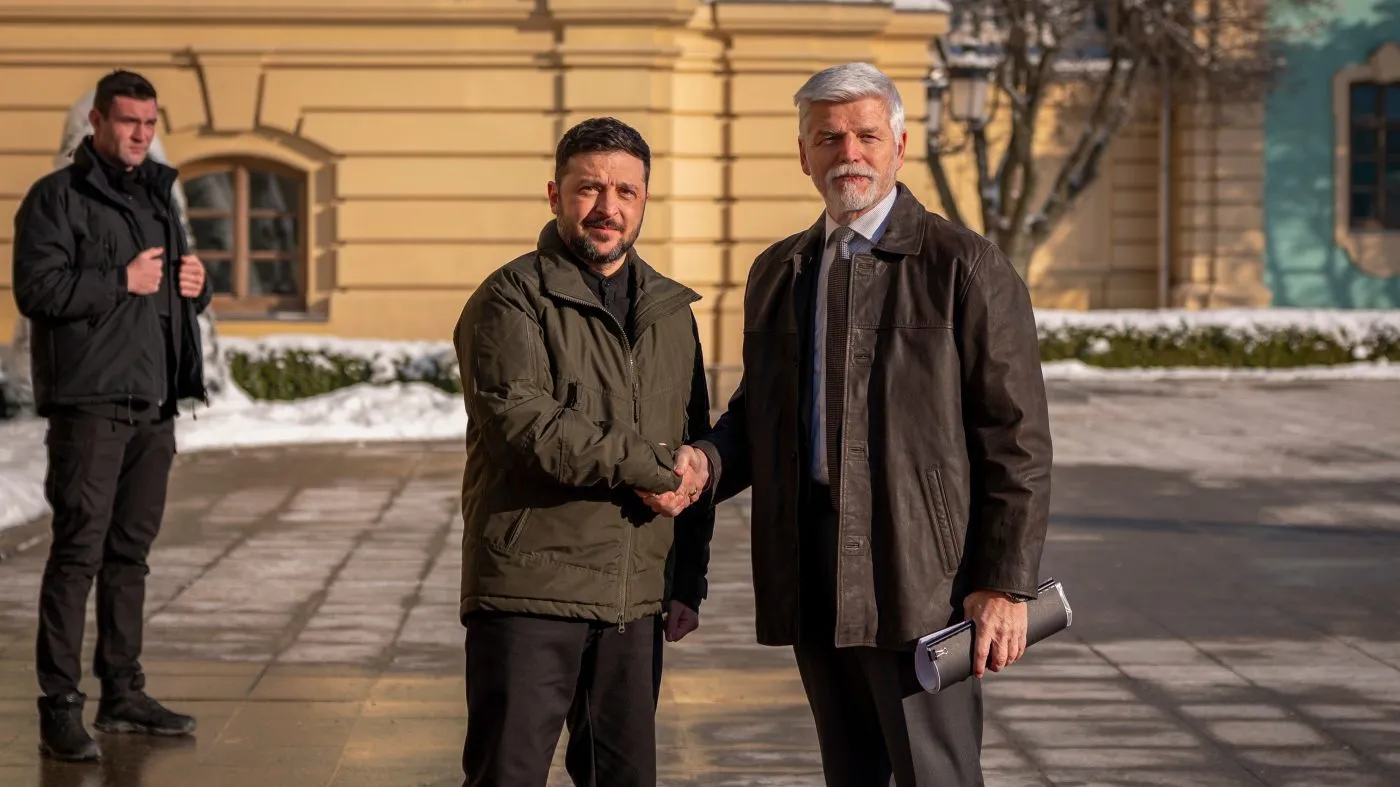
Czech President Petr Pavel on Tuesday said President Trump’s diesel deal with Russia derailed peace talks between the Kremlin and Ukraine, saying both sides were “so close” to a ceasefire.
“It will be much harder now,” Pavel told the Axel Springer Global Reporters Network, which includes Politico . “Russia uses this momentum to get out of pressure, and it’s kind of a moral boost for them.”
Pavel said that U.S. and European sanctions on Russian oil, oligarchs and other industries had Russia “under strain,” but the deal to permit 300,000 tons of diesel into the U.S. allowed Russia “time to breathe.”
On Wednesday, Pavel told Politico that Trump “may be attracted” by Russian President Vladimir Putin “as a leader with authority, but I don’t think that.”
“President Trump sees it from a position of a struggle between democracy and autocracies because he’s looking at it simply from the point of view of economic prosperity for the United States,” he added.
Pavel’s government has supported Ukraine in its war with Russia and holds close ties to Ukrainian President Volodymyr Zelensky. He said Zelensky and his country are victims “of a conflict.”
“So, I would be probably the last to blame Ukraine for being guilty of the conflict,” he added. “It was not Ukraine who attacked Russia. It was not Ukraine who was threatening Russia.”
Pavel declined to say whether the U.S. betrayed Ukraine or other European partners. Zelensky said last week that the U.S. appearing to support Russia with the diesel deal and waiving sanctions on Russia, signed into law last month and posthumously dedicated to the late Sen. Lindsey Graham (R-S.C.), amounted to a betrayal.
“I don’t know yet if we can call it betrayal, but I would call it a mistake,” Pavel told Politico. “Because … it’s now giving Russia a new hope: New hope that they can disregard Europe, they can disregard Ukraine, they can focus on making a deal with the United States, potentially with China, and arranging all things up to their priorities and strategies. I believe that it’s clearly against our interest in Europe.”
Pavel said it “will take time” before European countries buy Russian oil, saying they would if Russia starts “respecting other countries’ sovereignty and borders.”
“But Russia is not there yet,” he added.
U.S. special envoy Steve Witkoff met with Putin on Wednesday to open up the possibility of trilateral talks with the U.S. and Ukraine to end the war. Putin agreed to resume these talks . Witkoff praised Putin after announcing the release of detained U.S. teacher Stephen Hubbard , calling the Russian leader a “ humanitarian ,” sparking backlash and condemnation.
“WTF, Steve? Look up the definition of ‘humanitarian,'” Sen. Thom Tillis (R-N.C.) wrote on the social platform X. “What an embarrassing and outrageous thing to say. You should go back to Ukraine and ask the families of the children Putin has kidnapped and murdered whether they agree your friend Putin is a ‘humanitarian.'”
Topics in this story
Gathered from external sources. Rights to this text belong to whoever originally published it.