In 1995, Canada eradicated rats from British Columbia’s Langara Island; by 2004, ancient murrelet pairs had nearly doubled to 20,000–30,000
Rest of World News: Discover how Canada successfully eradicated rats from Langara Island, leading to a remarkable recovery of the ancient murrelet population. Learn about the innovative methods used for this conservation success.
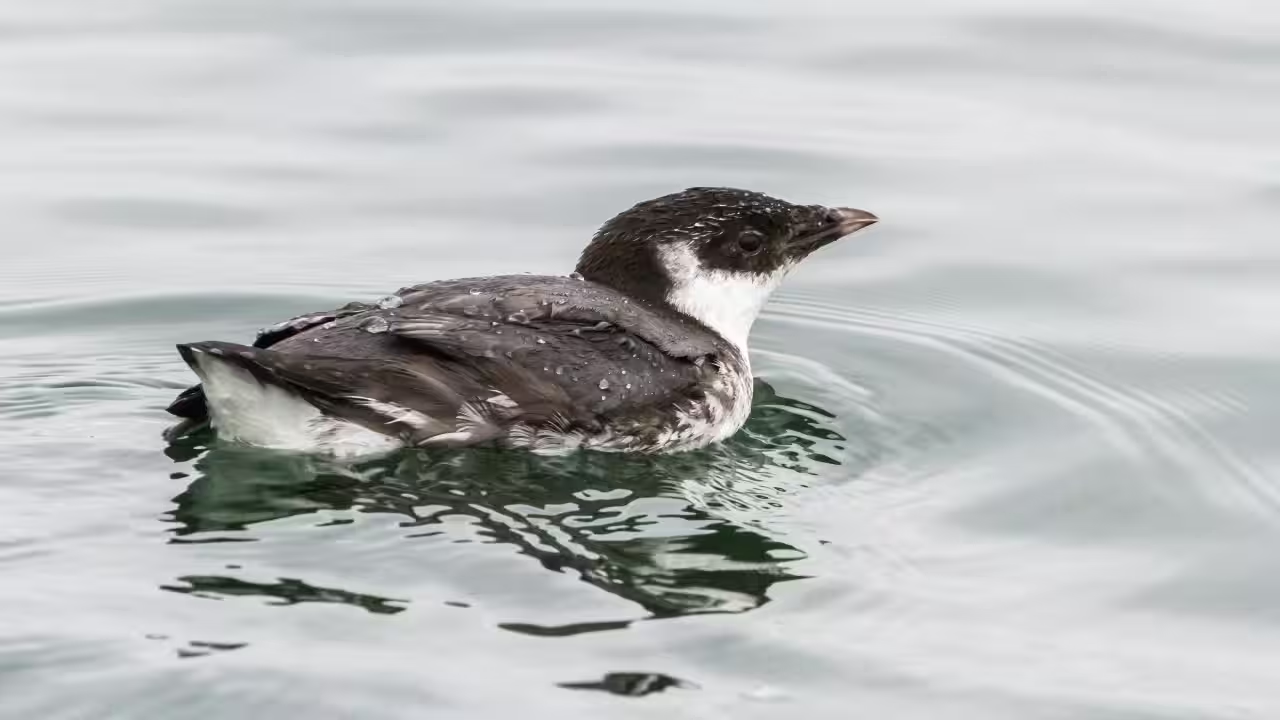
Islands have long been risky places for ground-nesting birds because, for most of evolutionary history, they had few predators to fear. That safety unravelled when humans began arriving by ship, because rats stowed away on vessels and found island seabird colonies easy prey. Few places show the damage more clearly than Langara Island, a remote island off the northern tip of Haida Gwaii in British Columbia, where one seabird population collapsed and later rebounded within a few decades.Rats reached Langara Island in the middle of the twentieth century, most likely as stowaways aboard fishing boats or log barges operating nearby. The island hosted one of the largest breeding colonies of ancient murrelets, small seabirds that dig burrows in forest soil and return to them under cover of darkness to avoid predators. Rats easily found the burrows and fed on eggs and chicks. Canada's own species assessment, published through the Government of Canada, attributes the roughly ninety per cent decline recorded in the Langara murrelet population directly to rat predation that built up over the following decades. Surveys conducted by conservation biologists in the 1980s found that large sections of Langara's own colony had already been abandoned, with searched burrows containing the bones of murrelets killed by rats, a clear warning sign of how close the population was to collapsing entirely.A poison bait campaign across the islandFunding for the project came from an unlikely source, the legal settlement following the Nestucca oil spill, which gave Environment Canada the resources to attempt something ambitious across the whole island rather than just a small test plot. Crews set up bait stations roughly every hundred metres in a grid covering the entirety of Langara Island, loading each one with wax blocks containing the anticoagulant brodifacoum. Rats kept taking bait for twenty-six days before crews switched to protective bagged bait stations to finish the job. The main eradication effort took place through 1995, and follow-up monitoring over the following years found no further sign of rats anywhere on the island, a result that surprised even some of the biologists who had pushed for the project.Murrelets bounce backThe recovery that followed was faster than most conservationists had dared to expect. A separate academic analysis using controlled before and after comparisons against islands without eradication programmes found the estimated population had jumped from roughly thirteen thousand birds in 1999 to around twenty-four thousand by 2004, a pace of growth of about thirteen per cent a year, according to figures compiled through the Conservation Evidence database, run by the University of Cambridge. Other burrow-nesting species that had vanished entirely from the island, including Cassin's auklet, also began reappearing in small numbers once the rats were gone. Langara has since become something of a template for island restoration efforts across Haida Gwaii and beyond, though Parks Canada has since had to deal with rats reinvading some of the smaller islands nearby, a reminder that keeping an island rat-free can be just as demanding as clearing it in the first place.Catch the latest World News and Live updates. Download the TOI app.
Topics in this story
Gathered from external sources. Rights to this text belong to whoever originally published it.