Zelensky rolls the dice on combative Trump pressure campaign
Ukrainian President Volodymyr Zelensky is making a high-stakes bet that a combative public pressure campaign targeting President Trump — in coordination with his allies in Congress — will push the president to reverse course on concessions to Russia. Zelensky, under intense strain from relentless Russian strikes and depleted air defenses, has lashed out at Trump…
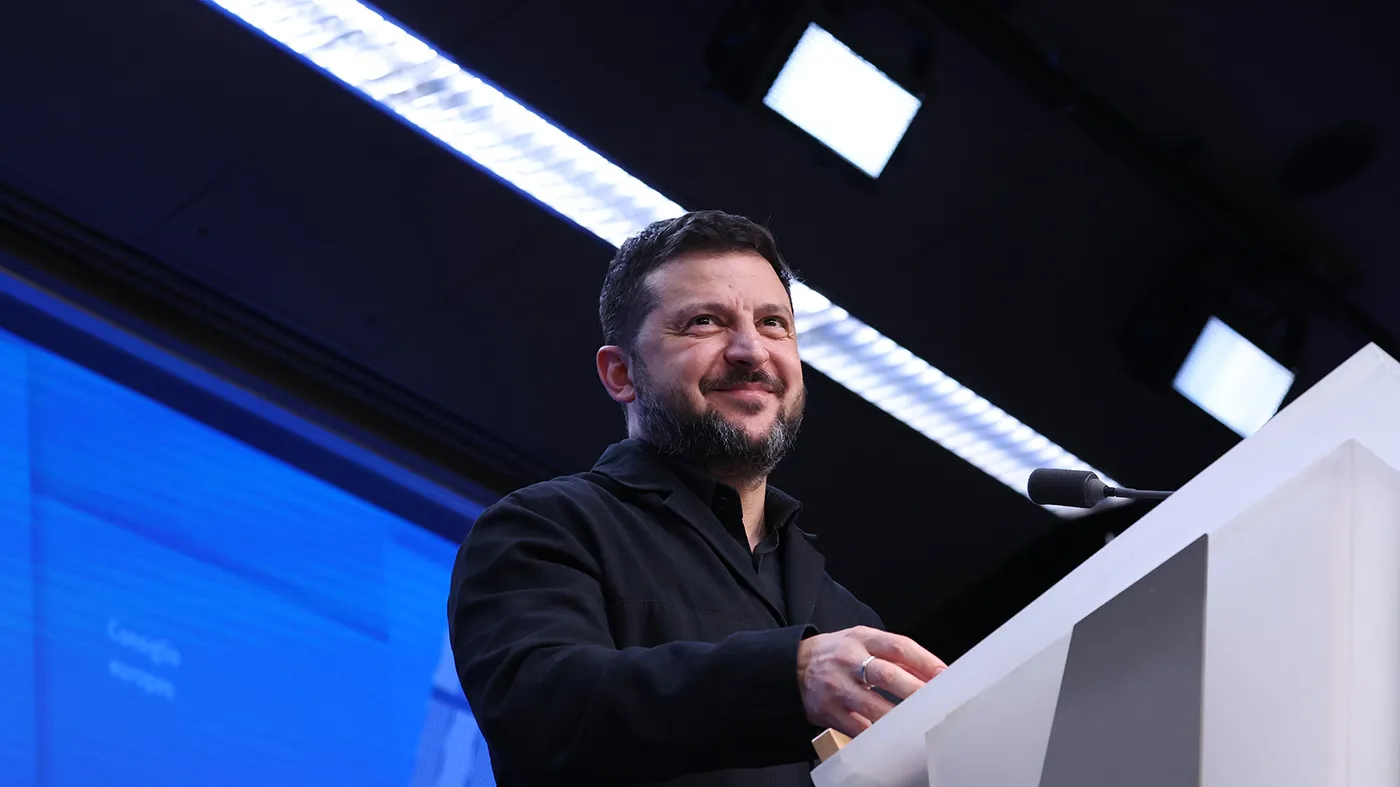
Ukrainian President Volodymyr Zelensky is making a high-stakes bet that a combative public pressure campaign targeting President Trump — in coordination with his allies in Congress — will push the president to reverse course on concessions to Russia.
Zelensky, under intense strain from relentless Russian strikes and depleted air defenses, has lashed out at Trump for offering to buy Russian diesel and waiving sanctions meant to throttle resources for Russia’s war machine.
So far, Trump has responded by ramping up his criticism of the Ukrainian leader — repeating demands for elections in Ukraine, calling Zelensky the main obstacle to peace and downplaying Russian attacks on the country.
Even some of Zelensky’s backers in Congress don’t see the wisdom in his approach.
Rep. Michael McCaul (R-Texas), in a text message to The Hill, said Zelensky has been cautioned against lashing out at Trump “as it will not end well.”
Some observers note Zelensky has pulled back from some of his harshest criticism immediately following the announcement of a deal for the U.S. to buy diesel from Russia. At that time, Zelensky called Trump “weak.”
McCaul participated in a Zoom call with Zelensky earlier Monday, along with other lawmakers, and said the Ukrainian leader “did not say anything negative” about Trump.
Zelensky has also pointed his finger at the U.S. government for restricting Ukraine’s ability to use satellite communications Starlink and Starshield, run by tech billionaire and close Trump ally Elon Musk. Trump has said that neither he nor Musk called for a slowdown.
Zelensky has avoided assigning specific blame but again told NBC News’s “Meet the Press” on Sunday: “Of course the message came from [the U.S.] government, I don’t know from whom or what Cabinet.”
McCaul is among a handful of Republicans urging Trump to withdraw a waiver he issued Friday suspending sanctions meant to economically isolate Russia, authorized by the Lindsey O. Graham Sanctioning Russia and Iran Act which was signed into law last month.
But McCaul, who is leaving Congress, has not gone as far as Republican Reps. Brian Fitzpatrick (Pa.) and Don Bacon (Neb.), who have committed to blocking Trump’s agenda if he doesn’t change course on Ukraine.
“I’m trying to be more constructive,” McCaul told The Hill.
The number of Republican defections spurred by Trump’s actions on Ukraine are increasing but “not enough,” said John Herbst, a former U.S. ambassador to Ukraine and senior director of the Atlantic Council’s Eurasia Center.
While intense criticism against Trump could cause him to back off pressuring Ukraine in the short term, the president has repeatedly returned to Putin-friendly positions in his efforts to end the war. Herbst pointed to Trump abandoning last year a 28-point peace plan proposal in the face of widespread pushback but said some of those ideas — calls for Zelensky to cede territory in eastern Ukraine to Russia or release frozen Russian assets — reappear at different times.
He also pointed to Republican lawmakers seeking to walk a tightrope between supporting Ukraine and the president.
Rep. Mike Turner (Ohio) is one of those Republicans. Speaking with Margaret Brennan on CBS News’s “Face the Nation” on Sunday, he joined calls for an investigation into who limited Ukraine’s access to Musk’s satellites. But he stopped short of endorsing the more hard-line approach of some House colleagues.
“I don’t think there’s any brinksmanship that needs to have to occur on this,” he told Brennan.
Republican Sen. Kevin Cramer (N.D.) — who visited Zelensky in Kyiv last week — said he expects Trump’s waiver on the Graham sanctions bill to be a “short-term pause.”
Cramer said he backed a proposal by Sen. Roger Wicker (R-Miss.), chair of the Senate Armed Services Committee, for the U.S. to give Ukraine targeting information on Russian launch sites in exchange for Kyiv halting attacks on Russian energy infrastructure.
“I would hope we can get to that point where, remembering that what President Zelensky is protecting are civilians. Russia has chosen to go after civilian populations,” Cramer said Sunday on “Face the Nation.”
Zelensky on Monday detailed a “horrific” Russian strike on the Kharkiv region, where a 1-year-old girl was killed in her stroller, the mother later died in the hospital, and an 11-year-old child was killed. On Saturday and overnight to Sunday, Russia launched 337 drones and a ballistic missile, according to an analysis by the Institute for the Study of War.
Russia over the past week launched nearly 2,700 attack drones, 1,700 guided and other aerial bombs, and 66 missiles — most of them ballistic — against Ukraine, Denys Sienik, the Charge d’Affaires of the Ukrainian Embassy in Washington, D.C., said in a statement to The Hill.
Sienik said Starlink and Starshield services still face restrictions.
“Ukraine’s position is guided not by a desire for confrontation, but by the fundamental responsibility to protect its people and preserve its ability to defend itself while pursuing a just and lasting peace,” Sienik continued.
“In the situation of Russia’s escalation, meaningful and sustained pressure on Russia remains essential to creating the conditions for genuine progress toward peace.”
Part of that pressure is Ukrainian attacks inside Russia, which have persisted despite Trump urging Zelensky to back off.
Ukraine launched a major attack on Russian oil refineries in St. Petersburg over the weekend — hitting an oil refinery, a cable-stayed bridge, a data center and electricity substation — which impacted electricity for about 20,000 civilians, the Institute for the Study of War noted.
Sienik said those attacks are reciprocal for Russian attacks on Ukrainian civilian energy infrastructure.
“Ukraine remains committed to pursuing peace and supports efforts to secure a ceasefire through talks with Russia,” he said.
“Any indication that continued aggression can yield strategic gains risks reinforcing the Kremlin’s conviction that its military approach can succeed.”
After nearly two years of mediation efforts, Trump and his top officials are increasingly convinced that Zelensky is the obstacle to peace, said Mark Episkopos, a research fellow in the Quincy Institute’s Eurasia Program.
“The territorial issue is the big one. Ukrainians have made clear no intention of withdrawing from Donetsk, this continues to be a hard Russian demand that I don’t see the Russians walking back on,” he said.
Secretary of State Marco Rubio underscored that point in an interview Monday with the conservative news outlet Breitbart.
“This war is honestly about one part of Ukraine called Donetsk,” Rubio said.
“The core of this conflict is that Russia demands all of Donetsk, including that defensive line, as part of their territory. That’s what they have defined as victory. And Ukraine has said we can’t give up that 11 percent that’s remaining of Donetsk because that defensive line is our last defensible line. Hence, that is at the core of this conflict.”
Ukraine’s supporters — and Zelensky — argue Putin would not stop at taking Donetsk and that his ultimate goal is Ukraine’s complete subjugation.
Episkopos argued Zelensky is making a wrong bet that majority support from members of Congress and backing from Europe strengthens his hand with Trump. He said Kyiv risks graver U.S. pullback if it fails to engage constructively with the White House.
“Clearly Trump and Zelensky don’t get along, but this is much deeper,” he said.
“This is about people in the White House, and I think President Trump himself concluding that if there is no peace deal that can be reached in the foreseeable future, then it’s time to do what Trump, [Vice President] JD Vance, Marco Rubio, and others have been threatening for over a year, which is to slowly start walking away.”
Topics in this story
Gathered from external sources. Rights to this text belong to whoever originally published it.