No warning before impact: Saudi Arabia’s alert system went silent amid Houthi attacks
Saudi Arabia stopped issuing public warnings of imminent military attacks days before deadly strikes on Riyadh airport killed at least 18 people and
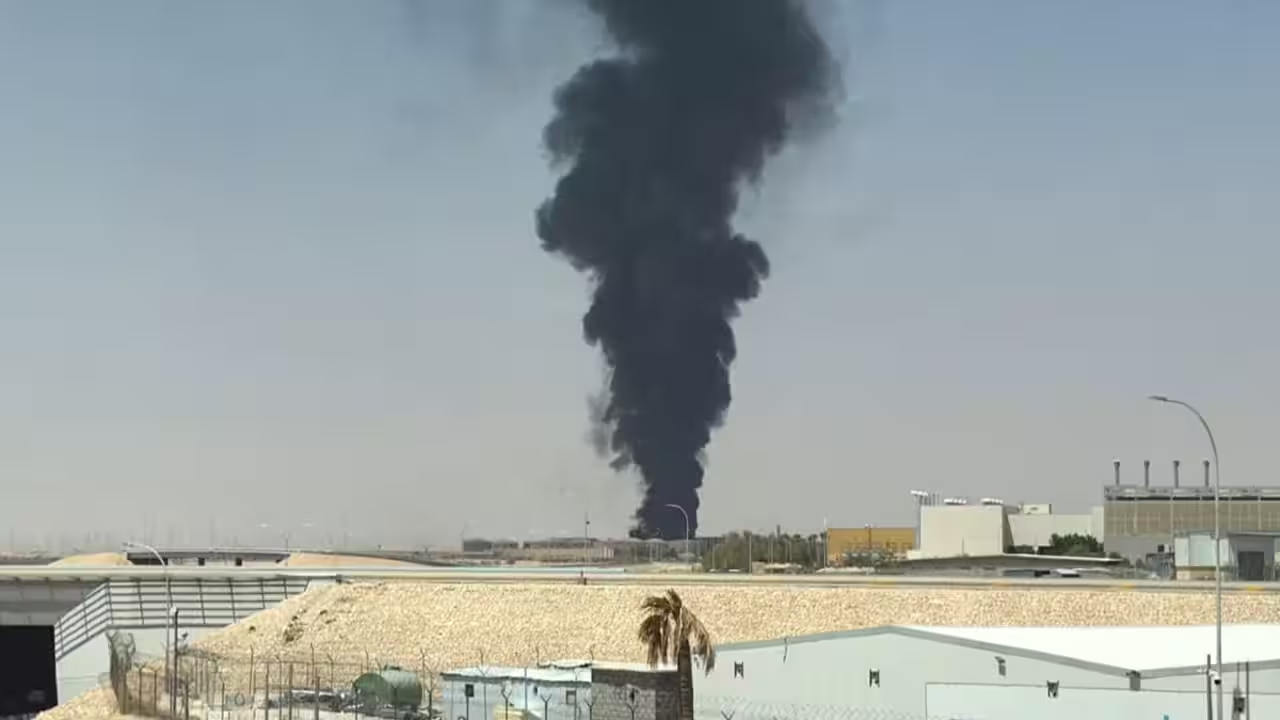
Saudi Arabia stopped issuing public warnings of imminent military attacks days before deadly strikes on Riyadh airport killed at least 18 people and wounded more than 300, as reported by Reuters.The suspension came despite a rise in Houthi attacks on the kingdom.The kingdom began sending threat alerts to mobile phones and social media accounts through a national early warning system in May. However, the alerts stopped as attacks intensified in the lead-up to last week’s airport strikes.The last public alert before the attacks was issued on September 29 for the southern province of Najran, according to posts on the Saudi civil defence authority’s X account.The authority has continued to issue warnings about adverse weather, including rain and flooding, with its latest such advisories issued on Monday. It has also warned residents against sharing images, rumours or information about missile interceptions and impact sites, in line with government regulations introduced in March.Before last week’s airport attacks, officials from an allied Western government asked Saudi authorities why the alerts had stopped, two officials with direct knowledge of the matter said. The Saudi response was that the alerts were too disruptive and that many citizens had complained about being woken up by them at night, the officials said.Western embassies issue their own alertsDespite the absence of public warnings until Monday, Riyadh had come under attack about a dozen times during the period, two Western officials said, as cited by Reuters.Western embassies in Saudi Arabia continued issuing internal missile and drone alerts to their staff, according to three people familiar with the matter and alerts reviewed by Reuters.The alerts were compiled using a combination of intelligence from the United States and other Western governments, along with information from Saudi authorities, one of the people said. They included warnings sent to embassy staff around the time of the first two airport strikes last week.However, the embassies had also received no internal warning before Saturday’s airport strike, the people familiar with the matter said, without providing an explanation.On Sunday, Saudi state television released footage of Saturday’s attack, showing travellers inside the airport terminal shortly before the missile struck. Dozens of people were seen lining up to board a flight, while men and women sat waiting in chairs and looked at their mobile phone screens.The footage then showed a bright orange flash as the missile exploded.All Gulf countries have faced Iranian drone and missile attacks since the US-Iran war began in February, but their governments have adopted different approaches to public warnings.Qatar’s interior ministry has issued mobile phone alerts before nearly every attack. During the most recent attacks in July, residents were warned to stay indoors and away from windows.Bahrain and Kuwait, meanwhile, have repeatedly sounded sirens urging people to take shelter.You use AI every day. Now get your AI Quotient. Take the AIQ test.
Topics in this story
Gathered from external sources. Rights to this text belong to whoever originally published it.