<b>From Gen Z wave to heat in 150 days: Balen faces street anger, parl pressure and party unease</b>
South Asia News: Barely 150 days after Gen Z anger helped propel Balendra âBalenâ Shah to Nepalâs top job, the same restless street energy that propelled his rise seem.
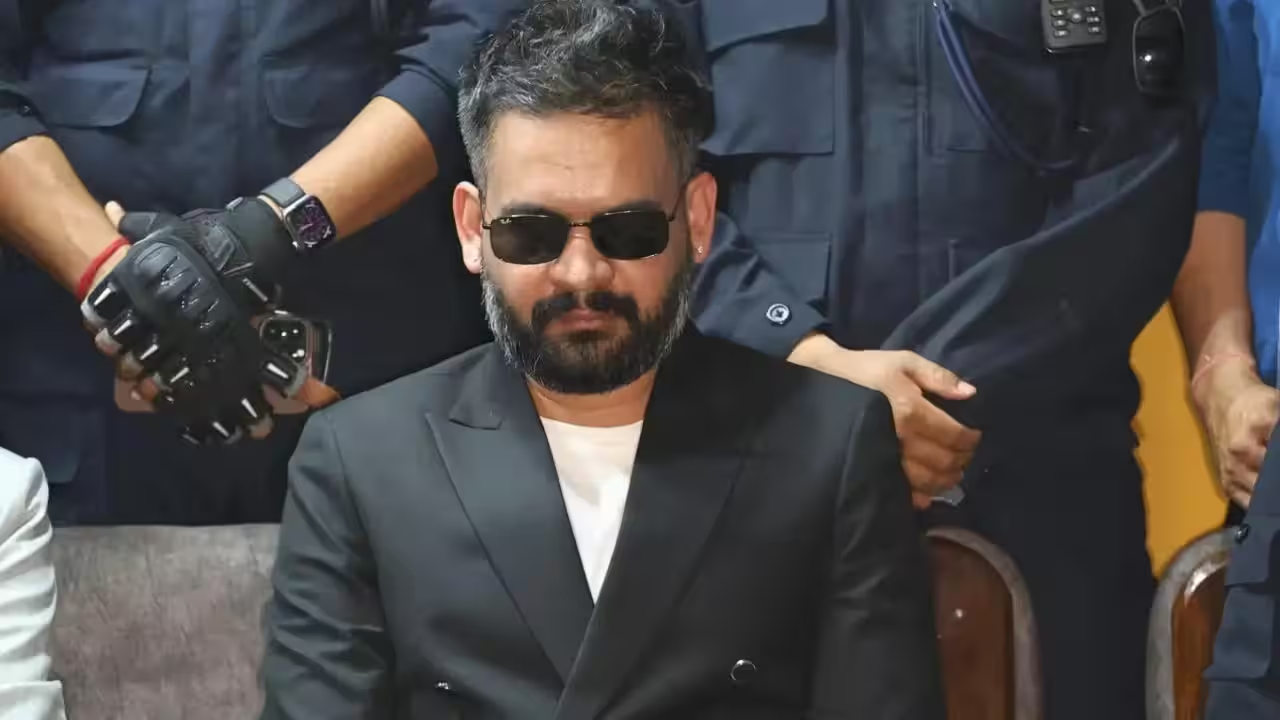
Barely 150 days after Gen Z anger helped propel Balendra âBalenâ Shah to Nepalâs top job, the same restless street energy that propelled his rise seems to be pinning him down, leaving the former rapper and Kathmandu mayor under pressure from public protests, Parliament and his own Rastriya Swatantra Party (RSP).Barely two months after he took office, young protesters returned to Kathmanduâs Maitighar Mandala demanding his resignation, while opposition MPs attacked his repeated absence from Parliament, where he attended only five of the first 39 sittings before Speaker Dol Prasad Aryal directed him to appear and answer lawmakers on Aug 26.The political honeymoon began fraying within weeks of Shah taking office on March 27 after RSP swept 182 of 275 House seats. In April, strict enforcement of customs rules on goods brought across the open India border hit people dependent on Indian markets for groceries, medicines and household essentials, triggering protests in border towns and forcing authorities to relax the move.Public anger intensified in July after 25-year-old ride-share driver Ganesh Nepali self-immolated outside the passport office in Kathmandu following a dispute over municipal action against his vehicle. His death fuelled demonstrations over municipal policing and revived criticism of drives against informal settlements and landless squatters without adequate rehabilitation.Shah also faced sustained attacks over Nepalâs border dispute with India after telling Parliament, âAfter becoming PM, I came to know that not only has India encroached on Nepalâs land, but Nepal has also encroached on Indiaâs land.â Opposition parties demanded evidence, withdrawal of the statement and an apology.Pressure also came from Nepalâs media fraternity. Federation of Nepali Journalists (FNJ) alleged in May that senior journalist Kishore Shrestha faced police surveillance, an attempted arrest and threats after his publication carried reports critical of a minister and ruling-party leaders.Violent communal clashes in southern Nepal along the border with India added another layer of pressure and forced Shah to address the nation after criticism over his delayed response, while in Pokhara former Gorkha servicemen, their families and prospective recruits continued demanding a resolution of stalled recruitment of Nepalis into Indian Army under Agnipath.The strain meanwhile has spread inside RSP, where lawmakers and senior leaders questioned Shahâs distance from party structures and unilateral governing style, with party insiders saying he had shown âlittle faith in the party system itselfâ. RSP MP Jagadish Kharel sharpened the criticism from within while speaking in Parliament, saying, âThis govt will not survive if only the dignity of the Prime Minister is preserved. Our dignity must also be preservedâ. The unease was serious enough for home minister Sudan Gurung to urge colleagues at RSPâs Aug 19 parliamentary-party discussion to "contain" their differences rather than carry them into House. âLetâs keep the quarrels at home, letâs not oppose (the govt) in the House; the opposition is beginning to grow stronger,â he said. Catch the latest World News and Live updates. Download the TOI app.
Topics in this story
Gathered from external sources. Rights to this text belong to whoever originally published it.