A Brisbane computer repairman spent 18 months collecting 4,480 discarded battery cells; his DIY powerwall now runs some household appliances off-grid
Discover how Brisbane computer repairman Pete Matthews transformed 4,480 discarded lithium-ion battery cells into a DIY powerwall, significantly reducing his electricity bill and powering his home off-grid.
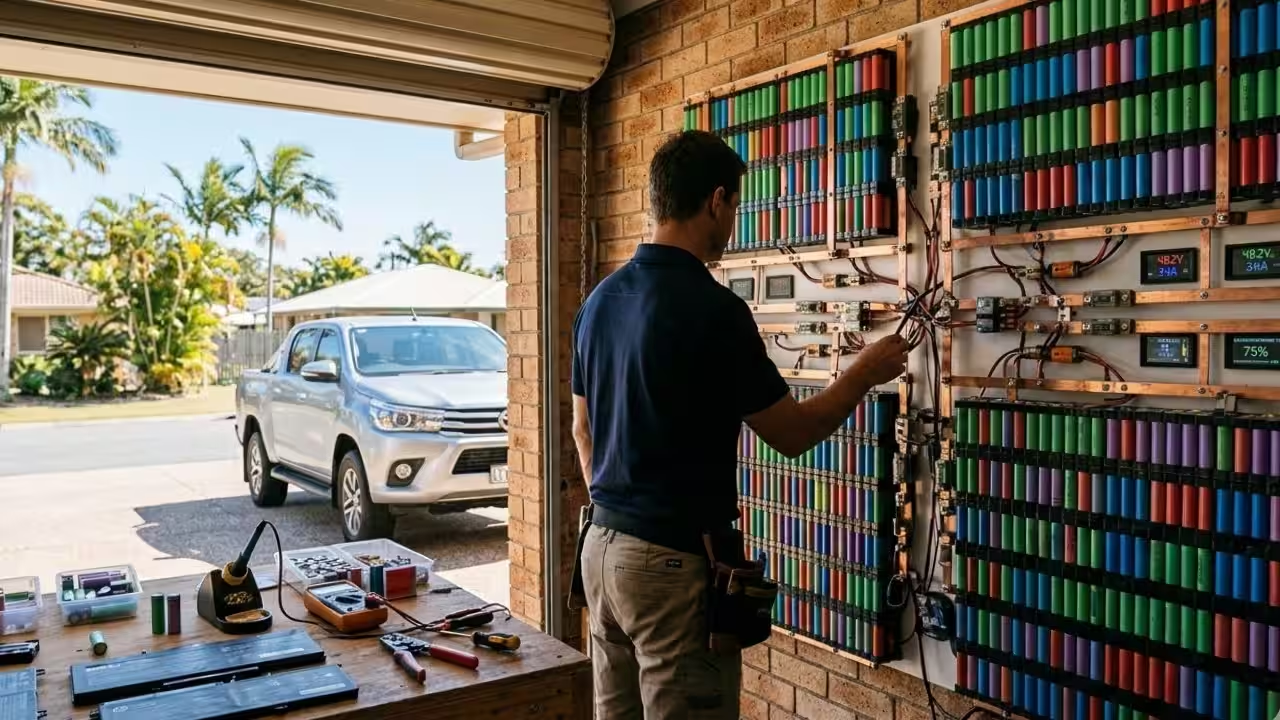
Turning scrap into something useful can be considered an art form, and only a few people have the skills and patience to transform discarded electronics into practical household tools. Back in 2017, an Australian man named Pete Matthews caught people’s attention when he pulled out all the stops to build a DIY powerwall from discarded batteries.According to an ABC News report from that time, Matthews spent nearly 18 months collecting and wiring thousands of discarded batteries. Because he was bored and wanted to make the best use of his time, his main goal during this period was to construct his own homebrew version of Elon Musk’s Tesla Powerwall, a home battery designed to offer reliable backup power during an outage.Building a backyard power systemDuring an interview with The Link, Matthews candidly shared what inspired the build, noting he just needed a hands-on project to get his ideas out of his head and onto the workbench. To ensure his setup was safe and up to code, he enlisted the help of a licensed electrician. Upon completion, the self-taught computer repairman used his backyard invention to power most of his family’s household appliances off-grid, except for high-draw appliances such as hot water, air conditioning, and the stove, which were connected to the main grid.High energy storage capacity on a budgetElsewhere in the interview, Matthews mentioned that his DIY powerwall had an energy storage capacity of 40 kWh, approximately 2.8 times the capacity of Tesla’s 14 kWh Powerwall 2. Along with this, he revealed his electricity bill went down from $1,700 to $400 because of his backyard creation.The inventor also noted that the system cost him $10,000 and was developed with the help of 4,480 18650-type lithium-ion batteries, a generic battery primarily found inside laptops as well as other rechargeable consumer devices. To build it, he sourced the batteries sold by the kilogram from recycling companies, which amounted to approximately 8 cents per piece. On the other hand, he purchased the rest of the parts on eBay. In addition, he noted that builders with the right technical know-how and proper safety precautions can source components online, solder the cells together, and assemble a working build.A growing global DIY communityMatthews’ unique innovation earned him recognition from the U.S. science and technology outlet Motherboard, which named the Brisbane native one of the most central figures in the DIY powerwall scene. Subsequently, Matthews talked about the existence of the emerging DIY community on the DIY Powerwall forum and the Facebook group. He further elaborated that due to the growing DIY community, backyard hobbyists from all over the world got the chance to share their ideas and experiences regarding batteries, home energy storage systems, and even cars with each other. On top of that, he stated that they operated globally, spanning both developing and developed countries.Moreover, Matthews specified that similar DIY projects held strong potential for developing areas where power grids were unreliable, recycled parts were accessible, and green energy was in high demand. He also admitted that the bigger environmental picture never entered his mind while building his home project. Despite its impressive capacity, Matthews was cautious about comparing his DIY powerwall to Tesla’s commercial product. Since he used recycled cells that had already endured heavy wear, overcharging, and overheating, he acknowledged that his product wouldn’t last nearly as long as a Tesla Powerwall.You use AI every day. Now get your AI Quotient. Take the AIQ test.
Topics in this story
Gathered from external sources. Rights to this text belong to whoever originally published it.