In 1996, Bill Clinton created Grand Staircase-Escalante with 1.7 million federal acres; decades of boundary fights later reshaped the Utah monument
In 1996, President Bill Clinton designated the Grand Staircase-Escalante National Monument in Utah, protecting 1.7 million acres of unique geological features and archaeological sites, amid debates on conservation versus mineral development. This article explores the monument's history, boundary changes, and the ongoing significance of this landscape.
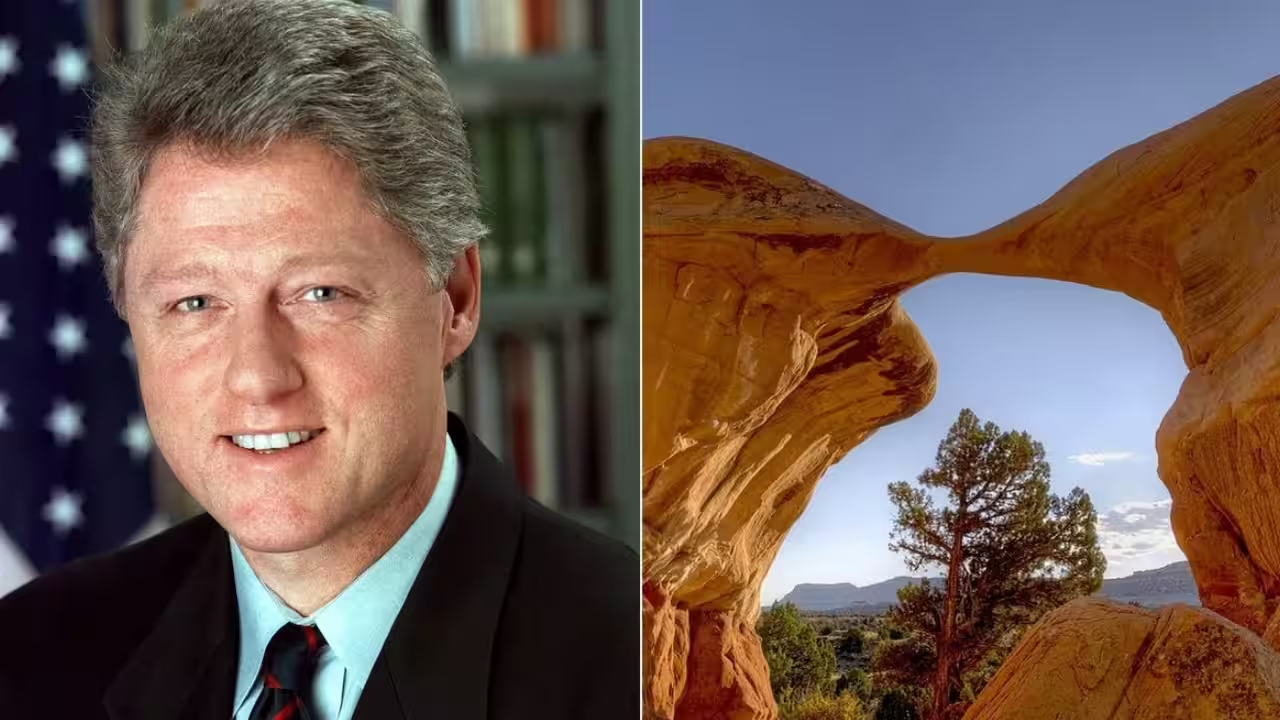
In September 1996, President Bill Clinton protected about 1.7 million acres of federal lands that have geologic features, dinosaur fossils, archaeological sites, and wildlife habitats in order to create the Grand Staircase-Escalante National Monument in southern Utah. This move was made during a debate on the future of the region. President Clinton designated the national monument through the Antiquities Act of 1906 on September 18, entrusting the management of the site to the Bureau of Land Management (BLM) of the Department of the Interior. Initially, the designation covered about 1.7 million acres, but it was expanded by Congress to cover about 1.87 million acres.Why Utah’s canyon country is important conflict groundThe region contains a broad range of landscapes, including the Grand Staircase’s layered rock formations, the Escalante Canyons and the Kaiparowits Plateau. The area’s geological record, fossil deposits and archaeological remains make it important for scientific research. Bill Clinton’s original proclamation identified these resources among the reasons for protecting the area. Additionally, the landscape preserves evidence of past human activity, including archaeological sites associated with Indigenous communities.The debate was also related to mineral development, since there are large coal resources at the Kaiparowits Plateau. It involved a potential coal mining project. The Clinton administration’s stated aim included preventing development of significant coal reserves and protecting the region’s historic and scientific resources. Supporters of mining argued that development could provide economic benefits. However, conservationists were concerned with the outcomes for the landscape and its resources. The Los Angeles Times reported opposition from the Utah government to the designation, indicating that it was controversial.How Clinton set aside 1.7 million acresThe then-president announced the designation on September 18, 1996, from the South Rim of the Grand Canyon in Arizona. Proclamation 6920 invoked the Antiquities Act, which explicitly authorises presidents to designate national monuments on federal lands to protect objects of historic or scientific significance. This proclamation reserved approximately 1.7 million acres of federal land in Utah and assigned management responsibility to the BLM. Furthermore, it directed the Interior Secretary to prepare a management plan. This designation was subject to valid existing rights, and the proclamation particularly provided that existing livestock-grazing permits and uses would continue under applicable laws and regulations.From expansion to repeated boundary changesThe monument’s boundaries did not remain fixed after 1996. On three occasions, Congress made adjustments, including through legislation in 1998 and 2009, increasing the federal acreage reserved within the monument by 170,000 acres. Consequently, the total area reached 1.87 million acres. In December 2017, President Donald Trump issued a proclamation removing around 861,974 acres from the monument. Conservation organisations and paleontologists challenged the removal, arguing that while the Antiquities Act allows presidents to establish monuments, it does not grant them the reciprocal authority to reduce or dissolve them.President Joe Biden then restored the monument to 1.87 million acres, its immediate size before the removal in 2017, through a proclamation in October 2021. Nevertheless, the issue regarding its boundary did not stop there. More recently, on July 13, 2026, President Donald Trump issued another proclamation reducing the monument to approximately 181,541 acres, divided into the Canyons of the Escalante and Kaiparowits Horizon units. The latest change therefore means that the monument’s present boundaries differ substantially from those restored in 2021.You use AI every day. Now get your AI Quotient. Take the AIQ test.
Topics in this story
Gathered from external sources. Rights to this text belong to whoever originally published it.