A Kentucky landowner paid $800,000 in 1998 for two acres beside the Ohio River despite floodplain rules adopted a year earlier; after never seeking a floodplain variance, it lost its compensation appeal in 2026
Buying land for development can involve risks that are not immediately visible, particularly when local regulations restrict how a property can be used.
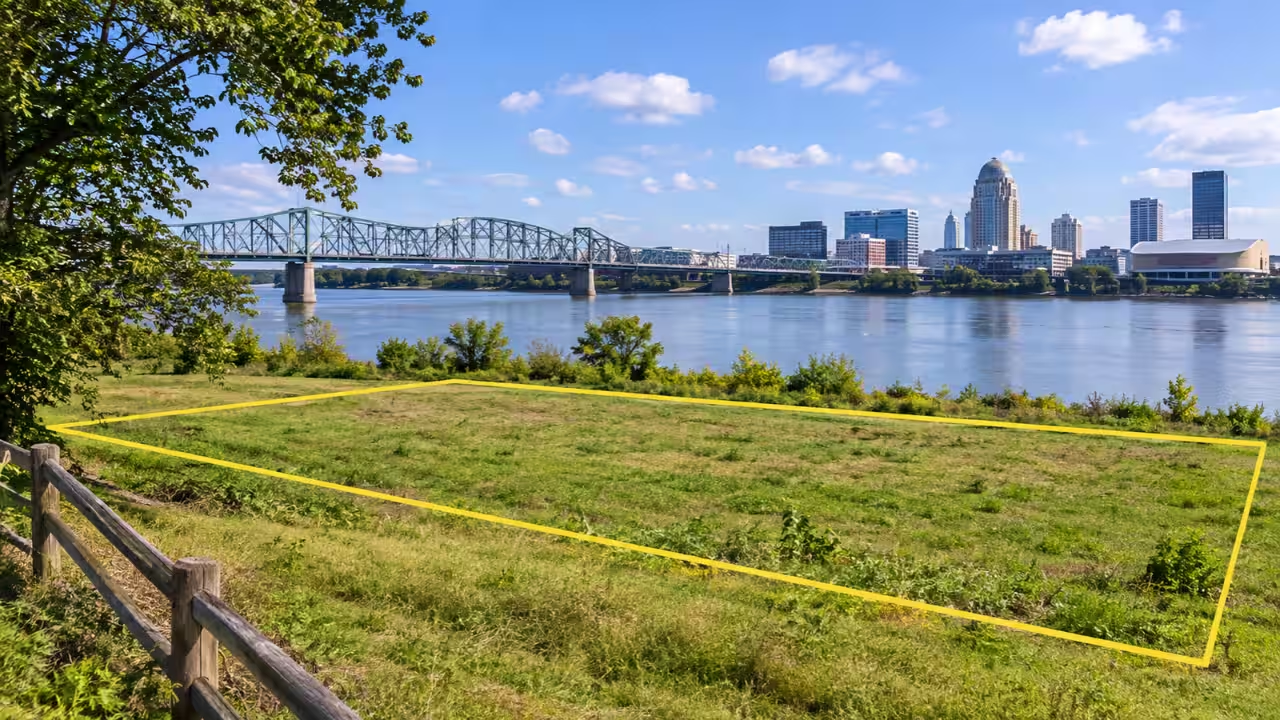
Buying land for development can involve risks that are not immediately visible, particularly when local regulations restrict how a property can be used. A Kentucky landowner that purchased a two-acre tract along the Ohio River for $800,000 in 1998 has lost its appeal seeking compensation over floodplain restrictions that it claimed prevented the planned development. The dispute centred on floodplain regulations introduced by local authorities in 1997, which limited construction in certain areas considered vulnerable to flooding.In an opinion rendered on October 30, 2026, the Kentucky Court of Appeals affirmed a Jefferson Circuit Court decision granting summary judgment to Louisville-Jefferson County Metro Government and the Metropolitan Sewer District. According to the court's ruling, available on Justia under Lampton Securities Partnership, LLP v. Louisville-Jefferson County Metro Government, the landowner had not obtained a final decision from the relevant authorities about what could be built on the property. It had also failed to seek a variance, an administrative exception that could have allowed development despite the restrictions. The appellate court consequently concluded that the compensation claim was premature.A development plan approved before floodplain restrictionsThe dispute originated in the early 1990s, when the owners of a roughly four-acre property along the Ohio River received approval from the Metropolitan Sewer District for a condominium development. The project was planned in two phases, with the first covering approximately two acres and the second intended for the remaining two acres. While the first phase was completed, the second portion, which later became the subject of the legal dispute, remained undeveloped. An electrical equipment building was constructed on the tract, and utility lines were installed, but no condominiums were built there.In 1997, Louisville-Jefferson County Metro Government introduced floodplain ordinances following catastrophic flooding. The regulations restricted most new construction within the conveyance zone, a designated section of the floodplain intended to accommodate the movement of floodwater. The two-acre tract was located within this zone.The ordinances, however, included exceptions. They allowed certain construction that had already begun before the regulations took effect to continue. They also permitted affected property owners to apply for specific variances through the Metropolitan Sewer District's Floodplain Board.Landowner purchased the property after restrictionsLampton Securities Partnership purchased the two-acre tract in 1998 for $800,000, a year after the floodplain regulations were introduced. The tract sat largely idle for years before the partnership placed it on the market around 2019. The marketing materials described the land as suitable for commercial development. However, Metropolitan Sewer District personnel learned about the sale, leading to a meeting between the district's legal counsel and representatives of Lampton.During the meeting, the district's counsel expressed the view that the floodplain ordinances prevented development on the property. Lampton subsequently argued that the restrictions had deprived it of all economically beneficial uses of the land. Rather than applying for a variance or attempting to begin the second phase of the previously approved condominium project, the partnership filed a reverse condemnation lawsuit against the Metro Government and the Metropolitan Sewer District in May 2020.Reverse condemnation, also known as inverse condemnation, allows a property owner to seek compensation when government regulations or actions effectively take private property without formally acquiring it. Lampton argued that the restrictions amounted to such a taking.Court says compensation claim was prematureIn July 2025, the Jefferson Circuit Court granted summary judgment in favour of the two government entities. The lower court cited Lampton's failure to exhaust administrative remedies and the timing of its complaint. The partnership appealed, but the Kentucky Court of Appeals found that the case could be dismissed on another ground: the claim was not ripe for judicial review.The appellate judges explained that a regulatory taking cannot be established until the relevant authorities have made a final decision about how a property can be used. Property owners must generally follow reasonable administrative procedures, including pursuing available variance procedures, before claiming that regulations have eliminated the property's economic value.In this case, Lampton had received no final decision from the Floodplain Board. The court also noted that an opinion expressed by a Metropolitan Sewer District staff member was not an official determination of the property's permitted uses. The court rejected Lampton's argument that seeking a variance would have been futile. The Floodplain Board had the authority to grant exceptions, and the record showed that it had approved variances for other property owners.Ruling leaves possibility of a future lawsuitThe Court of Appeals also found insufficient evidence to establish that the Floodplain Board would inevitably reject Lampton's application. The district's representative had testified that the decision rested with the board, not individual staff members, and that no similar condominium development variance had previously been requested. The judges therefore concluded that Lampton had filed its compensation lawsuit before obtaining a final administrative decision on the property's permitted uses. They affirmed the Jefferson Circuit Court's summary judgment in favour of Louisville-Jefferson County Metro Government and the Metropolitan Sewer District.Importantly, the ruling did not determine whether the property could ultimately be developed or whether the floodplain regulations amounted to a taking. The appellate court clarified that Lampton could bring another compensation claim in the future if it obtained a final administrative decision and its claim otherwise met the legal requirements.You use AI every day. Now get your AI Quotient. Take the AIQ test.
Topics in this story
- Kentucky landowner floodplain appeal
- Kentucky Court of Appeals ruling
- Louisville-Jefferson County Metro Government
- compensation claim land development
- Lampton Securities Partnership
- floodplain regulations Ohio River
- Metropolitan Sewer District
- land use restrictions
- reverse condemnation lawsuit
- property development risks
Gathered from external sources. Rights to this text belong to whoever originally published it.