Michael J. Fox’s foundation launched a Parkinson’s study in 2010; 16 years later, its data has been downloaded over 50 million times and is helping researchers design more targeted clinical trials
When the Michael J.
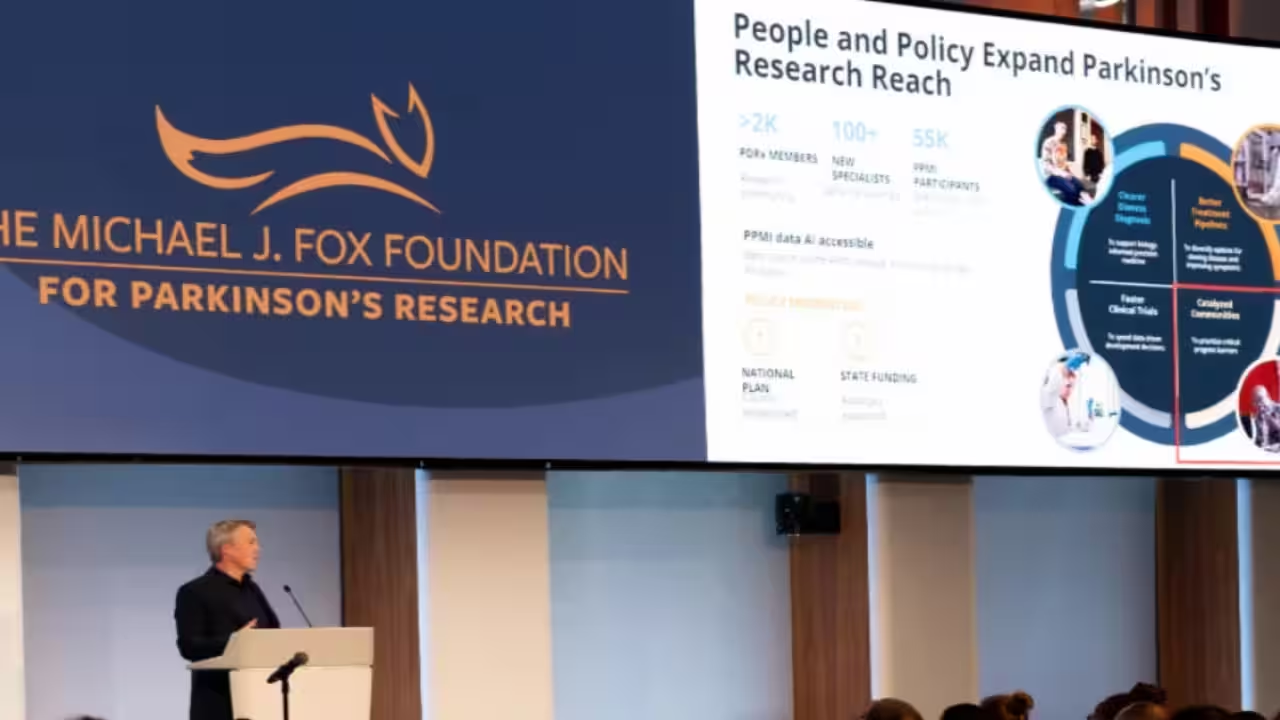
When the Michael J. Fox Foundation for Parkinson’s Research launched a major study in 2010, the objective was to help scientists better understand the disease and identify markers that could improve the process of diagnosis and subsequent treatment. Sixteen years later, the initiative has grown into a global research resource. With its data downloaded over 50 million times, it has transformed the nature of Parkinson’s research and drug development.The study, originally known as the Parkinson’s Progression Markers Initiative (PPMI), reached this milestone as researchers began exploring new ways to understand the biological differences between people living with Parkinson’s disease. In May 2026, the foundation announced that the initiative would be renamed the Parkinson’s Precision Medicine Initiative, reflecting the progress made since its launch and a growing focus on treatments tailored to individual patients.The research that grew into a global resourceFor Michael J. Fox, who has publicly shared his experience of living with Parkinson’s disease since disclosing his diagnosis in 1998, the foundation's work has remained focused on advancing research and bettering options for people affected by the condition.Parkinson’s disease is a neurological condition that affects movement, can also cause a range of non-motor symptoms and worsens progressively over time. The foundation has described Parkinson's as “one of the fastest growing neurological diseases in the world.” The report Economic Burden of Parkinson’s and Atypical Parkinsonism in the United States, prepared for the Michael J. Fox Foundation, indicates that the disease affects an estimated 1.2 million Americans and costs the US federal government over $82 billion yearly.While existing treatments can help alleviate certain symptoms, the major global endeavour behind Parkinson's research has been finding ways to relieve the disease's effects. The foundation established PPMI to carry out research on biomarkers, which are measurable biological indicators that can help scientists identify and track a disease. By studying people with Parkinson’s, individuals considered at risk and control participants, researchers could collect information about how the condition develops and changes over time.Over the years, the initiative has expanded beyond its original scope. According to the foundation's May 2026 announcement, it now includes over 4,200 participants attending clinics across 50 sites in 12 countries, alongside more than 47,000 online participants contributing information through its digital platform.The resulting collection of data, biological samples and research findings has become an important resource for scientists investigating Parkinson’s. Rather than each research team having to build its own study from the beginning, investigators worldwide can access PPMI data and use it to explore questions about the disease.Why is the study moving towards precision medicineOne of the most significant developments in Parkinson’s research is the growing understanding that the condition does not necessarily follow the same biological course in every person. The renamed Parkinson’s Precision Medicine Initiative reflects an effort to address this challenge. Precision medicine focuses on understanding the biological characteristics of individual patients rather than treating everyone as though they have precisely the same form of a disease. The foundation has highlighted how PPMI data can help researchers identify disease-related changes earlier, making it easier to develop more sensitive ways to measure changes during clinical trials.These findings could help investigators select participants whose biological characteristics make them more suitable for testing a particular treatment. They could also help researchers determine whether a potential therapy is having the intended effect.MJFF Chief Scientist Mark Frasier, PhD noted that “It’s a tremendously exciting time in Parkinson’s research,” and it certainly is. Some recent and noteworthy breakthroughs involve research using the alpha-synuclein seed amplification assay, which can detect Parkinson’s related biological activity in samples. Work using PPMI samples has helped further this approach, including the possibility of identifying disease related biology even before symptoms appear.While the data and scientific developments have attracted attention, the initiative also depends on the people who contribute their time, health information and biological samples.Thousands of participants have helped build the resource over the past 16 years, allowing researchers to examine the disease across different populations and stages of progression. Their contributions have made it possible to develop a dataset that individual laboratories would find difficult to assemble independently.The foundation has also expanded opportunities for people to participate remotely through its digital research hub , my PPMI. This allows individuals to contribute health information and take part in research without every aspect of their involvement requiring an in-person visit.The initiative's international reach also means that its findings can inform research beyond the institutions where the original information was collected. By making its research and data available, the foundation is helping lay the groundwork for precision medicine in Parkinson research.What comes next for Parkinson’s research?The foundation's next challenge is to turn the knowledge gathered through years of research into more effective ways of identifying, studying and treating Parkinson’s disease.Its data is helping researchers redefine clinical trial designs, investigate differences between patient groups and explore whether potential treatments could be better matched to the people most likely to benefit. Such work remains profound and fundamental in medical research because identifying a promising therapy is only one part of the overall process, but it is a crucial starting point for the research.You use AI every day. Now get your AI Quotient. Take the AIQ test.
Topics in this story
Gathered from external sources. Rights to this text belong to whoever originally published it.