Mapped: Theatres at risk and fighting back across the West of England
During these difficult times, venues are keeping their doors open in a range of ways.
In the space of a week, two theatres in the West of England announced they would be closing their doors.
Taunton Brewhouse said on 7 October that it would shut at the end of the month , citing financial difficulties. A week later, Bristol Improv Theatre announced it would close with immediate effect due to its "very difficult and precarious financial position".
Other theatres across the region are having to rely on government funding, crowd funders and community takeover bids to keep their doors open.
The BBC has mapped closures and campaigns to save and revive theatres, showing a mixed picture across the region.
Teenage boy dies in crash following police pursuit
Three arrested after illegal warehouse rave
The penguins are noisy, the people fantastic - what it takes to be an Antarctic postmaster
Joshua McTaggart, chief executive of the Theatre's Trust said more smaller venues risk closing down due to rising energy bills, staff wages and the maintenance of older buildings, while audiences are "increasingly choosing to go into the city to see big productions, rather than the local theatre".
But he said there was still reason to hope that "the state of the theatre is, for the most part, buoyant".
The BBC has spoken to theatres of ranging sizes to see how they are managing to keep their doors open during these difficult times.
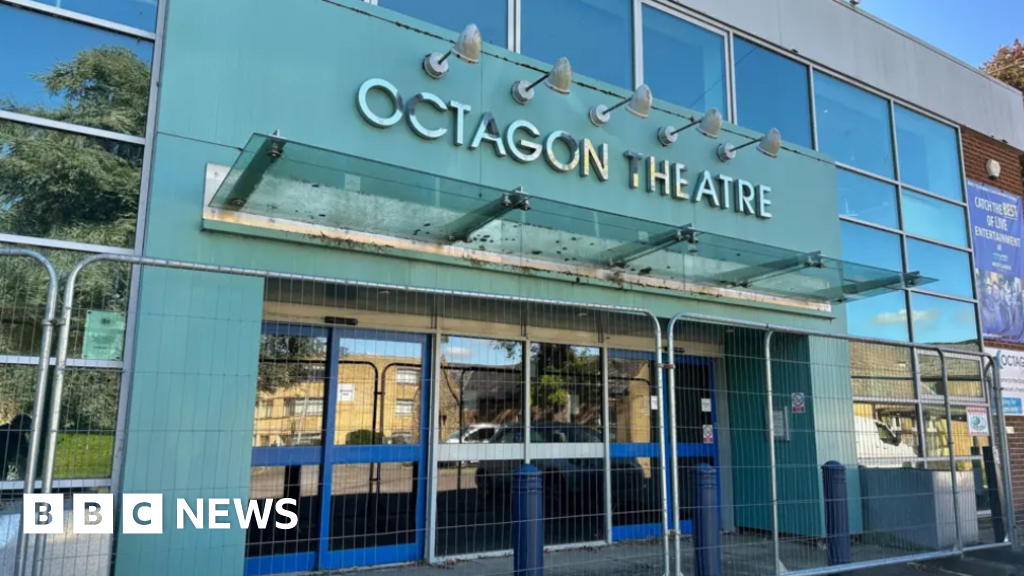
The Octagon Theatre in Yeovil has been shut since May 2023 after a previous larger-scale refurbishment was abandoned due to rising costs.
Somerset Council's planning committee approved a new redevelopment scheme in February , which includes making changes to the foyer and cafe, creating a new studio space and extending the backstage area.
Adam Burgan, theatre manager, said he felt "concern" and "sadness" about recent theatre closures elsewhere because of the "power and importance theatre plays in the community".
"It's a difficult time with rising utility costs, these are expensive buildings to heat and maintain," he said.
"Audiences are tightening their belts slightly due to the cost of living," he said, adding families leave it later to book.
"We're very lucky that we're having the £15m development, to make it a more efficient building to run."
After contractors are appointed, building work could start in the new year and be completed by autumn/winter 2028/29
"I can't wait to see a crane and spades in the ground and for our audiences to see a major milestone in seeing Octagon reopening," he said.
£10m of this is coming from the Arts Council and £3.75m from Yeovil Town Council, which they will have to repay with via a ticket levy.
"Theatres are often one of the heartbearts of the town, if we look at economic case we know they can drive regeneration of a town," Burgan said.
"It's also about feeling a sense of pride in the place where we live, we all need arts and culture to lift our spirits."
The Mechanics' Institute in Swindon is another venue that would need a major overhaul after closing in 1986.
The 19th Century Grade II gothic-style listed building has fallen into disrepair and been subject to break-ins and a fire in April.
But the Theatres Trust gave the Swindon Preservation Society a grant of £10,000 to carry out a new viability study exploring future visions for the building.
Lots of smaller theatres aren't so lucky to have access to large pots of government money and instead have had to rely on crowdfunding.
The Kings Theatre in Gloucester reopened last year after a huge fundraising effort by locals.
The volunteer-run venue had closed in early 2025 after an audit exposed fire safety risks, and £20,000 was raised to bring the building up to scratch.
Armstrong Hall in Thornbury, to the north of Bristol, also reopened last year after a large donation made the much-needed refurbishment possible.
After closing during Covid in 2020, a £350,000 gift from Maggie Lansdown led to renovation of one of the performance halls, as well as a new foyer, bar, toilets and green room.
The Cheltenham Playhouse is another venue to rely on a fundraising campaign to stay open.
It ran a number of fundraising initiatives in 2025 to raise its target of £100,000, with the help of a grant from Cheltenham Borough Council of £25,000.
Miles Leven, their theatre manager, said: "It always really sad to see any venues closing, big or small.
"The cost of owning and managing a premises means creative spaces are struggling to remain open.
"Audiences do want culture and live entertainment, but it's the balance of the cost and the upkeep."
He said the charity's difficult financial position was averted last year due to a fundraising campaign, allowing them to keep the doors open.
He said the theatre is working out how to combine a more commercial approach with its community and charitable aims so that it becomes more viable in future.
But the cost of maintaining the Grade-II listed building keeps going up, including £1m to fix the roof that is currently leaking onto the stage.
"No better management is going to get us to replace that roof - support is limited and it feels like it's going to have to be luck that gets us there."
Leven said they have competition from a bigger theatre on their doorstop, but "some people prefer a more intimate performance setting".
His urged audiences to support smaller venues by "trying something different".
Some venues are having to offer a variety of things due to the decline of community space.
The Amulet Theatre in Shepton Mallet closed in 2010, but after being used and a gym and unsuccessful attempts to turn it into flats, there are plans for a community takeover.
Martin Berkeley from the Buy The Amulet campaign said the town doesn't have a proper community space let alone a dedicates theatre.
"Running a commercial theatre becoming increasingly difficult," he said.
Some 300 local people have already bought shares and funding applications have been submitted to help reach the total of nearly £750,000 to buy the building.
"We would start with a community centre purpose and then add pantomimes and professional touring theatre shows," he said.
They are waiting for news on the new Community Right to Buy fund.
"Public funding is mostly aimed at existing venues, there's very little for buying buildings."
They ran a series of temporary events last summer on a "shoestring budget" and plan to eventually increase the capacity of the theatre space to make it more financially viable.
"We're still on target, we're making progress, but it's painfully slow because there's a lack of funding out there, so for now it's about remaining community focused," he said.
Follow BBC Bristol on Facebook , X and Instagram . Send your story ideas to us on email or via WhatsApp on 0800 313 4630 .
Closures highlight struggles facing local theatres
Improv community 'devastated' by theatre closure
Brewhouse Theatre is closing - what happens next?
Topics in this story
Gathered from external sources. Rights to this text belong to whoever originally published it.