How janta got protest mantra. And lost it
Delhi Police de-notifies Jantar Mantar as protest site, raising concerns over visibility for dissent; article traces shift from Boat Club and key agitations.
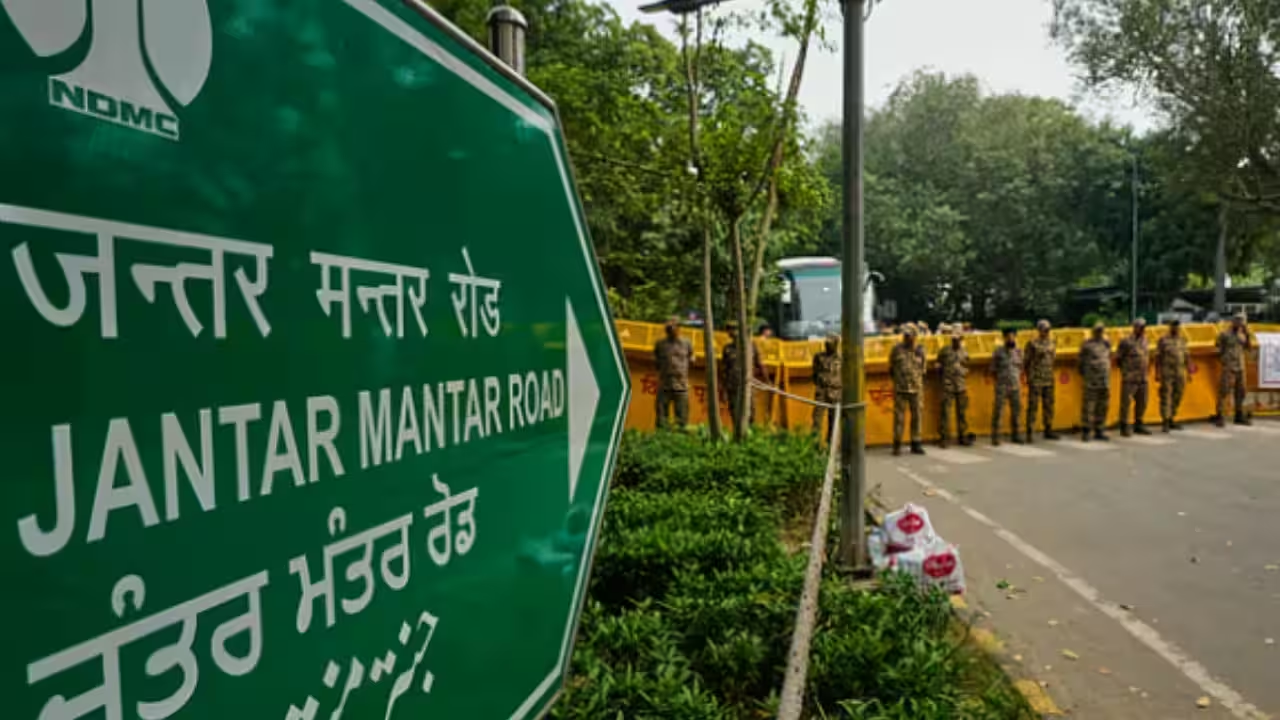
NEW DELHI: For decades, Jantar Mantar has been more than a stretch of road where people gather with placards, raise slogans and sit on dharna.For many, it has been the place where a grievance that went unheard elsewhere could find an audience from national television cameras and newspaper reporters to the very people protesters wanted to hold accountable.That familiar address for dissent, however, has now lost its designated status as a protest venue after being de-notified by Delhi Police.The change is not merely about shifting crowds from one location to another, but raises a larger question about what happens when a protest loses the visibility that came with its location.Anupam, who has led several protests at Jantar Mantar for youth causes and is now associated with Congress, said the recent protest was about more than the issue concerning CEC Gyanesh Kumar.Protesters were asserting their right to demonstrate, but many were detained before they could reach the venue, he added.“Jantar Mantar Road is located in the heart of central Delhi, roughly 1.5km from Parliament House and very close to major ministries, govt headquarters and CP,” he said.For protesters, that location meant being close to the institutions they sought to question. It also placed their demands within easy reach of newsrooms.Journalists and camera crews could reach the site quickly, giving even relatively small demonstrations a chance to attract attention that a larger gathering on the outskirts might struggle to secure.But Jantar Mantar’s significance was not confined to movements with national leaders, large banners or organisational backing.Sidharth Mishra, author of Delhi Political, said the venue also provided space to people whose problems rarely attracted attention.Large organisations and well-known campaigners, he said, could find other ways to amplify their voices, including through social media. Smaller groups and individuals don’t necessarily have those options.“They were people whose voices were not heard in their states, those affected by bureaucracy or cheated by banks and cooperatives. Many times, their stories would catch a reporter’s attention and their problems would get resolved,” Mishra said.He questioned whether such protesters would be able to afford the alternatives: “Do they have so much money to book Ramlila or other grounds?”The history of protest venues in the capital offers a glimpse of how Jantar Mantar acquired this role. For decades after Independence, the Boat Club lawns near India Gate were a major gathering point, bringing protesters close to Parliament and govt’s principal offices. Mahendra Singh Tikait’s massive farmers’ mobilisation in 1988 became one of the defining episodes in the debate over large demonstrations in central Delhi.As concerns over security, traffic and public order prompted tighter restrictions around prominent central spaces, protesters moved to other locations. In the early 1990s, tents and demonstrations along the stretch now known as Kartavya Path were dismantled, and Jantar Mantar emerged as a prominent alternative.Among the first protest held here was a major mobilisation in 1993, led by then DUSU president Ashish Sood along with 33 civil organisations, that brought thousands of students to the venue for a “Jail Bharo” campaign against Centre’s anti-student measures and economic policies.Over the years, the road became associated with causes that extended beyond student politics. Anna Hazare’s 2011 anti-corruption movement demanding Jan Lokpal Bill drew thousands. In 2015, military veterans held hunger strikes for One Rank, One Pension’s implementation.TN farmers staged a 41-day protest in 2017 to highlight agrarian distress, while prominent wrestlers chose the venue in 2023 to raise demands for action over allegations of sexual harassment against former WFI chief Brij Bhushan Sharan Singh.Jantar Mantar’s place in history has not been uninterrupted. In Oct 2017, NGT prohibited protests and loudspeakers amid complaints of noise, but SC restored the right to protest in July 2018.You Can Also Check: Gold Rate in Delhi | Silver Rate in Delhi | Bank Holidays in Delhi | Public Holidays in Delhi | Delhi AQI | Weather in Delhi | Petrol Price in Delhi | Diesel Price in Delhi | CNG Price in Delhi | LPG Price in DelhiStay updated with the latest Delhi news. Download the TOI App.
Topics in this story
Gathered from external sources. Rights to this text belong to whoever originally published it.