In 1979, a Florida woman spent a week in a 50-foot eagle’s nest; her stunt helped fund a raptor centre that had released 620+ rehabilitated bald eagles by 2019
Discover the remarkable journey of Doris Mager, who lived in a 50-foot eagle's nest to raise funds for a bird rehabilitation center that has helped over 620 bald eagles. Learn how her actions contributed to the conservation of this iconic species and the impact of the Audubon Centre for Birds of Prey.
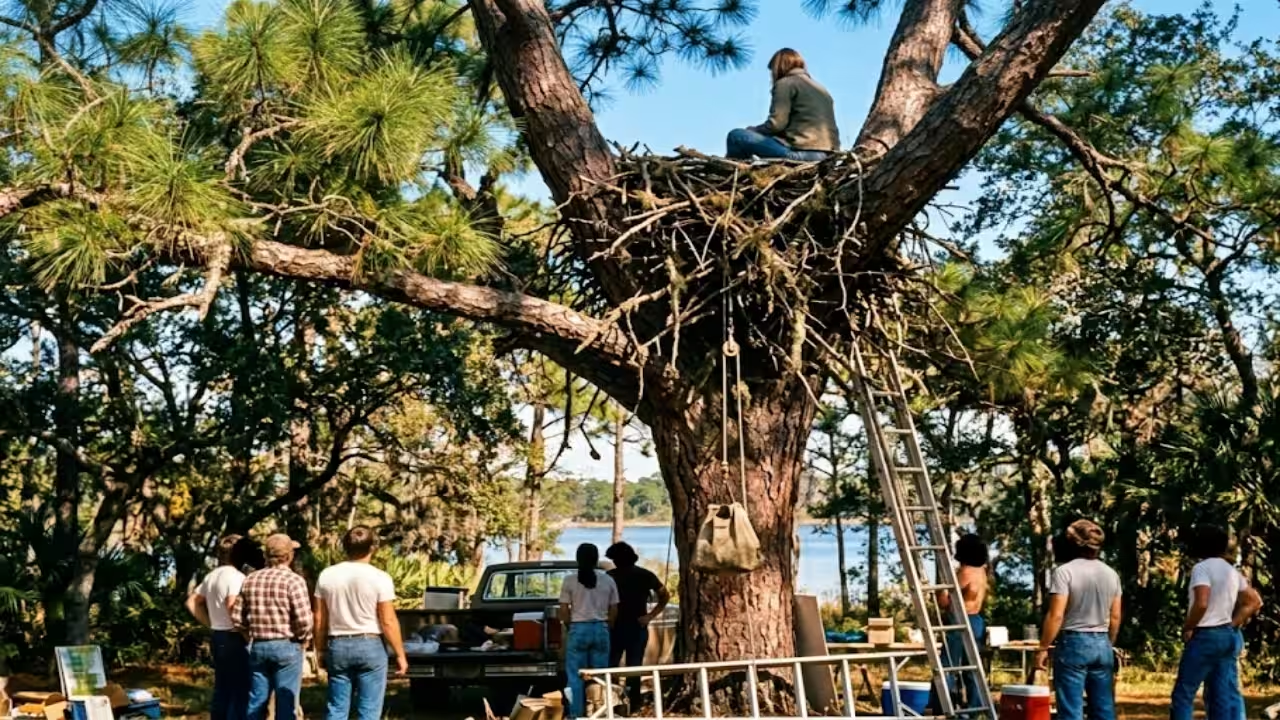
The bald eagle faced significant challenges throughout the United States in the early 1970s. The national bird was in a sharp decline due to habitat destruction, DDT, and illegal shooting; in 1973, Florida recorded just 88 active nests. There was no designated location for ill and injured birds of prey in Central Florida at the time, so anyone who spotted an injured hawk, owl, or eagle had virtually nowhere to send it.That gap was what put Doris Mager in a tree. Mager, a gift shop manager at the Florida Audubon Society's office in Maitland, had spent years nursing injured raptors and in June 1979 she climbed 50 feet into an abandoned eagle's nest to raise money and attention for a proper rehabilitation centre. She was there a week. The Audubon Center for Birds of Prey opened on October 19, 1979. By its 40th anniversary in 2019, it had released more than 620 rehabilitated bald eagles into the wild, according to Audubon’s anniversary report.How it startedMager began her rescue efforts in 1963, when a visitor brought a red-tailed hawk with an infected foot into the gift shop. She took the bird home, placed its foot in warm water and Epsom salt and released it a month later. She was no expert and thus sought instruction from raptor specialist John Hamlet. Word got out, and additional injured birds came in; at one point, she had seven eagles in her backyard. By the 1970s, both Mager and Audubon Florida could see that a dedicated facility was needed. Some sizeable donations had come in, but funding still fell short. Then she remembered a story about a couple in British Columbia who had spent a night in an eagle’s nest.A week in the treetopsMager thought, as she subsequently described it, that residing in an eagle's nest to collect money would be the best trick possible. She selected a nest high in a dead longleaf pine. Her greatest worry was if they’d let her. Disturbing a bird’s nest is banned in many circumstances, especially if the species is endangered. The US Fish and Wildlife Service said it did not support the proposal but would not stop her.Some of Mager’s friends were experienced tree climbers, so they helped install a ladder and lightning rods and build a pulley system to transport food, water and waste. Mager began her weeklong stay on June 14, 1979. By the morning of June 15, she had completed her first night in the nest. Audubon’s account notes that she was never left alone during the stay. Friends, colleagues and volunteers gathered under the tree to support the fundraiser. About 50 came to see her every day, including journalists, and on one wet day a string of cars got stranded in the mud on the way to the location. She remembered the mist coming off Lake Harney that first morning. She remembered the tree swaying so fiercely she had to hold on fast. The place she helped create has had a long career since.What the centre has doneBy 2019, the centre was taking in over 700 wounded or orphaned raptors per year and had released over 250 of them in the year prior. Birds who survive but can’t be released become educational ambassadors. Audubon’s 2019 report said more than 400 volunteers monitored over 700 eagle nests in Florida, while the centre’s staff investigated causes of illness and death in raptors, including pesticide exposure, microplastics and lead poisoning.In the lower 48 states, bald eagle numbers recovered from an estimated 417 breeding pairs in 1963 to 9,789 by 2007. The U.S. Fish and Wildlife Service removed the species from the federal list of threatened and endangered wildlife in the lower 48 states in 2007, although bald eagles remain protected under the Bald and Golden Eagle Protection Act and the Migratory Bird Treaty Act. By 2019, Florida had about 1,500 nesting pairs. Habitat protections and the DDT ban contributed to the recovery, and Charles Lee of Audubon Florida told Audubon that a significant percentage of the state’s eagles descended from rehabilitated birds. Mager continued her conservation work. In 1981, she travelled around the country in a van with her raptors, visiting schools and speaking to community groups. She later founded a conservation nonprofit called Save Our American Raptors. She turned 95 in 2019.You use AI every day. Now get your AI Quotient. Take the AIQ test.
Topics in this story
Gathered from external sources. Rights to this text belong to whoever originally published it.