A 2,000-year-old water channel still flows beneath Smyrna after surviving earthquakes and now irrigates parks in Izmir
A channel built about 2,000 years ago still carries water beneath the ancient city of Smyrna in present-day Izmir, Türkiye.
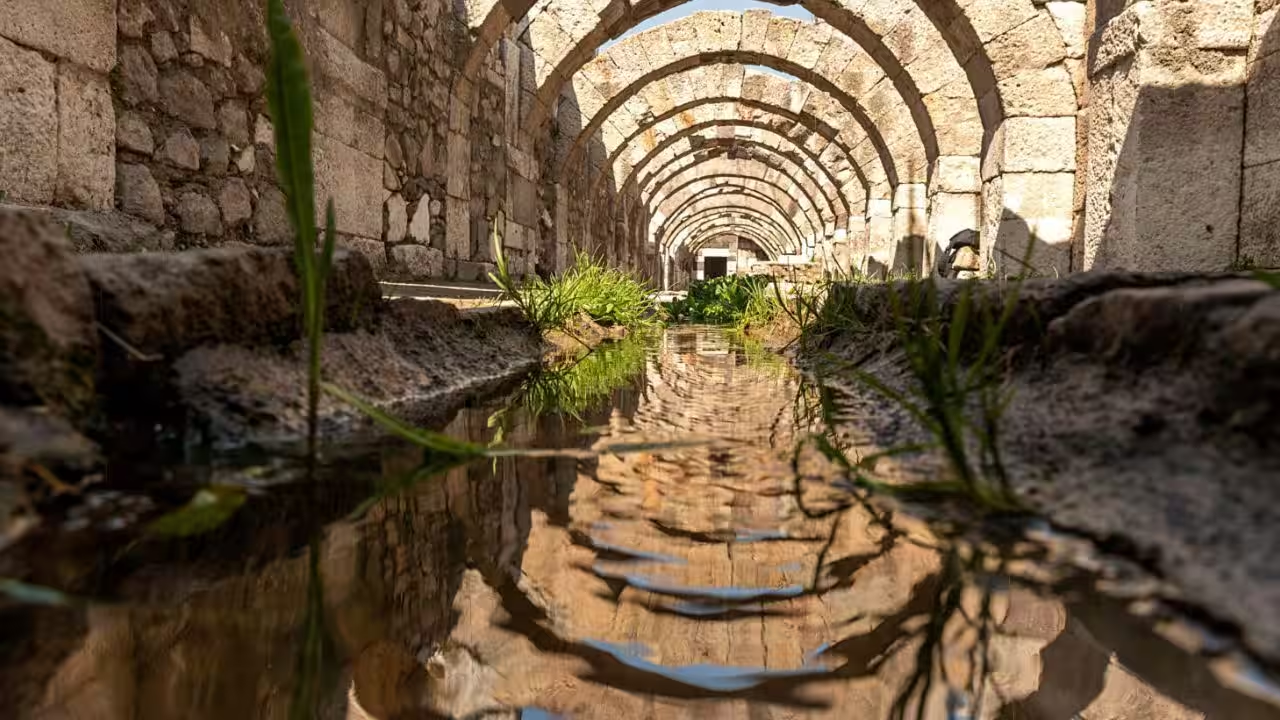
A channel built about 2,000 years ago still carries water beneath the ancient city of Smyrna in present-day Izmir, Türkiye. The channel was built beneath streets and houses and still carries water today. The main channel stretches 150 metres and is large enough for a person to walk through comfortably. Water still flows from a spring into the channel, even during summer. Archaeologists are continuing excavations at Smyrna to uncover more of the ancient city and preserve its remains. According to Türkiye Today, Smyrna has been on UNESCO’s World Heritage Tentative List since 2020 as part of the ‘Historical Port City of Izmir’ listing.How did Smyrna’s ancient water channel carry water through the cityThe main water channel reaching the Smyrna Agora is 150 metres long, 2.16 metres high and 90 centimetres wide. Its size allows a person to walk inside it comfortably. The channel was built under streets and houses around 2,000 years ago. Water still travels through the system from a spring, flowing at a height of 1.5 metres from the spring to the channel.The network was part of Smyrna’s underground water system, which connected natural springs to fountains and bathhouses. One channel running through the agora divided into two branches. One branch supplied the Roman bath, while the other led to the Gymnasium.How is the ancient water channel being used todayThe water flowing through the ancient channel is still being used, although it is not suitable for drinking. Tests found nitrate levels were 1.5 times the accepted limits, while arsenic levels were twice the accepted limits. Professor Akin Ersoy said the water is instead used to irrigate the grass in the Smyrna Agora and green spaces in the city.The ancient baths no longer function, but the water continues to flow throughout the year, including summer. The excavation team now uses the water to irrigate nearby green spaces instead of letting it flow away unused. Ersoy also noted that the sound of running water creates a relaxing atmosphere for visitors.Smyrna’s Roman infrastructure included water channels, fountains, and public buildingsSmyrna’s water system formed part of a larger city infrastructure that expanded during the early Roman Empire under Augustus. The ancient city stood between Kemeralti and Kadifekale, while springs were identified along the slopes of Kadifekale. The agora was surrounded by porticos with columned facades, fountains and water channels.Smyrna also had one of the largest agoras from antiquity and one of the grandest theatres in the Mediterranean region. Excavations have uncovered thousands of artefacts dating from the Hellenistic period to the late Ottoman era. Roman-era household objects include bowls, plates, basins, strainers, lamps, jugs, weaving weights and lids dating from the first to fourth centuries A.D.Smyrna’s ancient city survived earthquakes and centuries of changeThe ancient city of Smyrna has a history stretching back to the late fourth century B.C., following the reign of Alexander the Great. According to the ancient geographer Pausanias, Alexander founded the city after a dream in which the goddess Nemesis told him to build it on Pagos Hill (modern-day Kadifekale). His generals, Antigonos and Lysimachos, later oversaw its relocation and construction. The agora served as a commercial, political, and judicial hub until an earthquake destroyed it in 178 A.D.Roman Emperor Marcus Aurelius ordered its reconstruction, and most surviving ruins belong to this later phase. Excavations began in 1933 and were revived in 2007 under Associate Professor Akin Ersoy and his team. Since 2020, the ancient city has been officially included on UNESCO’s World Heritage Tentative List under the name ‘Historical Port City of Izmir’.You use AI every day. Now get your AI Quotient. Take the AIQ test.
Topics in this story
Gathered from external sources. Rights to this text belong to whoever originally published it.