A flaw in the granite forced workers to abandon Thomas Jefferson’s original position on Mount Rushmore; they moved him to the other side of Washington
Discover the unexpected challenges faced during the construction of Mount Rushmore, including how a granite flaw led to Thomas Jefferson's relocation and the changes made to the monument's design.
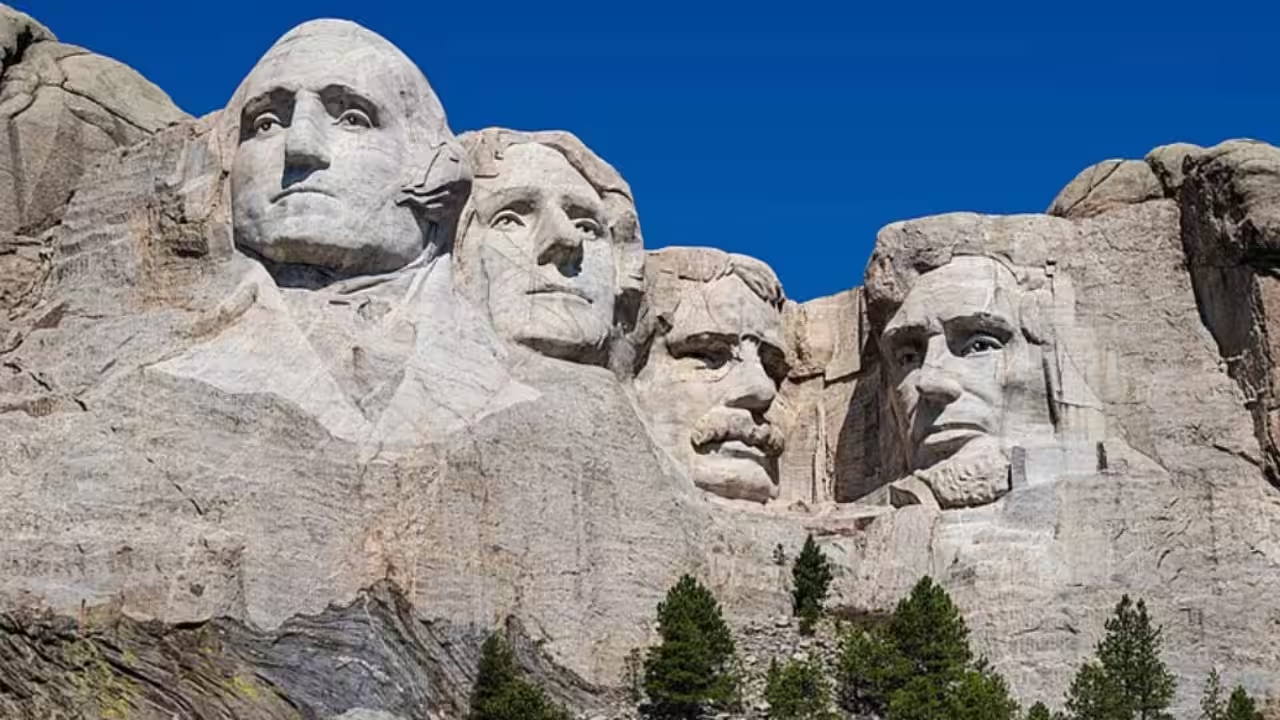
Mount Rushmore might look like a plan that went perfectly, but the road to getting there wasn't without hiccups. The National Park Service’s page on the Entablature idea reads that in 1934, the Thomas Jefferson figure was moved from Washington's right (the viewer’s left) to his left due to inconsistencies in the rock. That one flaw in the granite didn’t just move one face; it ended up changing the entire plan for the mountain.A mountain carved with dynamite The carving ran from 4 October 1927 to 31 October 1941. According to the National Park Service’s Carving History Page, nearly 400 men and women worked on the project. Blasting was a big part of the process. About 90% of the mountain was carved using dynamite. Powdermen would cut and place specific-sized charges to remove specific amounts of rock. The process continued until there were three to six inches of rock remaining. Then drillers and assistant carvers made holes very close to each other in the granite surface. This process is called honeycombing, and it helped weaken the rock so it could be manually removed. Workers were lowered over the 500-foot-tall surface of the mountain in a bosun’s chair. Even though it was risky, no fatal accidents were reported during the 14 years of construction.Plan changes as Jefferson movesSculptor Gutzon Borglum reportedly had big plans for the mountain. He wanted a large inscription there, the Entablature, along with the faces of the four presidents. It was supposed to be a short history of the United States, carved in letters three feet high. The inscription was planned to sit in an area shaped like the Louisiana Purchase territory. The park service suggests that the inscription was meant to present Mount Rushmore as a national memorial to the country's first 150 years, and not just the lives of four great men. Work started, and in 1930, the year 1776 was carved into the east side of the mountain.In 1934, however, Jefferson had to be moved from the right side of Washington to his left because of the inconsistencies in the rock. This brought on further changes along the way. The spot set for the Entablature had to be taken up by Lincoln. Borglum also said that the words would be too hard to read from below. So, the plan changed again. Now the history would go into the Hall of Records, a room behind the sculpture. But Borglum died in 1941, before the plans for the inscription could be finalised.The essay contestThe plan was for Calvin Coolidge to write the history of the United States. But there were disagreements between Coolidge and Borglum on how it should be worded. Coolidge passed away in 1933 before the wording could be finalised. In 1934, Borglum teamed up with the Hearst newspapers to sponsor an essay contest. The winning words were supposed to be carved somewhere on the mountain alongside the four presidents. Once the winners were announced and the prizes awarded, Borglum decided against carving anything into his monument.There was one winner who left a strong impression. A young Nebraskan named William Andrew Burkett won the college-age category. He wrote his essay when he was a student at the Omaha University Law School in 1934. Burkett donated a bronze plaque of his essay on 4 July 1971. The plaque now hangs on the Borglum View Terrace, which was the site of the first studio at Mount Rushmore. The story shows how even a famous landmark was shaped by setbacks that are often lost in the pages of history.You use AI every day. Now get your AI Quotient. Take the AIQ test.
Topics in this story
Gathered from external sources. Rights to this text belong to whoever originally published it.