How Kielder Water protects the North East from drought
How did England's least populated region become home to its largest, drought-battling reservoir?
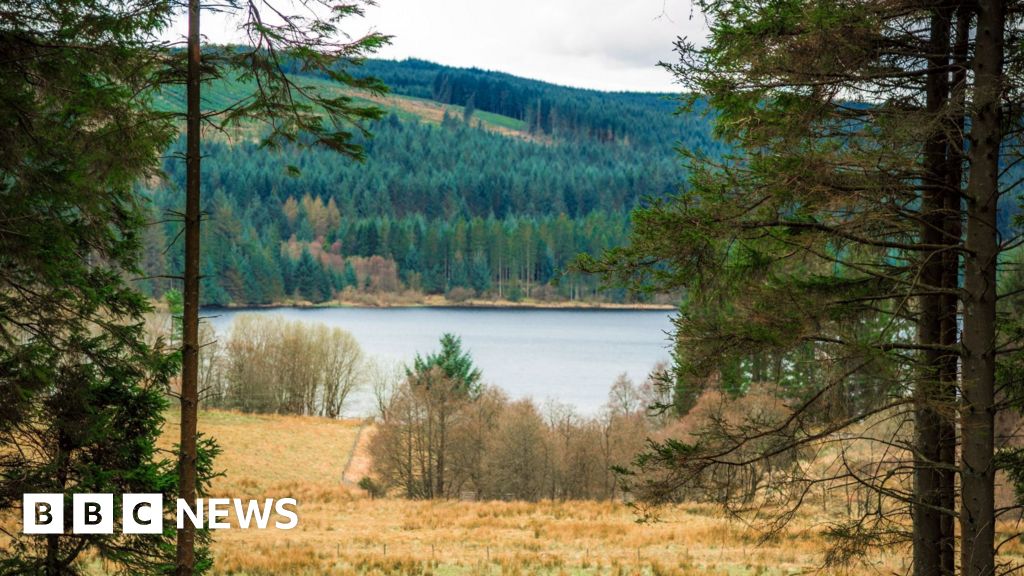
Much of England has faced drought conditions during a summer marked by repeated heatwaves, but the North East has been spared water scarcity despite experiencing what the Environment Agency dubs "prolonged dry weather".
One of the, quite literally, biggest reasons is that Northumberland is home to England's largest reservoir – Kielder Water.
So how did the country's least populated region gain this huge asset and will the lake continue to protect the North East from water shortages long into the future?
Kielder Water opened in 1982 and is the biggest man-made lake in the UK, holding about 200bn litres of water.
Jonty Hall, then aged nine, was chosen to press the button to start filling the reservoir, flooding the multiple farms and homes that once stood on the dry site.
"This is now my 37th year," he said, referring to his work for Northumbrian Water at the lake he helped create.
The reservoir had been built with the expectation that the area's water-hungry steel industry would continue to expand, but the predicted boom never lasted.
Instead, Kielder Water now plays a part in ensuring the North East is one of the "most water secure regions" in the world, according to Newcastle University hydrology researcher Dr Anna Murgatroyd.
Right now, water from Kielder is being used to top up the River Wear to maintain minimum levels.
The Department for Environment, Food and Environment said about 560 Olympic-sized swimming pools worth of water had been diverted from Kielder to the Wear since mid-July, and the lake can be similarly used to protect the likes of the Tyne, Tees and Derwent.
But Kielder is not the only reason the region is relatively protected from droughts today, said Murgatroyd.
The region is home to numerous other reservoirs and enjoys relatively high rainfall.
Its large river systems also provide locals with a "good amount of water".
While Kielder continues to give the North East a high level of protection, the effects of climate change have led to questions about the region's future water security.
Murgatroyd was part of a team that modelled climate effects across England and Wales up to 2080, work that suggested the North East would see a rise in drought conditions but remain more water secure than other regions.
Prof Kiran Tota-Maharaj, from the University of Hull, said Kielder remains an example of "best practice" in water engineering.
"It has served its purpose and it is resilient, especially during unforeseen conditions," he said.
But he warned climate change was changing weather patterns so much that "predictability was becoming more and more challenging".
Northumbrian Water, which has no current plans to build new reservoirs, said its estimates suggested the North East would have enough water to meet demand for the foreseeable future.
But it said this did not mean the region possessed unlimited resources, so it was encouraging people to be more considerate in their water use.
"Kielder is a major safeguard," a spokesperson said, "but saving water reduces pressure on the whole supply system and environment and makes that safeguard last longer."
Follow BBC North East on X , Facebook , Nextdoor and Instagram and listen to Radio Newcastle on BBC Sounds .
River topped up after driest July since 2006
Sea trout and salmon numbers declining in rivers
Topics in this story
Gathered from external sources. Rights to this text belong to whoever originally published it.