In 2026, Paul Goldstein undertook a 1,000-mile walking challenge across Britain carrying a 9-foot tiger; by mile 826, his fundraiser had raised about £36,000 for tiger conservation
In 2026, wildlife photographer Paul Goldstein undertakes a 1,000-mile journey across Britain with a 9-foot tiger to raise funds for tiger conservation, surpassing £36,000 in donations. Learn about his inspiring adventure and the causes benefiting from this extraordinary effort.
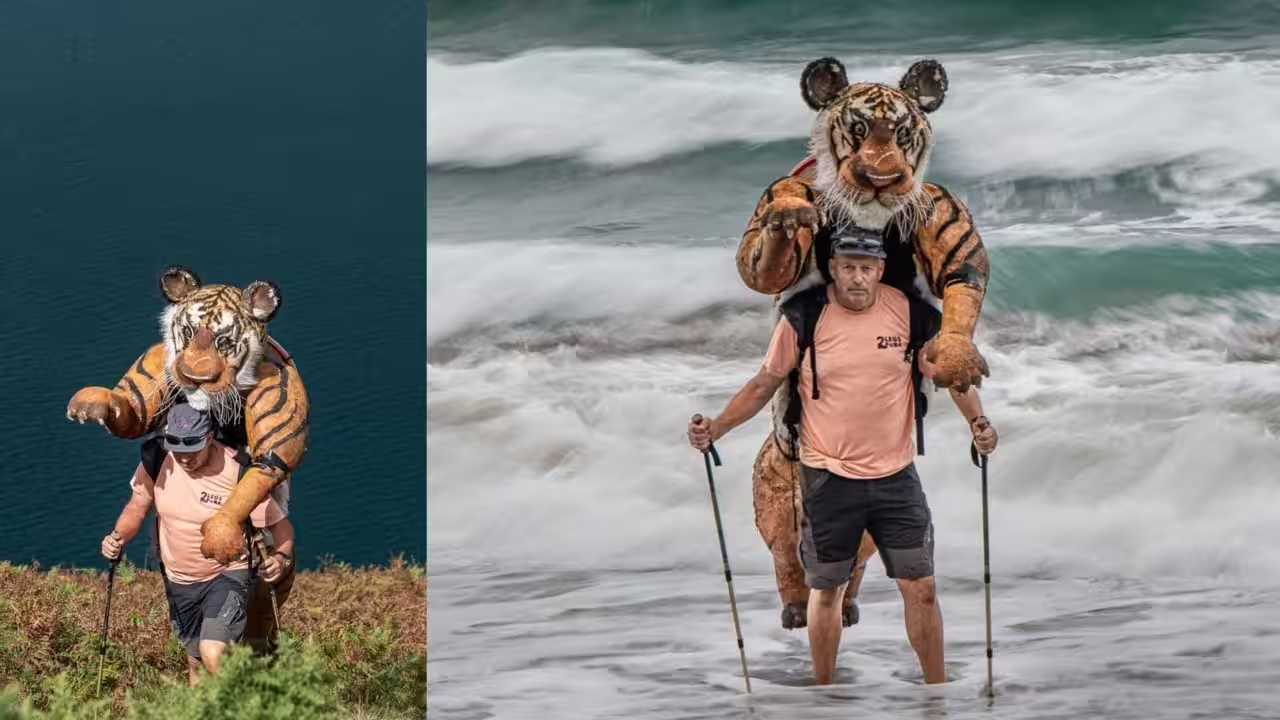
In order to earn money for tiger protection, Paul Goldstein, a 63-year-old wildlife photographer and guide from Wimbledon in southwest London, walked 1,000 miles (about 1,600 kilometres) across Britain in the summer of 2026. His fundraising goal was £50,000, but at mile 826, it had surpassed £36,000. On September 12, he finished at Land's End.The cause is bigger than one man’s stamina. Tigers are endangered, with the IUCN Cat Specialist Group estimating the global population (excluding cubs) to be between 3,726 and 5,578 in 2021. This compares with an estimated 100,000 tigers at the beginning of the 20th century. Tigers today live in only eleven countries and have lost more than 93% of their original range.A walk in two partsAccording to the official 2 Legs for 4 website, the route was divided into two 500-mile legs. The first leg ran from Anglesey to Southend-on-Sea from 7 to 28 July, a 22-day period. After a break, the second leg ran from Southend-on-Sea to Land’s End from 20 August to 12 September, a 24-day period. Together, the two date ranges cover 46 calendar days, including four non-walking days, leaving 42 walking days across the two legs. The Cornish press said the split was because Goldstein had already organised a wildlife guide trip to Alaska.Most days were close to marathon length, with hillier sections shortened. Anyone could join for free by registering, and the second leg alone offered 22 route options. The year before, Goldstein covered the equivalent of 25 marathons in 25 days, from Tigerton in Scotland to Tiger Bay in Wales.ITV News London reported that the oversized tiger prop was created by Norfolk-based designer Liz Putland and modelled on one of Goldstein’s photographs of a wild Bengal tigress, taken in 2005. The tiger and Goldstein have finished more than 50 marathons together, including the Everest Marathon in 2022, according to local news in Cornwall.Heat, storms and fellow walkersOrganisers said the first leg concluded in scorching heat. The second delivered wind and rain along the Dorset coast, which Goldstein told a Devon newspaper was the roughest part of the challenge. Even the tiger was damaged in the stormy weather, but Goldstein repaired it with gaffer tape and a zip tie. He ran a half marathon with Simon Reeve, the TV presenter, between Bridport and Beer, and wildlife broadcaster Michaela Strachan was among the walkers on the route. Fundraising was also rising steadily. By the middle of July, organisers said they had gathered more than £13,000 with another £10,000 in matching funding. By the end of August, a news story put the total at £29,000 and by mile 826 it had crossed around £36,000. Local publications report that Goldstein has now raised over £600,000 for conservation over three decades. The money is earmarked for specific projects.Where the money is spentThe funds raised by the completed hike are intended to support two projects through the UK conservation organisation Explorers Against Extinction. The first is Lighting Up Time at Bandhavgarh Tiger Reserve in Madhya Pradesh in collaboration with the Corbett Foundation. India is home to most of the world’s remaining wild tigers, and villagers near Bandhavgarh live alongside them. Wildlife moves between forest and farmland after dark, and poor lighting can put local residents and forest staff at risk. The project has a separate fundraising target of US$40,000. If that target is met, the Corbett Foundation will install 90 solar-powered lighting units in villages affected by human–wildlife conflict and 20 solar lighting systems in designated forest camps in the reserve’s core zone.The second initiative is a camera trap research project in Bhutan, which local media characterise as documenting alpine habitat shared by tigers and snow leopards. Together, they cover two very distinct elements of conservation: one is protecting people who live beside tigers and the other is discovering where tigers live in the first place. “Tigers don’t need pity; they need action,” Goldstein told a Hampshire newspaper. The walk may be over, but the conservation projects it was designed to support will need backing long after the tiger has been packed up.You use AI every day. Now get your AI Quotient. Take the AIQ test.
Topics in this story
Gathered from external sources. Rights to this text belong to whoever originally published it.