Between 1970 and 1991, New Zealand phased sheep off a remote island; the vegetation recovered and even the island's cats eventually disappeared
Rest of World News: For decades, introduced animals transformed some of New Zealand’s remote subantarctic islands, where native plants and wildlife had evolved without la.
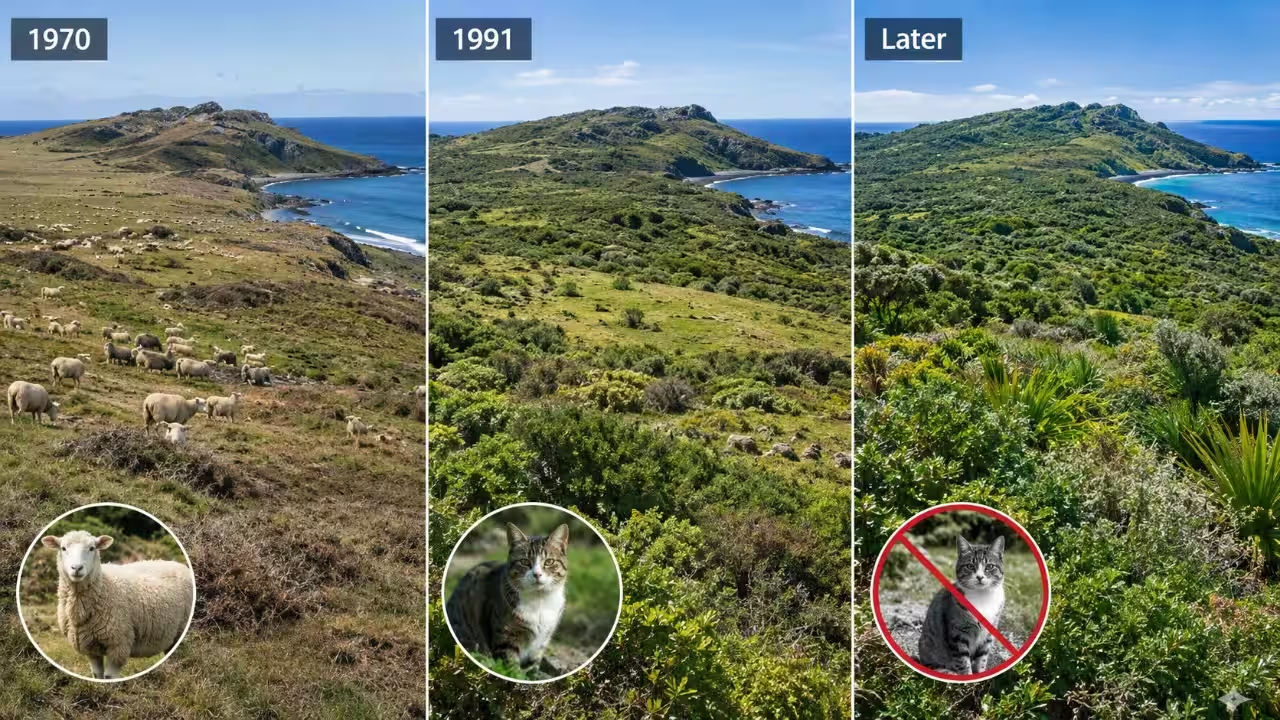
For decades, introduced animals transformed some of New Zealand’s remote subantarctic islands, where native plants and wildlife had evolved without large grazing mammals or land predators. Sheep were among the animals introduced to islands where people attempted to establish farming, while cats arrived alongside human settlement and ships. Removing those introduced species eventually gave some island ecosystems a chance to recover. The Department of Conservation (DOC) describes the removal of introduced pests from New Zealand’s offshore islands as an important part of restoring ecosystems that had been heavily altered by animals brought there by people.Introduced sheep changed vegetation on New Zealand’s remote islandsNew Zealand’s subantarctic islands are isolated landscapes with plant communities that developed without the grazing pressure created by introduced livestock. When people brought animals such as sheep to these islands, the consequences could be substantial. Grazing reduced vegetation and altered the structure of plant communities, while other introduced mammals could compound the damage by eating native plants or prey. DOC notes more broadly that New Zealand’s native forests and ecosystems were not adapted to mammalian browsers, meaning introduced ungulates can cause major changes in vegetation structure and composition.The contrast between islands with introduced mammals and those without them became especially useful for conservationists. DOC describes pest-free offshore islands as examples of what New Zealand ecosystems can look like when introduced mammals are absent. In these places, native vegetation can recover and populations of native birds and other wildlife can become far more abundant.That makes the removal of livestock more than simply the end of farming. It can become the beginning of ecological recovery.Removing the animals allowed native vegetation to recoverOnce grazing animals are removed, vegetation no longer faces the same constant pressure from browsing and trampling. Plants that have been suppressed can regenerate, while seedlings and taller vegetation have a better chance of surviving.This experience with offshore islands has shown how dramatic this recovery can be. Conservation staff have described pest-free islands as places where the abundance and diversity of life can be strikingly different from nearby areas where introduced mammals remain. Forests became filled with continuous bird song after introduced cats were removed from Little Barrier Island, followed later by the successful eradication of rats.The same principle applies across New Zealand's offshore islands, removing the animals that are causing ecological damage allows natural processes to take over again.The cats were another problem for island wildlifeSheep were not the only introduced mammals that changed these remote environments. Feral cats became serious predators on several New Zealand islands, where native birds had evolved without mammalian predators.Cats can be particularly damaging on islands because many native birds nest or feed on the ground and have few natural defences against introduced predators. DOC identifies introduced mammals, including feral cats, as major threats to native wildlife. On Little Barrier Island, for example, The cats had wiped out saddlebacks by the 1960s. The last cat there was removed in 1980, after which saddlebacks were returned to the island.The removal of cats also demonstrated how one conservation action can unlock another. Once the cats were gone, conservationists could begin restoring bird populations without exposing newly released animals to the same predator.Some islands eventually became free of the predators that once dominated themNew Zealand's offshore-island conservation work eventually moved from controlling individual pests to attempting complete eradication. DOC describes the eradication of introduced mammals from islands as an important conservation tool because isolated islands provide an opportunity to remove pests completely and then prevent them from returning.That approach has produced some of New Zealand's most dramatic restoration successes. Conservation specialists point to pest-free offshore islands as living demonstrations of what ecosystems can look like when introduced mammals are removed. Bird numbers can increase, vegetation can recover and species that disappeared from an island can sometimes be returned.The transformation is particularly striking because the islands themselves have not been rebuilt. Once the introduced pressures are removed, much of the recovery comes from the ecosystem's own ability to regenerate.The story shows what happens when an island is given a chance to recoverNew Zealand's offshore islands have become some of the country's most important conservation laboratories precisely because their isolation makes it possible to remove invasive mammals and protect the results. This work has shown that an island that once appeared permanently altered can change substantially once grazing animals and predators are removed.The lesson extends beyond any single island. Introduced sheep could reshape vegetation through grazing, while cats and other predators could suppress native wildlife. Removing those pressures did not simply make the islands quieter, it allowed native ecosystems to begin functioning more like they had before the arrival of introduced mammals.For New Zealand's conservationists, pest-free islands offer a glimpse of what restoration can achieve, remove the animals that do not belong, protect the survivors, and allow the vegetation and wildlife to rebuild themselves.Catch the latest World News and Live updates. Download the TOI app.
Topics in this story
Gathered from external sources. Rights to this text belong to whoever originally published it.