Damilola Taylor: Knife crime prevention needed 'now more than ever'
A new BBC documentary retells the story of Damilola Taylor's killing in Peckham, 26 years on.
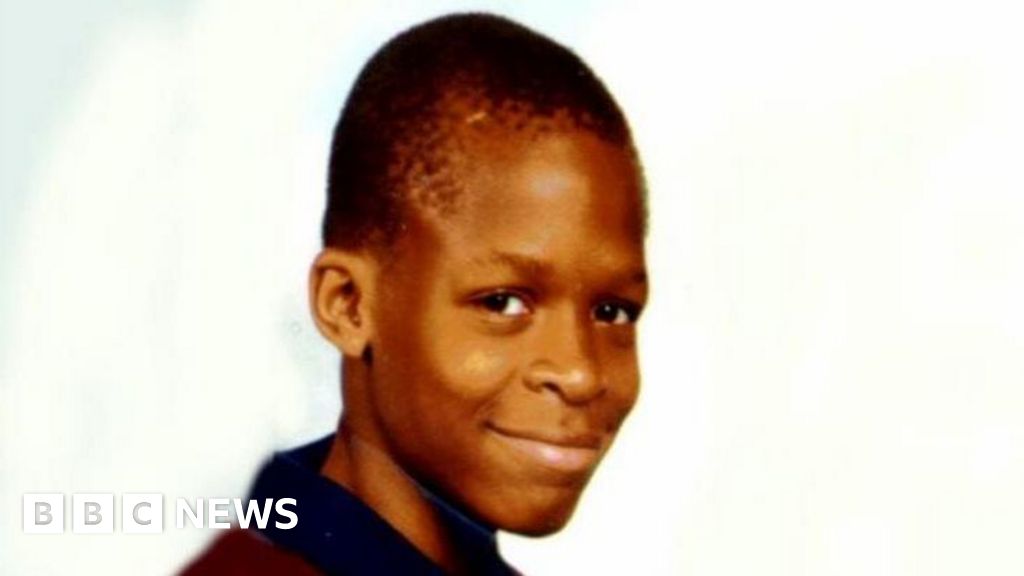
The brother of schoolboy Damilola Taylor, killed in an attack in Peckham 26 years ago, has said work to tackle knife crime is "needed now more than ever".
The 10-year-old was fatally stabbed while on his way home from Peckham Library in south London on 27 November 2000.
Babatunde (Tunde) Taylor now chairs the Damilola Taylor Trust, set up by their parents in his brother's memory. It works to provide support for disadvantaged children vulnerable to falling into crime.
He said issues they were currently facing were "more diverse" than they were when his brother died.
Damilola's killing is now the subject of a BBC documentary called Damilola: The Untold Story .
Tunde said the problems faced today by young people were different to his experience growing up.
"We've got the emergence of social media... we have to find a way to keep evolving and adapting," he said.
Tunde said the charity trust was facing an uncertain future, despite its many successful programmes.
"One of the challenges we're facing is sustainability, just like every small charity there are issues regarding funding," he said.
"We're trying to keep the trust sustainable for the next generation. We're open to partnerships with people who share what we are looking to achieve.
"We need all hands on deck and we need that support to help us to continue to provide."
Damilola was born in Nigeria and moved to the North Peckham Estate with his mother and siblings in August 2000.
On 27 November, he was at Peckham Library with friends, including future actor John Boyega and Boyega's sister Grace.
While walking home, Damilola was attacked and stabbed in the leg with a broken bottle. It severed an artery.
Damilola was found in a stairwell on the estate by a caretaker and later died.
His death sent shockwaves around the country.
But convictions for his death were not secured until 2006 when two teenagers, who lived on the estate and were believed to be part of a local gang, were found guilty of manslaughter. Two previous trials had failed.
Speaking in the documentary, Boyega said the killing of his friend had a profound effect on him.
He said it had spurred him on to pursue the opportunities that were available to him, which ultimately led to him achieving his dream of becoming an actor.
"Damilola's legacy to me means being able to be unrealistic with your dreams," he said.
"He wrote a poem and he used to recite it all the time: I will travel far and wide to choose my destiny and remould the world, I know it is my destiny to defend the world, which I hope to achieve in my lifetime.
"From that poem [you can tell] he had plans and he didn't care about the environment he was in, he was more fixated on where he was going. So what's my excuse?"
Tunde said it was "very important" his brother's story was told again, more than a quarter of a century on.
"There's a whole generation of young people who were not around at the time and they get the chance to see him as a person, a young boy, his ambitions and how the tragedy cut that," he said.
"If they can think of that and think about the choices they're making then we will have actually achieved something positive."
Listen to the best of BBC Radio London on Sounds and follow BBC London on Facebook , X and Instagram . Send your story ideas to hello.bbclondon@bbc.co.uk
Tension and violence rising among young people in south London, police tell BBC
Damilola Taylor: The fight to protect young lives
Damilola Taylor: What lessons have been learnt?
Topics in this story
Gathered from external sources. Rights to this text belong to whoever originally published it.