Fort Cronkhite, the abandoned WWII fort near San Francisco where giant 16-inch guns once shook the city, is now a historic site surrounded by beaches, trails and Pacific Ocean views
Long before Fort Cronkhite became a destination for hikers, surfers and wildlife enthusiasts, it was part of a vast American military effort to prepare
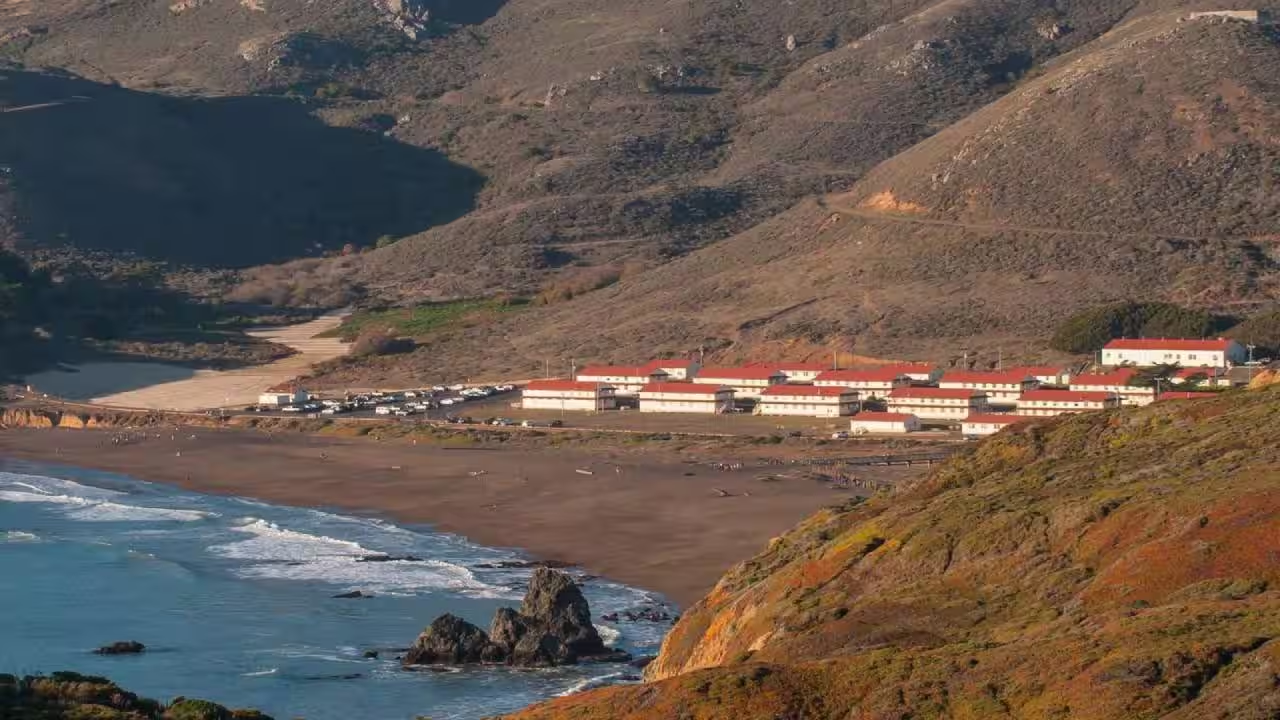
Long before Fort Cronkhite became a destination for hikers, surfers and wildlife enthusiasts, it was part of a vast American military effort to prepare for war.As World War II approached, the U.S. Army was rapidly expanding. Around 200,000 soldiers had enlisted in 1939, but by 1944, the number had surged to approximately 6 million. The sudden growth created an enormous demand for accommodation and military infrastructure, resulting in the construction of more than 100,000 temporary buildings across the country.Barracks, hospitals, offices and mess halls were built at mobilization posts, including Fort Cronkhite in California.Most of those temporary military installations disappeared after the war. Fort Cronkhite is one of the rare exceptions.Located in the Marin Headlands, overlooking the Pacific Ocean just north of San Francisco, the former military post remains one of the best-preserved examples of a WWII mobilization site and is now part of the Golden Gate National Recreation Area, according to the National Park Service (NPS).The fort that guarded San Francisco BayFort Cronkhite occupied a strategically important position. From the surrounding hills, soldiers could observe the Pacific and protect the entrance to San Francisco Bay from potential enemy attacks.The steep ridges also provided ideal locations for artillery installations.One of the most formidable was Battery Townsley, which housed two enormous 16-inch guns. The scale of the weapons reflected the seriousness of the coastal defense mission during the war.Historical records cited in the source material say that when the guns were tested in 1940, their concussion was powerful enough to break windows across San Francisco.Today, visitors can explore the restored interior of Battery Townsley and walk the trails that once formed part of the military landscape.The Cold War brought a new threatFort Cronkhite's military story did not end with World War II.During the Cold War, the nature of the perceived threat changed. Instead of preparing primarily for an attack arriving across the ocean, the U.S. military became increasingly concerned about enemy aircraft.The answer was the Nike missile system.A nearby installation at Fort Barry, known as SF-88, became part of this Cold War defense network. The site has since been preserved, offering visitors an unusual glimpse into another chapter of American military history.Together, Battery Townsley and SF-88 demonstrate how the defenses of the San Francisco Bay evolved from giant coastal guns to sophisticated missile systems.WWII barracks still surviveWhile many temporary military structures were demolished following World War II, several original buildings at Fort Cronkhite remain.One of the barracks has been restored to its original appearance, giving visitors a sense of what daily life may have been like for troops stationed in the Marin Headlands.The National Park Service has also created a self-guided History Walk, allowing visitors to explore the former base while learning about its wartime role.The beach looks unlike most California beachesThe military history is only part of the attraction.Just below Fort Cronkhite is Rodeo Beach, a distinctive stretch of coastline known for its colorful pebbles.Rather than the familiar golden sand found on many California beaches, Rodeo Beach is covered in red and green stones, including jasper, carnelian and jade.The beach is popular with surfers because of its powerful waves, although swimming is dangerous due to strong currents.Nearby Rodeo Lagoon offers a completely different landscape. The calm lagoon is surrounded by habitat that supports wildlife, but swimming is prohibited in order to protect the fragile ecosystem.Visitors can instead take the easy Rodeo Lagoon Loop, which is particularly appealing to birdwatchers.A paradise for hikers and birdwatchersThe Marin Headlands provide numerous opportunities to explore the landscape on foot or by bicycle.The Coastal Trail is one of the highlights. A short but steep section leads toward Battery Townsley, eventually opening onto dramatic views across the Pacific Ocean.The surrounding hills are particularly colorful in spring, when wildflowers attract butterflies and a variety of birds.Peregrine falcons and red-tailed hawks can be seen in the area, while migrating humpback and gray whales may occasionally be spotted offshore.The region's weather can change quickly, however. Fog and strong coastal winds are common, meaning visitors should be prepared for temperatures that can feel much colder than they might expect from the sunny conditions in San Francisco.A rare glimpse into America's Cold War pastA trip to Fort Cronkhite can also include a visit to Fort Barry and the SF-88 Nike missile site.The restored installation provides an opportunity to see how the United States prepared for a potential Cold War-era air attack.According to the supplied source material, the site is free to visit and opens on the first Saturday of every month.For history enthusiasts, the combination of Fort Cronkhite, Battery Townsley and SF-88 creates an unusual journey through several decades of American military strategy.The Marine Mammal Center is nearbyThe area also offers plenty for visitors who aren't interested in military history.Behind Fort Cronkhite is the Marine Mammal Center, a rehabilitation and research facility dedicated to helping sick and injured marine mammals.The center cares for animals including California sea lions, sea otters, harbor seals and elephant seals.Visitors can explore the facility, while additional behind-the-scenes tours provide a closer look at the rehabilitation work. Visits need to be reserved in advance.Look out for brown pelicans and whalesWildlife encounters continue along the coastline.The Bird Island overlook, beyond Rodeo Beach, is an important roosting location for brown pelicans and provides another excellent spot for birdwatching.Further along the coast stands Point Bonita Lighthouse, one of the region's most picturesque historic landmarks.Getting there involves a hike, but the scenery makes the journey worthwhile. Visitors should check opening dates before setting out because the Point Bonita Trail operates on a limited schedule.A historic destination just outside San FranciscoFort Cronkhite is roughly 10 miles north of downtown San Francisco, making it an easy addition to a Bay Area itinerary.The route takes visitors across the Golden Gate Bridge before continuing along Bunker Road toward the fort, where parking is limited.There is no camping at Fort Cronkhite itself, but several small tent-only National Park campgrounds are located in the Marin Headlands. Kirby Cove is particularly popular for its views of the Golden Gate Bridge.Today, Fort Cronkhite offers something few former military bases can: a chance to walk through surviving WWII-era structures, stand beside enormous coastal artillery, explore Cold War defenses and then hike to a Pacific beach - all within the same landscape.You use AI every day. Now get your AI Quotient. Take the AIQ test.
Topics in this story
Gathered from external sources. Rights to this text belong to whoever originally published it.