In 2015, UNICEF turned shipping containers into heated bathrooms for Mongolia’s nomadic schools; 15 movable WASH Houses gave warm water and toilets to 1,400 students
Rest of World News: Discover how UNICEF's WASH Houses are revolutionizing sanitation and hygiene for nomadic schoolchildren in Mongolia, providing heated toilets and warm water to ensure their well-being even in extreme winter conditions.
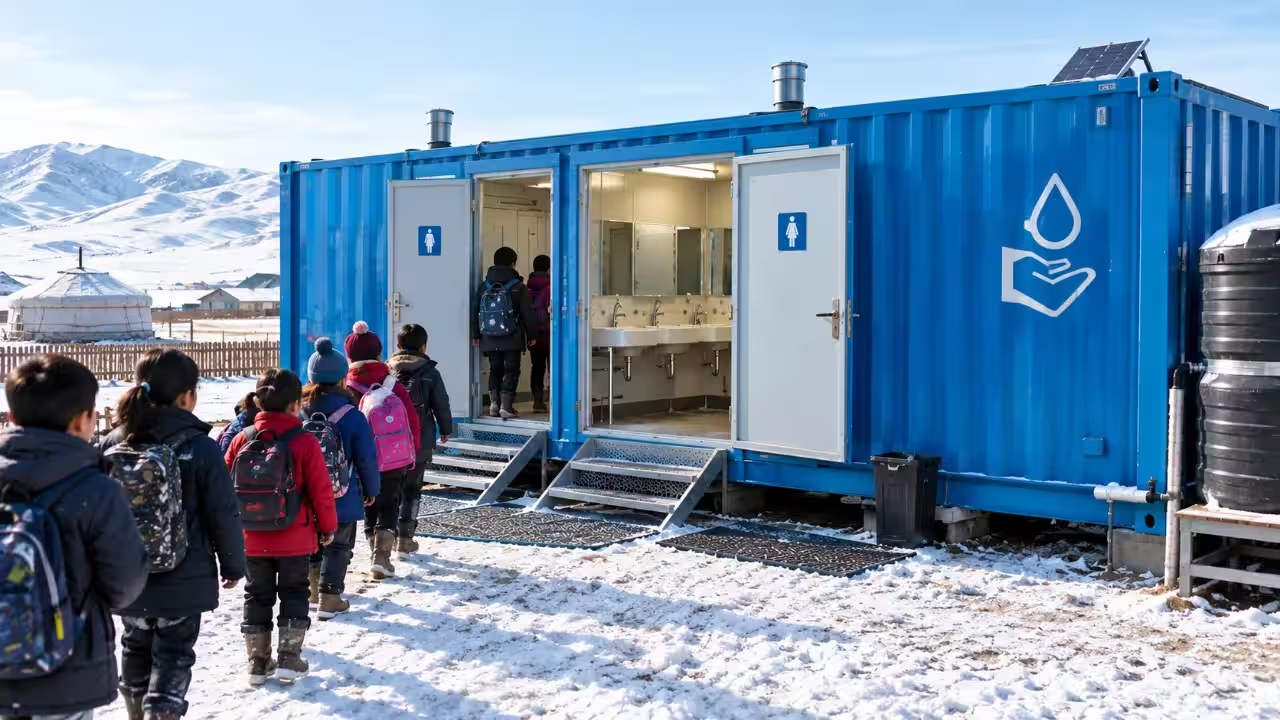
For children in Mongolia’s remote herding communities, using a toilet could mean leaving a heated classroom and stepping outside into temperatures far below freezing. Many rural schools and kindergartens depended on outdoor latrines, while access to warm water for washing was limited. The problem was especially difficult in a country where nomadic families move with their livestock and frozen ground can complicate conventional construction.According to UNICEF, the organisation developed relocatable WASH Houses in Mongolia by adapting the principles of insulated shipping-container construction. The units provided toilets and basins with warm running water in heated, well-lit structures that could be connected to classrooms or ger kindergartens. By 2015, 15 WASH Houses had been installed alongside ger kindergartens and regular classrooms, directly benefiting about 1,400 students.Building a bathroom that could survive winterThe WASH House was developed as a prefabricated and relocatable solution for Mongolia's harsh climate. The organisation worked with local partners to develop several models based on insulated shipping-container structures. Rather than building every facility from scratch at the school site, the units could be manufactured elsewhere and transported to remote communities. The design addressed one of the biggest problems facing sanitation infrastructure in Mongolia: freezing temperatures. The units were insulated and heated, while their water and sanitation systems were designed to operate in winter conditions. They contained toilets and washing facilities supplied with warm water, giving children access to basic hygiene without having to leave the building for an outdoor latrine.The facility’s portability was especially useful for ger schools and kindergartens. A ger is a round tent-like home traditionally used by Mongolian herding families, and schools in remote areas often have to adapt to that way of life. A portable sanitation facility can offer more flexibility compared to a regular building made of bricks and concrete. UNICEF said the units could be adapted to different water and sanitation setups depending on the site. Some could use wells and septic tanks, while others could connect to existing systems.Warm water became part of school lifeIt was not just about making toilets available to them. Water, sanitation, and hygiene facilities affect whether students can access washrooms, maintain personal hygiene, and use toilets safely during the day. UNICEF research on WASH and menstrual health also noted that rural students in Mongolia faced special challenges because sanitation facilities were inadequate and water and separate washing rooms were limited.Research published in the International Journal of Environmental Research and Public Health also examined hygiene conditions among Mongolian schoolchildren. A survey of 1,507 fifth-grade pupils in Ulaanbaatar found that access to water and soap at school handwashing facilities was far from universal, showing how infrastructure availability can shape everyday hygiene practices. For the children using the new WASH Houses, the difference was tangible. UNICEF described facilities that allowed pupils to wash with warm water and use toilets inside a heated structure instead of relying on exposed outdoor facilities. The organisation reported that the teachers linked the better WASH conditions with the lack of health-related issues and absenteeism, but this information was not a part of the scientifically controlled evaluation of the WASH Houses. These units solved multiple problems by improving sanitation, reducing children’s exposure to extreme winter weather, and making handwashing easier.A shipping container becomes school infrastructureThe project reflected a broader trend toward designing infrastructure for places where conventional construction is costly or impractical. Mongolia has a short construction season, harsh winters, and long distances between settlements. As a result, it can be difficult to transport materials and build facilities in remote locations. A prefabricated container offered another option, since much of the work could be completed before delivery and the facility could then be connected to local water and sanitation services.The approach did not aim to turn shipping containers into an alternative to regular schools but rather showed that the infrastructure could be adapted to suit the location. An insulated, heated, and mobile bathroom could be built where it was needed without erecting a whole new permanent structure. In remote Mongolian schools, it became a way to provide toilets, hot water, and basic hygiene facilities for children who previously had to endure harsh conditions to meet basic needs.Catch the latest World News and Live updates. Download the TOI app.
Topics in this story
Gathered from external sources. Rights to this text belong to whoever originally published it.