Navy's Fleet Air Arm: From tracking enemy radars in 1965 to monitoring China along LAC
When the Indian Navy's Fleet Air Arm is discussed, the focus is usually on submarines, ships and sea lines of communication.
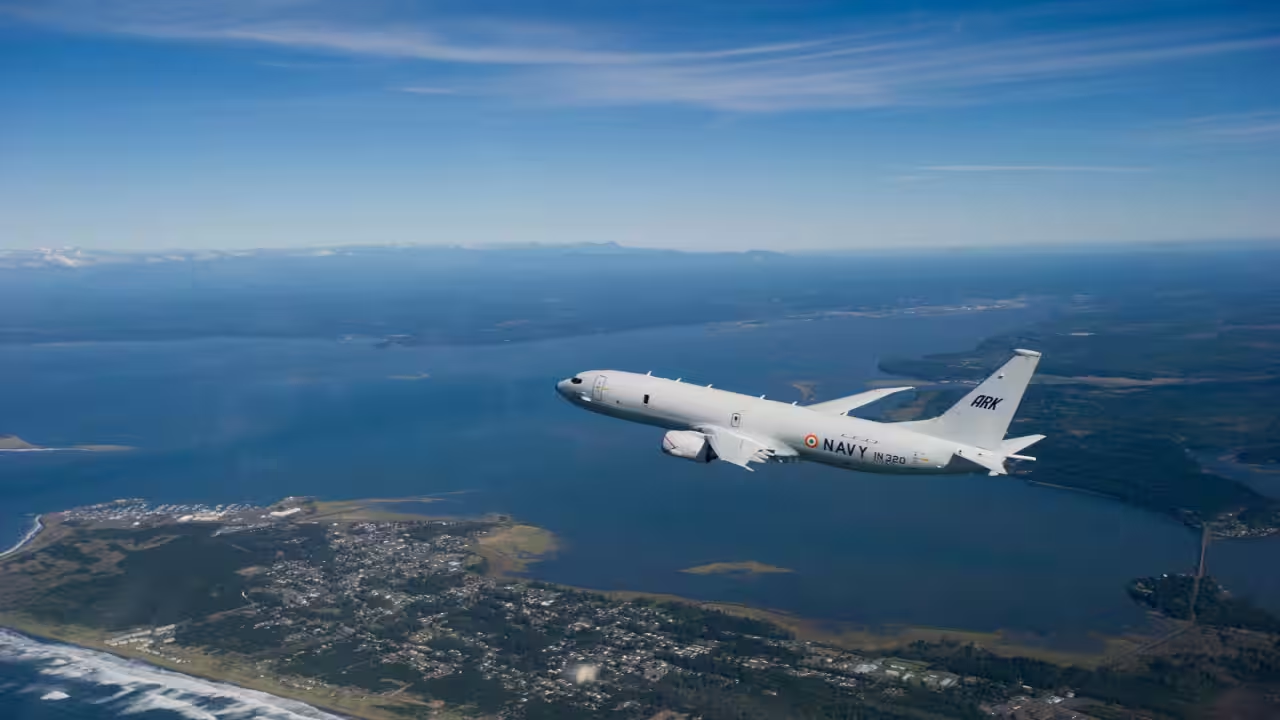
When the Indian Navy's Fleet Air Arm is discussed, the focus is usually on submarines, ships and sea lines of communication. But naval aviation has also played a less-publicised role over land, supporting the Army and the Air Force with intelligence and surveillance. That capability dates back to the 1965 war and has now returned along the Line of Actual Control (LAC), where the Navy's P-8I long-range maritime reconnaissance aircraft are helping monitor Chinese activity.The precedent was set by the French-built Breguet Alizé, an anti-submarine warfare aircraft operated by the Navy in the 1960s. It carried a belly-mounted radar and an ARAR 11-D Electronic Support Measures (ESM) suite, with eight antennae providing 360-degree coverage. The system could passively detect radar emissions and help locate their sources.The Air Force recognised that the capability could also be used to detect ground-based radars. Following the 1962 war with China, an Alizé was deployed to identify Chinese radar stations along the LAC, according to a United Services Institution publication.The aircraft's most notable mission came during the 1965 war with Pakistan. Radar installations at Sakesar and Badin had begun guiding Pakistani fighters towards Indian aircraft, prompting the IAF to seek the Navy's help.An Alizé commanded by Lieutenant Sourirajulu Ramsagar was moved to Agra before operating out of Ambala. It flew four missions over the western sector, covering the border stretch from Pathankot to Jamnagar at an altitude of around 15,000 feet.The aircraft deliberately allowed Pakistani radars to track it while its ESM equipment picked up their emissions. The crew plotted and triangulated the sources, identified eight radar installations and relayed their coordinates to the Air Force. Canberra photo-reconnaissance aircraft subsequently refined the data, which was used to plan strikes.From Alizé to P-8IThe capability has evolved with the Boeing 737-based P-8I, equipped with advanced sensors for maritime reconnaissance, anti-submarine warfare and electronic intelligence.During the 2017 Doklam standoff, P-8I aircraft were deployed to monitor Chinese People's Liberation Army movements in the Chumbi Valley. The deployment was subsequently confirmed by former Chief of Defence Staff General Bipin Rawat.The Navy's support along the LAC has since become more regular. During the 2020 eastern Ladakh standoff, P-8I aircraft and Sea Guardian drones were deployed at the Army's request to monitor Chinese troop movements and infrastructure along the border.The aircraft and drones supplemented satellite imagery and other unmanned systems, providing live feeds and electro-optical imagery to aid operational decisions. Their surveillance covered Ladakh in the western sector as well as Sikkim and Arunachal Pradesh in the east.The Navy's role in joint operations was also visible during Exercise Poorvi Prahar in November 2024, when the three services conducted drills in the Eastern Theatre. The P-8I participated in exercises involving intelligence gathering, surveillance, reconnaissance, mobilisation and logistics in mountainous terrain.The Fleet Air Arm's role, therefore, extends well beyond India's coastline. Its sensors, electronic intelligence capabilities and surveillance feeds can help the Army monitor activity across difficult terrain, adding to intelligence gathered through ground-based systems, satellites and Air Force assets.While operational details remain classified, the evolution from the Alizé tracking Pakistani radar emissions in 1965 to the P-8I monitoring activity along the Himalayas underscores the Navy's growing role in India's joint military and intelligence architecture.
Topics in this story
Gathered from external sources. Rights to this text belong to whoever originally published it.