'Process becomes punishment in our system': Ex-SC judge Sanjay Kaul on Umar Khalid, Sharjeel Imam bail pleas
NEW DELHI: Former Supreme Court judge Sanjay Kishan Kaul has said that the period before conviction or acquittal has become a \"punishment\" in India,
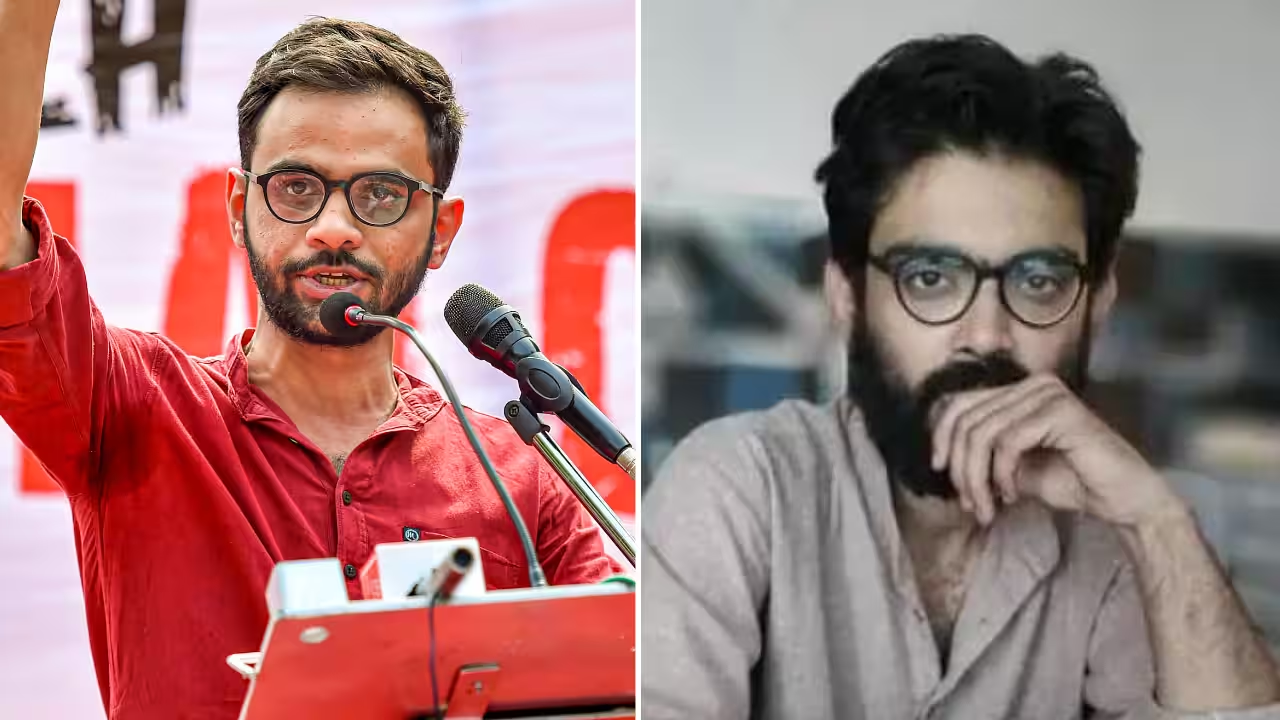
NEW DELHI: Former Supreme Court judge Sanjay Kishan Kaul has said that the period before conviction or acquittal has become a "punishment" in India, commenting on the denial of bail to Umar Khalid and Sharjeel Imam. He said that prolonged legal proceedings can themselves become a form of punishment and that bail should generally be the norm.In an interview with news agency ANI, Kaul said he had generally taken a liberal view on bail, but acknowledged that certain laws explicitly restrict the granting of bail in specific cases."I have taken a generally very liberal view on bail. I feel the bail cannot be the punishment. The conviction is the punishment. In our system, unfortunately, the pre-conviction or acquittal period itself becomes a punishment. The process becomes a punishment," former Supreme Court judge said.Kaul said several judges had raised concerns about the issue. He also referred to a judgment written by Justice Sundaresh, with whom he had dealt with the question of bail and the principles governing custody."And many judges have been writing and talking about it. In fact, I, sitting with Justice Sundaresh, had dealt elaborately with the bail itself, trying to say, why are you people under custody? Justice Sundaresh wrote the judgment. He's, to my mind, a liberal judge on this. And we tried to lay down norms, etc., which were already in existence, but trying to, you know, until this case. So in most cases, our view is, that bail should be the norm. But there are certain acts which prohibit bail," said Kaul.Kaul has co-authored an upcoming memoir, Without Fear or Favour, with Jay Vinayak Ojha. The book is scheduled for release on October 31.Khalid and Imam are accused under the Unlawful Activities (Prevention) Act (UAPA) in connection with an alleged larger conspiracy behind the February 2020 northeast Delhi riots. According to the prosecution, the violence left 53 people dead and more than 700 injured.The riots broke out amid protests against the Citizenship (Amendment) Act, 2019, and the proposed National Register of Citizens.On January 5 this year, the Supreme Court denied bail to Khalid and Imam in the case related to the alleged conspiracy behind the 2020 riots. In its judgment, the court observed that the two accused stood on a "qualitatively different footing" in terms of the prosecution's case and the evidence against them.In September, the Delhi high court had also rejected their bail pleas. The case stems from FIR 59/2020, registered by the Delhi Police Special Cell to investigate the alleged larger conspiracy behind the February 2020 northeast Delhi riots.‘Met him only a couple of times’: Justice Kaul on Saurav DasMeanwhile, former Supreme Court judge Justice Sanjay Kishan Kaul also clarified his association with Cockroach Janta Party activist Saurav Das, saying he had met him only a couple of times when Das was working as a journalist and had advised him to "taper down a little" in his language.Justice Kaul told news agency ANI that a photograph of him with Das, taken at a Diwali gathering about a year ago, was being used to suggest that he shared a particular ideology."So, it was one year ago. He was not even in the news then," Justice Kaul said, explaining how the meeting came about."He was a journalist, maybe met me a couple of times. He was insistent that I must, at Diwali time, come. I was going somewhere else. I said, 'Okay, I'll drop in for ten minutes.' I told my wife, 'Have a cup of coffee, I'll drop in for ten minutes, and then we'll go.' That's all that happened," he said.Asked whether he had mentored Das at any point, Justice Kaul denied doing so, while acknowledging that he had advised the activist on his choice of words."I was not mentoring him, but once or twice he met me, I told him that, I will always tell you to taper down a little in your language," he said.Justice Kaul added that differences in language and expression across generations could sometimes cause discomfort, particularly among those accustomed to more civil forms of conversation.Get the latest India News and Live updates. Download the TOI app.
Topics in this story
Gathered from external sources. Rights to this text belong to whoever originally published it.