A runway planned for a giant Everglades airport became a pilot-training facility, then an immigration detention center called Alligator Alcatraz in 2025; the facility was permanently shut down in June 2026
Explore the fascinating transformation of Florida's Dade-Collier Training and Transition Airport from a potential supersonic jetport to a high-profile immigration detention center known as Alligator Alcatraz, and its abrupt closure amidst controversy.
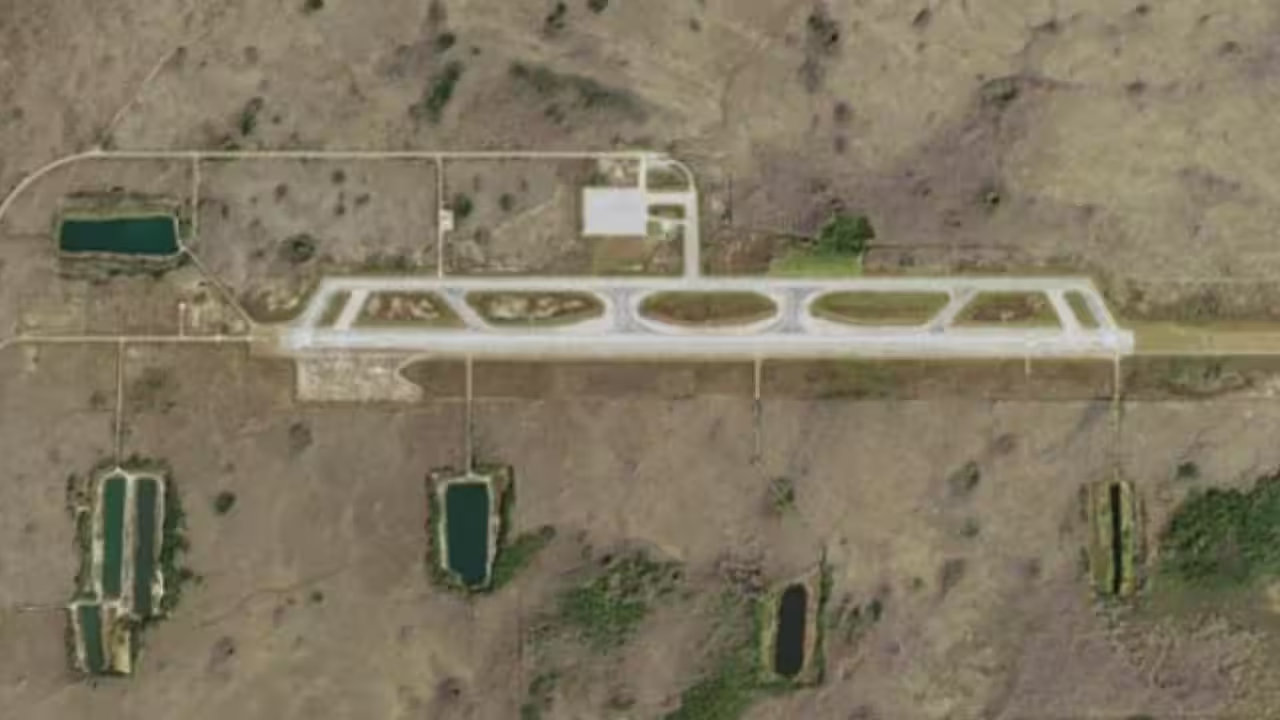
Over the last few decades, one Florida runway served numerous purposes, transitioning from an unbuilt supersonic airport to an aviation training center and ultimately into a detention center. According to the Miami-Dade Aviation Department, the Dade-Collier Training and Transition Airport (TNT) was built to provide a precision-instrument landing and training facility in South Florida for commercial pilots, private training sessions, and military touch-and-go operations.Before its 2025 conversion, commercial jets and military aircraft used the strip regularly. The department also reported that the airport held an Annual Service Volume capacity of almost 175,500 operations, though landings for all aircraft requiring user fees or weighing more than 12,500 pounds operated on a Prior Permission Required (PPR) basis.Airside and landside facilities The airside facilities at the Dade-Collier Training and Transition Airport offered proper support to both large and small aircraft, providing a safe space for precise landings. As per the Miami-Dade Aviation Department, the airfield had a single asphalt runway, Runway 09/27, measuring 10,499 feet long and 150 feet wide.In addition, the asphalt was in good condition with High-Intensity Runway Lights. It also featured a 75-foot-wide parallel taxiway equipped with Medium-Intensity Taxiway Lights. On the other hand, the landside facilities consisted of only a 2,000-square-foot administration building, with no T-hangars, conventional hangars, fuel tanks, or tie-downs at the site, reflecting its strict role as a touch-and-go training strip with no overnight aircraft parking or refueling services.History of Dade-Collier Training and Transition Airport Construction began in 1968 on the Dade-Collier Training and Transition Airport, which was initially envisioned as the Everglades Jetport. The original runway, which opened in 1970, was designed to replace Miami International Airport and serve South Florida. However, fierce environmental opposition led President Richard Nixon to halt further development in January 1970 through the Everglades Jetport Pact, limiting the facility to its single training strip.The 24,960-acre property contained almost 900 acres of developed and operational land, while the remaining area was managed by the Florida Fish and Wildlife Conservation Commission (formerly known as the Florida Game and Freshwater Fish Commission). Following its initial build, the airport’s most significant upgrades included a $3.5 million runway resurfacing and lighting enhancement in 1992 and a $100,000 taxiway restoration in 1996, as reported by the Miami-Dade Aviation Department. In recent years, Miami-Dade County focused on new strategies to generate revenue from the property.From training strip to Alligator AlcatrazIn June 2025, Florida officials partnered with the U.S. Department of Homeland Security (DHS) to convert the Dade-Collier Training and Transition Airport into a large-scale immigration detention center dubbed “Alligator Alcatraz,” as reported by Britannica. The project was proposed by Florida Attorney General James Uthmeier and expedited by Governor Ron DeSantis, who made use of emergency powers to take control of the site despite its ownership by Miami-Dade County.The facility was set up to hold up to 5,000 detainees awaiting deportation under an expanded federal enforcement initiative. It began operating deportation flights by July 25, 2025, as per an announcement made by DeSantis. At the same time, the project landed in legal trouble after being criticized by civil rights groups, environmental organizations, legal experts, politicians, Indigenous communities, as well as the general public, who raised questions about the facility’s location, purpose, and authorization process.As per CBS News Miami, Governor DeSantis announced the permanent shutdown of the facility on June 25, 2026, after federal officials shifted all the remaining detainees to other immigration centres earlier that month ahead of the approaching hurricane season.You use AI every day. Now get your AI Quotient. Take the AIQ test.
Topics in this story
Gathered from external sources. Rights to this text belong to whoever originally published it.