Donald Trump called Nvidia CEO Jensen Huang mid-interview and tells everyone he cannot take him on ...
Tech News News: Nvidia CEO Jensen Huang's appearance at the All-In Summit in Los Angeles took an unexpected turn when US President Donald Trump phoned in mid-conversa.
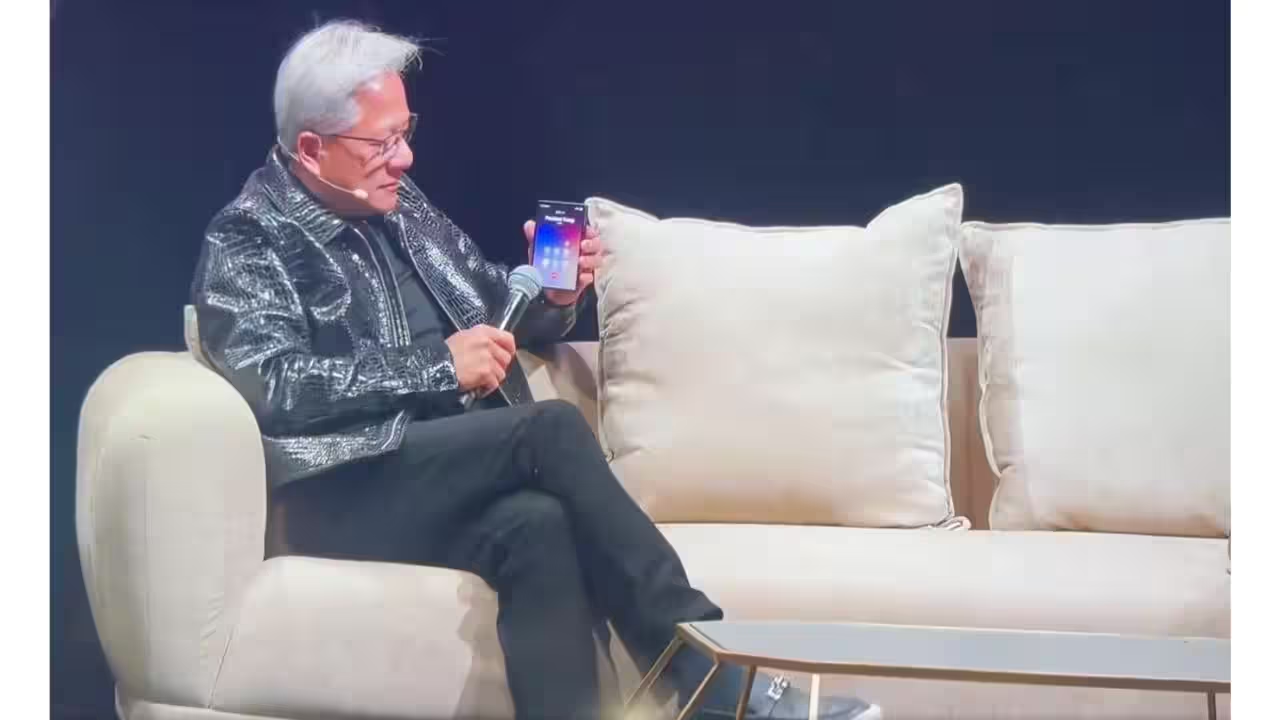
Nvidia CEO Jensen Huang's appearance at the All-In Summit in Los Angeles took an unexpected turn when US President Donald Trump phoned in mid-conversation, using the moment to publicly dismiss growing concerns about AI posing an existential risk. According to a report by Business Insider, at the All-In Summit the interview of Nvidia CEO Jensen Huang was interrupted by a phone call from Trump. Speaking via speakerphone, Trump dismissed the fears of artificial intelligence as alarmist, declaring, “The robots will not be taking over.” He further added that while caution is necessary, the US should not halt AI advancement.Donald Trump positionTrump described AI doomerism as a “hoax,” reiterating his stance later on Truth Social: “Breaking another Hoax That AI is going to take over, consume, and destroy the World.” His remarks came amid growing debate in Silicon Valley over AI safety, following whistleblower Jacob Coxon’s resignation from Anthropic, where he warned that AI could “kill us all by the end of the decade.”A debate already roiling Silicon ValleyThe interruption landed in the middle of an already heated industry conversation about AI safety. The debate intensified after Jacob Coxon, a former Anthropic researcher, announced his resignation from the lab last week, writing on social media that people building the technology believe it could pose a threat to humanity's survival within the decade.Nvidia CEO Jensen Huang’s responseDuring his talk, Huang struck a more measured tone than Trump's, praising Coxon for speaking out about AI safety while also pushing back on the broader idea that AI represents an existential threat, calling that particular framing unscientific. He said AI safety is paramount, while maintaining that the U.S. can continue moving quickly on AI development without sacrificing safety, arguing the country is capable of leading in AI while still doing so responsibly.Huang drew a clear distinction between Coxon's decision to speak up and the broader predictions being made about AI's future. He said he considers whistleblowing about problems inside a company to be legitimate, but views scientific-sounding predictions about the future as considerably less credible, since he argued they aren't actually grounded in science. He added that he doesn't personally know what Coxon witnessed while at Anthropic, and suggested that frontier AI labs more broadly are in the midst of a difficult transition from primarily research-driven organizations into engineering-focused ones.Get the latest technology news and updates. Download the TOI App.
Topics in this story
Gathered from external sources. Rights to this text belong to whoever originally published it.