I thought I was dying but it was health anxiety - here's how to recognise the signs
Hollie Sharman shares her experience of health anxiety and a doctor advises on how to manage symptoms.
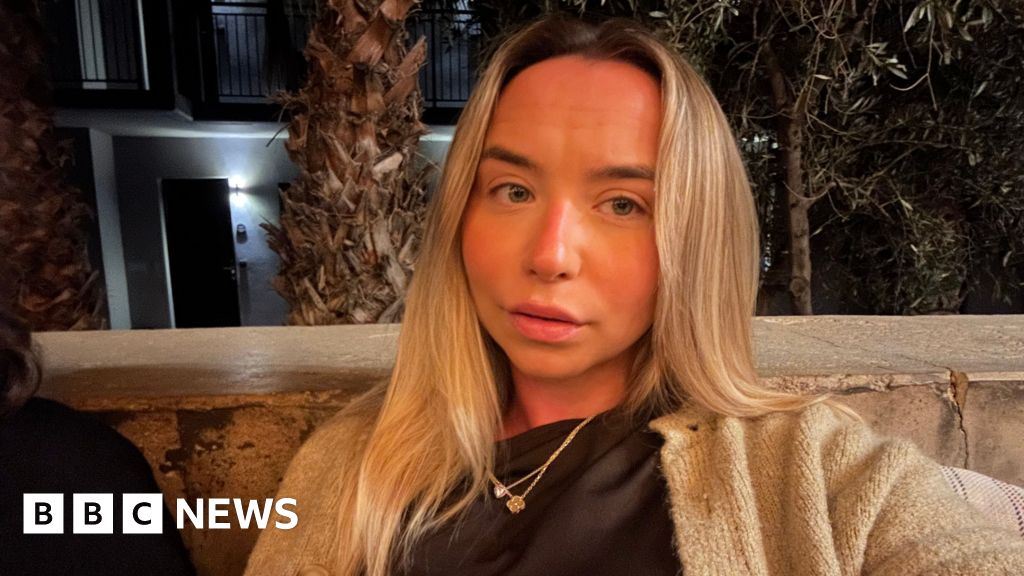
Hollie Sharman was convinced she was dying. She would go to hospital "four to five times a week" complaining of excruciating chest pain.
"I think the longest I spent in A&E was 13 hours," says the 25-year-old. But despite numerous tests, doctors could never find anything wrong.
Sharman says she had "always worried" about her health as a child and remembers "making up any excuse" to get sent home from school and get into bed.
Her 22nd birthday meal was spent in the restaurant toilets "having the worst panic attack I've ever had".
That triggered years of health anxiety, with hours spent searching symptoms, feeling panicked and isolated.
"I was constantly Googling and using ChatGPT, every source I could get that could tell me what was wrong," she says.
"I spent so long in the hospital. They'd tell me it's nothing, they'd check everything.
"I'd go home, but then my legs would feel weak, so I'd Google that and then it would say it's a sign of heart failure. So I'd go back, it was literally a constant cycle."
At its worst, she "completely disconnected from everyone" and wouldn't reply to messages from family to avoid repetitive conversations.
Sharman says her health anxiety also had an extreme affect on her relationship.
"It got to the point that nothing he said would be the right thing.
"I would get upset because he didn't understand what was going on inside my own head. How can you tell someone everything's fine when I think I'm actually dying?"
Clinical psychologist Dr Kirren Schnack says health anxiety is "a constant worry about being seriously ill or becoming seriously ill when you are not".
Key signs can be "checking" behaviours, such as frequently examining your body, taking your temperature, blood pressure or researching symptoms online.
Another is constantly asking the internet, friends or family for reassurance that you are safe and healthy, she tells Complex with Kimberley Wilson .
Others may experience "avoidance" - not looking at their body or going to doctors appointments because they fear "the worst".
Some may "take on the persona of somebody who has an illness", she adds.
"You may slow down your movements and stop exercising, you're treating yourself and your body and mind as if you are already ill."
Sharman was eventually diagnosed with health anxiety and health-related obsessive compulsive disorder (OCD). She says her family and partner have been "incredibly supportive" and have helped her get to a "better place" with techniques to manage her anxiety.
"I'd write down my symptoms like 'chest pain, excruciating'. And then at the end of the day, I'd write that I was fine.
"And then next time I'd have it, I'd have something to read and I'd be like, but I thought I was dying then and I wasn't."
Sharman says her health anxiety "doesn't control her life any more".
"You need to push yourself and do things when you're anxious, don't put your life on hold because I did for so many years."
Dr Schnack says if you have a symptom that is "new, concerning or doesn't go away", it is "responsible health behaviour" to check the NHS website.
If a symptom has not gone away within two weeks, she advises making a GP appointment. Here's when to call 111, 999 or go to A&E.
And here are some tips from Dr Schnack that might help:
Challenge worst-case thinking - give your brain other explanations for physical sensations; a stiff back might be poor posture rather than a serious illness.
Limit reassurance-seeking - set rules and time limits on how often you ask friends or family about symptoms, and stick to them.
Burn off anxious energy - take quick bursts of movement, like jumping jacks, to help process adrenaline and cortisol.
Ground yourself - use strong sensory experiences such as holding an ice cube or tasting something sour or spicy.
Breathing techniques - take a long breath through your nose, add a second inhale at the top and release it with a long sigh through your mouth.
I have a condition people are too embarrassed to talk about
How to find your perfect pillow - according to an expert
'Mum sent them £140,000': How to spot the signs a loved one is being scammed
Topics in this story
Gathered from external sources. Rights to this text belong to whoever originally published it.