Cotswold tourism, is it a blessing or a burden?
Tensions rise between visitors and residents in busy Cotswolds chocolate box villages this autumn.
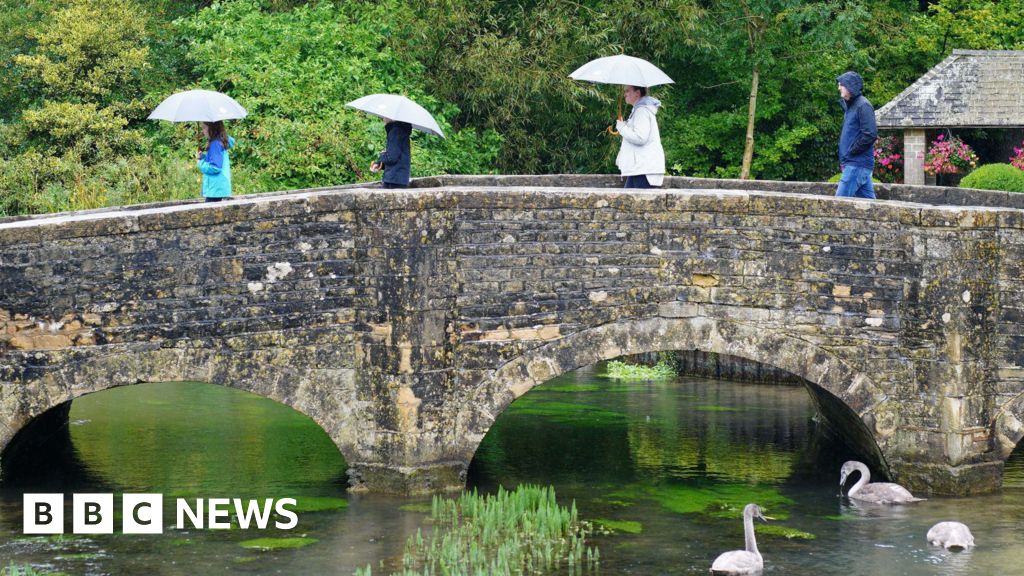
With autumn in full swing, the West of England is a popular region for tourists to make cosy getaways, with the chocolate box villages of the Cotswolds proving particularly popular.
But, with the post-pandemic rise in visitors in some areas, tensions have risen in villages such as Bibury.
The village is home to about 600 people but can see up to 20,000 visitors a day, with fences having to be installed to stop tourists paddling in the river .
Twenty-four miles away, in Painswick, Carol Maxwell said that while there are an "awful lot" of tourists in the village, there is a balance with most "really nice and appreciative".
GCHQ intern who took data home loses sentence appeal
'I was not living a normal life, I was surviving'
Home Guard training documents discovered in attic
Victoria Summerley, who has lived in Bibury for 14 years, told the BBC last week that the behaviour of some tourists had become worse since Covid, with "unbelievable" amounts of litter ending up in the stream.
Meanwhile, Maxwell said that while Painswick had seen an increase in visitors, they were "not exactly loud and they don't create a bad atmosphere".
She said she did not think anyone felt that tourists were a "nuisance or an imposition or anything like that" and that they spent money in the village having cups of tea.
"They're not causing problems at all," she added.
Cotswolds Lavender near Snowshill, sees thousands of visitors every summer.
Farm director Hannah Webb said tourists and influencers coming, taking and sharing photographs have driven business, but it can cause problems.
"We're very lucky to have something people want to see and want to tell people that they've been to us," said Webb.
The field has paths that have been mown between rows of lavender and wildflowers to create the illusion of visitors standing in the flower beds in photographs, but some have been sitting and laying down to get the perfect picture which has led to a lot of "squashed plants".
A few years ago, they decided to put up signs to warn people to be more careful which Webb said "completely changed" people's behaviour and now they are "so much more respectful".
She said they took a similar approach to people disobeying their dogs on lead policy, which is in place to protect insects and mammals that nest among the flowers, and that has also led to "more positive results".
In Wiltshire, Castle Combe is among the most popular Cotswolds locations to visit.
It was the backdrop to films such as Stardust and War Horse, and a bridge which stretches over the River Bybrook is often packed with people taking photos.
Most visitors to Castle Combe "enjoy the village respectfully", said local councillor Jon Atkey.
However, the village can struggle to cope with the volume of vehicles and people during busy spells.
Atkey said: "Castle Combe's roads and infrastructure were never designed to accommodate the levels of traffic we now see.
"During busy periods, traffic can become heavily congested, with cars circulating in search of parking spaces and spending long periods queuing through the village.
"Residents are understandably concerned about the impact this has on both safety and air quality.
"The vast majority of visitors simply want to enjoy one of England's most beautiful villages, and they should continue to be welcomed.
"The challenge for all of us is finding a better balance that enables people to visit while ensuring Castle Combe remains a thriving community and a good place for residents to live."
Dr Amir Gohar, University of West England, has worked on tourism policies in environmentally sensitive areas with rapid tourism development.
He said the phrase "overtourism" is when the "tourist get the attention of the government and transforms cities and villages to serve the tourists more than serving the local community or the people".
In areas popular with tourists in the South West, including the Cotswolds, Somerset and Wiltshire, it can mean more pressure on infrastructure like parking, water, sewage and waste collection as high tourist numbers are "not accounted for when planning the town or village".
Dr Gohar said having lots of visitors can also impact "housing affordability" as businesses or development companies start to cater more for the tourists with short stays or Airbnb's which means the "prices get high and the local residents pay that price".
Finding a balance between visitor experience and the residents wellbeing is a "challenge" that "it needs to be regulated", he said.
Follow BBC Gloucestershire on Facebook , X and Instagram . Send your story ideas to us on email or via WhatsApp on 0800 313 4630 .
'Drastic measure' to stop tourists paddling in river
Congestion 'is like living next to busy motorway'
Unease after village crowned world's most beautiful
Tourists urged not to 'overwhelm' popular village
Topics in this story
Gathered from external sources. Rights to this text belong to whoever originally published it.