5 foreign policy priorities for Democrats in the next Congress
Democrats charting America’s foreign policy in the next Congress are charged with answering Americans’ demands to bring down soaring prices linked to the war in Iran and President Trump’s tariffs. At the same time, they’re focused on reversing what they view as Trump’s destructive policies: gutting America’s diplomatic corps, slashing foreign assistance and spending federal…
Democrats charting America’s foreign policy in the next Congress are charged with answering Americans’ demands to bring down soaring prices linked to the war in Iran and President Trump’s tariffs.
At the same time, they’re focused on reversing what they view as Trump’s destructive policies: gutting America’s diplomatic corps, slashing foreign assistance and spending federal funds without Congress’s approval.
Democrats are likely to exercise their subpoena power to investigate corruption allegations across the Trump administration and confront other perceived threats to U.S. national security. But some former congressional staff are warning against theatrical hearings that contribute to partisan polarization.
“While oversight and investigations are necessary, I don’t think that the American public wants to see people subpoenaed and called in for things that, obviously, are just for show. I think they want to see actual concrete results,” said Algene Sajery, former Democratic policy director for the Senate Foreign Relations Committee and senior fellow for the National Security Institute.
Here are the top five priorities for Democrats on foreign policy:
Sen. Chris Coons (D-Del.) is viewed as the likely next chair of the Senate Foreign Relations Committee, and he has signaled a subpoena is coming for Elon Musk, the tech billionaire, top Republican donor and close ally to Trump.
Musk’s involvement in shutting off his Starlink and Starshield satellite communications in Ukraine in October — an action that left Ukraine defenseless in the face of Russian missile bombardment — was the focus of Coons’s threat.
But Musk also directed the elimination of America’s humanitarian assistance bureau, the U.S. Agency for International Development (USAID), in the first few months of Trump’s term. Democrats want an accounting of the lives lost because of USAID’s shutdown.
Researchers connected the global health cuts to hundreds of thousands of deaths , some two-thirds of which were children. More than 14 million additional deaths are projected to occur around the world by 2030 because of USAID’s shutdown.
The impact on U.S. national security is also not fully understood and ripe for investigation.
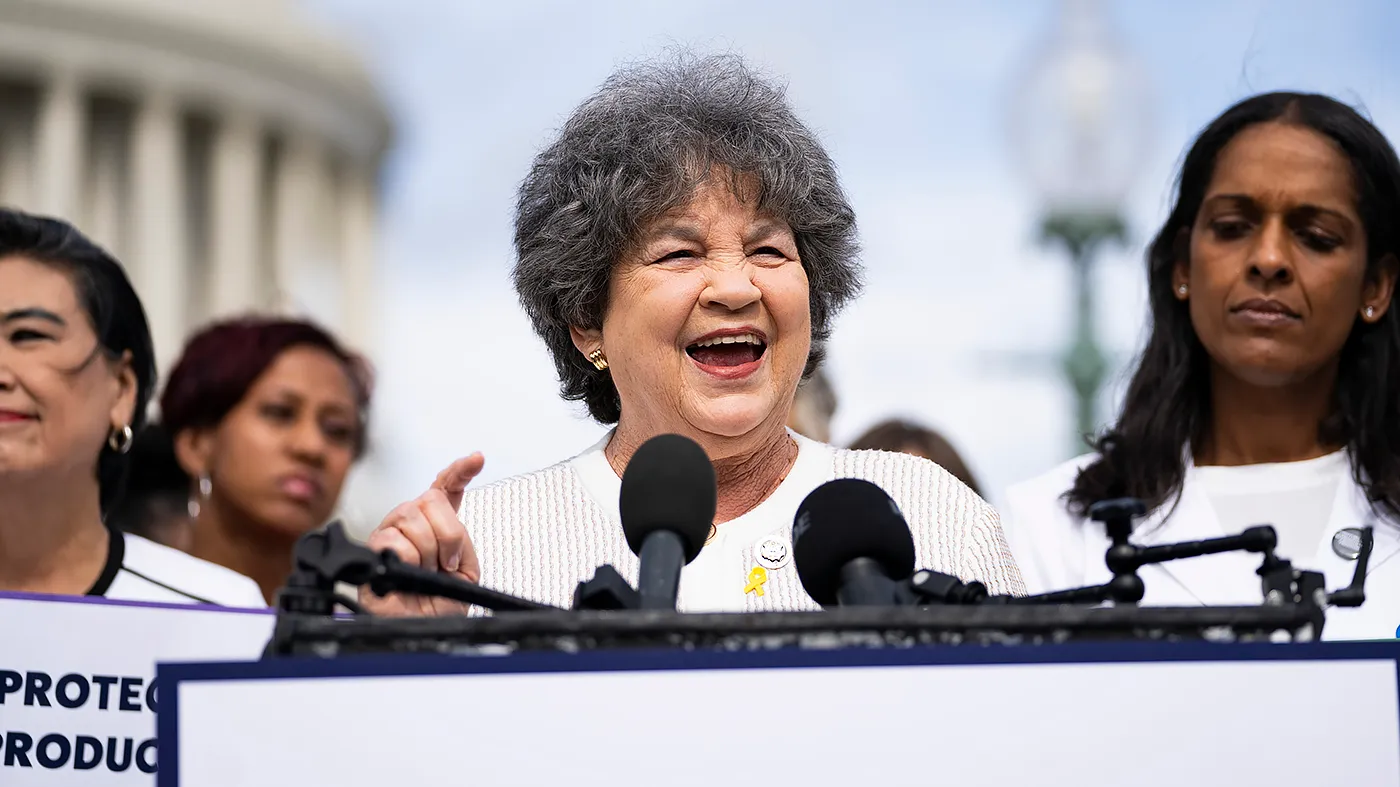
“If you want to keep our country secure and prosperous, it’s not through the bombs, you’ve got to do it with the soft power,” said Rep. Lois Frankel (D-Fla.), the likely incoming chair of the House Appropriations Subcommittee on State, Foreign Operations and Related Programs. She was quoting her son, a former USAID employee.
Frankel said another focus will be spotlighting how the administration is spending money outside the directives of Congress. She brought up the example of the administration choosing to destroy millions of dollars’ worth of taxpayer-funded contraception because it contradicted Trump’s policies.
“And I said to Marco Rubio, ‘What’s going on?’ He says to me — this is in public — ‘We’re not in the business of family planning.’ Really? Are you kidding me?” Frankel recounted, referring to Secretary of State Marco Rubio.
“There’s an example of not even doing what we’ve asked them to do, with the money we’ve given them.”
A State Department spokesperson said the agency does not comment on the secretary’s “purported private conversations” with members of Congress.
Democrats have telegraphed they want to withhold funding for Trump’s war against Iran as a way to assert Congress’s authority over the military.
“The Vietnam War ended when Congress finally pulled the plug on paying for it. We should not be providing any funds for this senseless, illegal war in Iran,” Sen. Chris Van Hollen (D-Md.) said in an interview last month with “The Federal Effect.”
Van Hollen is a member of the Senate Foreign Relations Committee and Appropriations Committee.
Spending bills provide a vehicle to end funding but could be a yearlong process, said Damian Murphy, senior vice president for national security and international policy at the Center for American Progress. He was the Democratic staff director for the Senate Foreign Relations Committee between 2021 and 2025.
“It’s not a perfect tool, but I do expect that that’s one that many members will be very interested in pursuing,” he said.
The Senate Foreign Relations Committee and House Foreign Affairs Committee will almost surely deploy significant investigative attention to the war.
“The American people deserve answers NOW about our actions in Iran. Why is the Pentagon afraid of the truth?” Coons posted on the social platform X on Oct. 15.
Rep. Gregory Meeks (D-N.Y.), in his bid for chair of the House Foreign Affairs Committee, said he plans to bring resolutions to the floor “immediately” to terminate the war with Iran. It’s an imperfect solution facing a veto from the president and not enough votes in the Senate to override it.
Meeks’s other priorities include protecting the State Department’s nonpartisan foreign and civil service in the face of the Trump administration’s large-scale layoffs, increased use of political appointees and alleged loyalty tests meted out during interviews for senior assignments.
In a brief interview with The Hill last month, Meeks criticized Trump’s “two real estate dealers” driving U.S. foreign policy, referring to the president’s son-in-law Jared Kushner and business partner and close friend Steve Witkoff.
“The State Department, its functionality, or nonfunctioning, is something that the committee has to look at and make some determinations about,” he told The Hill last month.
In a letter to colleagues announcing his bid for the chairmanship, Meeks said he wants to pass a State Department reauthorization bill, which would identify funding priorities, as part of the next Congress. The goal would be to place “guardrails on the Administration’s lawlessness,” protect the diplomatic and career workforce and ensure “our diplomatic capabilities are fully used on behalf of the American people.”
Meeks added the House Foreign Affairs Committee will coordinate with House committees where priorities overlap: the Armed Services, Intelligence and Ways and Means committees.
“We’re talking among ourselves to work collectively together, and respecting each other’s jurisdictions, but also making sure that we are giving our input … working together and … not stepping on one another’s toes,” he said.
Foreign military assistance, Israel, Ukraine
Meeks added that support for Ukraine will be a priority for his chairmanship.
“I will continue to advance a principled foreign policy grounded in our values, including support for Ukraine against Russian aggression,” he wrote in his letter to colleagues.
A more divisive issue for Democrats is military assistance for Israel. A wave of progressive lawmakers will further inflame divisions in the caucus over future U.S.-Israel ties.
Frankel oversees U.S. military assistance to Israel, and the subcommittee’s fiscal 2027 bill — which passed the House in July — includes $3.8 billion in annual funding for the Jewish state.
While Trump announced on Election Day that U.S. funding for Israel would be phased out by the end of the year, the president’s critics and supporters alike pointed to that money being shifted to a controversial joint U.S.-Israeli defense technology cooperation program.
Frankel said she supports the program, which is laid out in Section 219 of the National Defense Authorization Act.
“There’s a lot of, obviously, anti-Israel sentiment, and keeping in mind though, I think this is something that’s not really understood or talked about, the compatibility of the U.S. and Israeli military keeping that region secure,” she said.
Rights groups have come out against Section 219, saying it gives Israel “dangerous” influence over the U.S. defense industry at a time when U.S. interests are “diverging” from Israel and public opinion is increasingly against deeper ties, Reuters reported .
Democrats have tools to counter Trump’s tariffs, many of which were put in place after the Supreme Court dismissed his legal rationale for an earlier tariff regime. The average tariff rate on all imports is currently 9.6 percent, according to the Tax Policy Center .
The Senate Finance Committee is likely the main venue for reining in the president’s tariffs, and the Senate Foreign Relations Committee can use its oversight powers to press for greater accountability, said Sajery, of the National Security Institute.
Sajery said Coons is the type of lawmaker who pushes for concrete results rather than oversight simply for oversight’s sake, with a reputation as a successful bipartisan operator.
“I think he will really appeal to folks who want to find commonsense solutions to mitigate the economic impact of Trump’s failed foreign policies,” she said.
“I think he’ll immediately look at how to restore confidence in the American people that foreign policy is being prosecuted in a way that really takes into consideration their interests, and that economic security is central to the foreign policy agenda.”
Topics in this story
Gathered from external sources. Rights to this text belong to whoever originally published it.